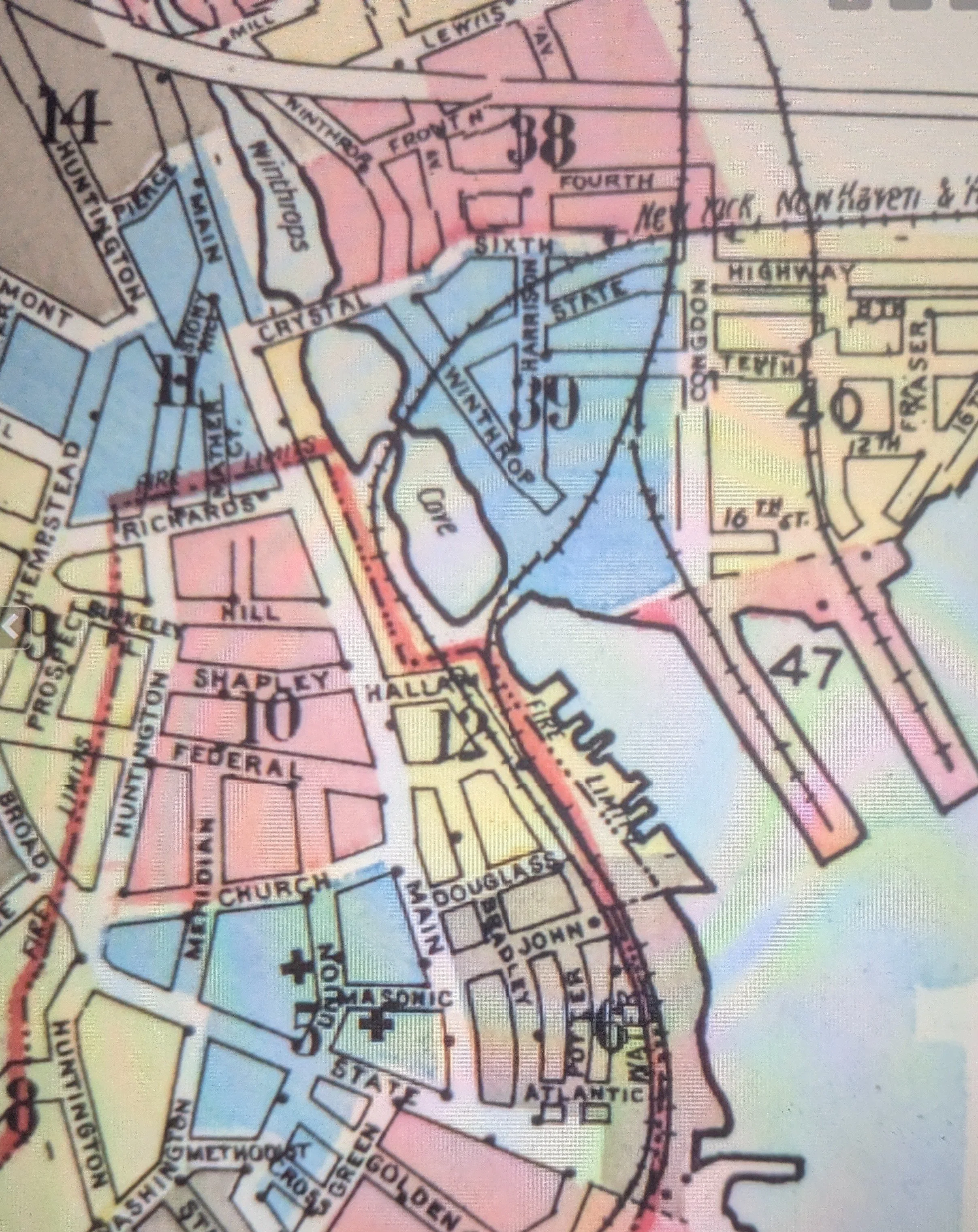
Overview from the 1954 Sanborn Fire Insurance map of New London. We are visiting the blue area where the tracks are shown.
Starting at the top and rolling south we‘ll be visiting:
the roundhouse at the end of Fourth Street
the state highway, or, State Pier road, as a vantage point
the main body of the yard where the freight office, scale house, diesel locomotive fuel tank are in the center blue area
the footbridge shown as a short, white strip at the bottom of Winthrop Cove
the CV pier left of 47, the State Pier right of 47
Courtesy the Library of Congress
Welcome to the Lost New London experience of the Central Vermont Railway!
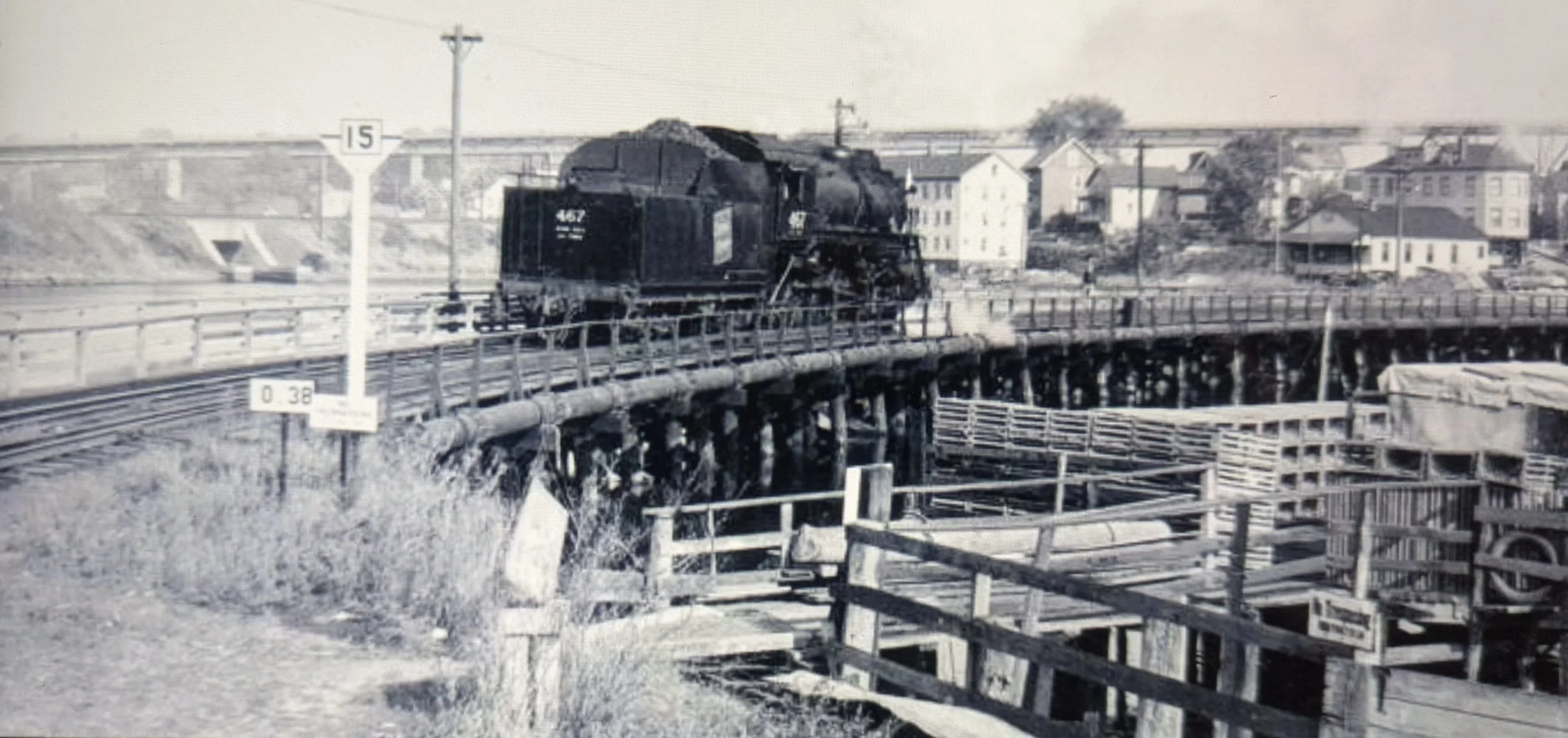
The date is still April 15, 1957. We‘re in the last months of steam on the Central Vermont. #467 has just left a string of cars for the New Haven on the interchange track along Water Street. Look closely and you can see steam and the top of the coal pile behind the cab on the tender. Besides coal, the tender also carries water to make the steam that creates pressure to drive the pistons which are connected with the rods that move the driving wheels that go round and round.
The location is the footbridge linking the downtown area with lower East New London. Notice how the highway bridge dominates the landscape. At one time, the sweeping graceful rail approach to the Thames River drawbridge was the engineering triumph of its day. That would change of course. In 1940, when the state opened the Gold Star Memorial Bridge, or more simply Route 1.
Courtesy Edward J. Ozog and RRPictureArchives.NET
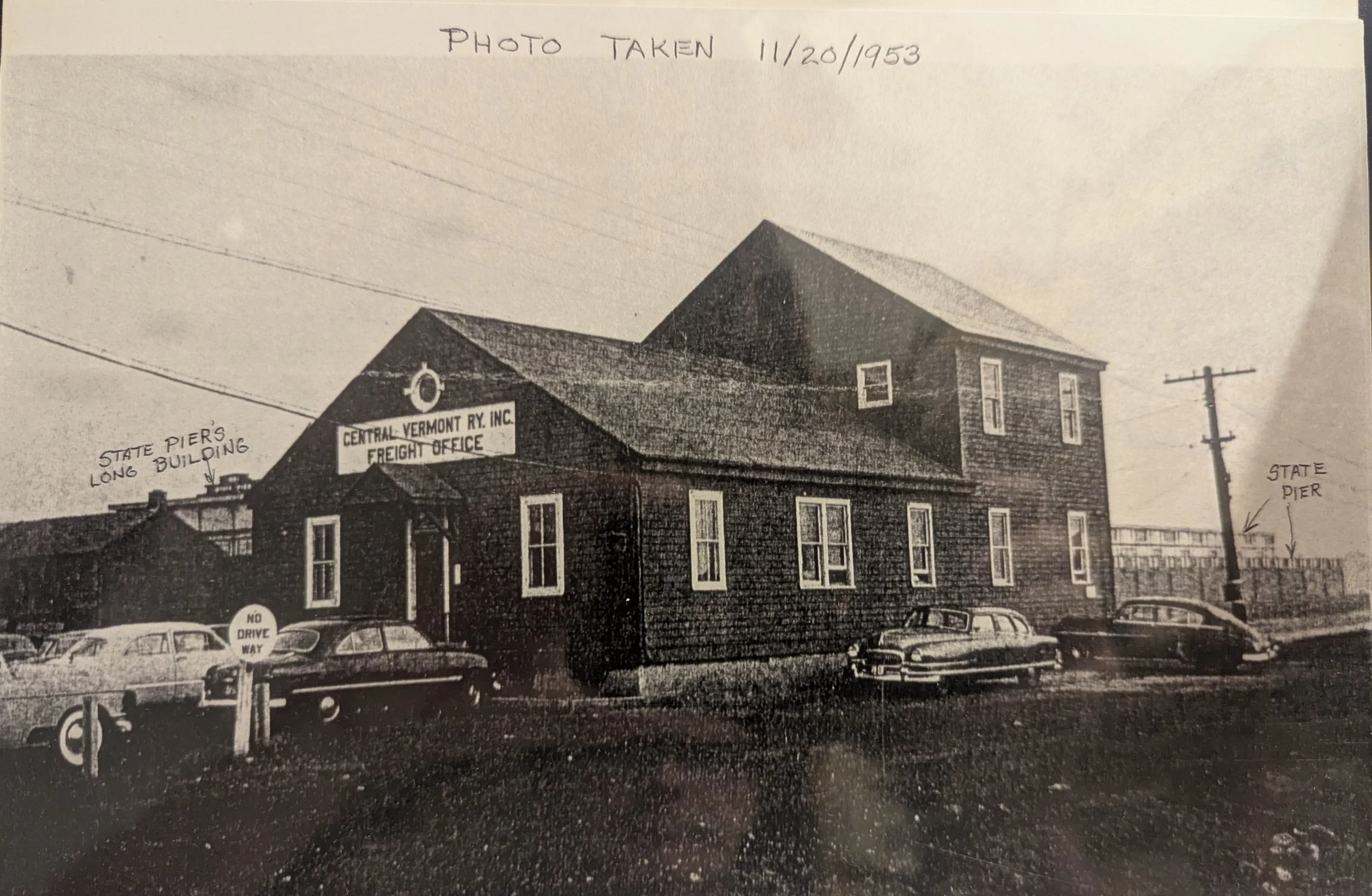
Long-standing building that housed the freight and superintendant‘s offices pictured here in 1953. Behind is Warehouse #1 of the State Pier. Around 1970 the offices were moved to a remodeled space in the roundhouse located near the north end of the yard.
Courtesy Dave Wordell of Salem
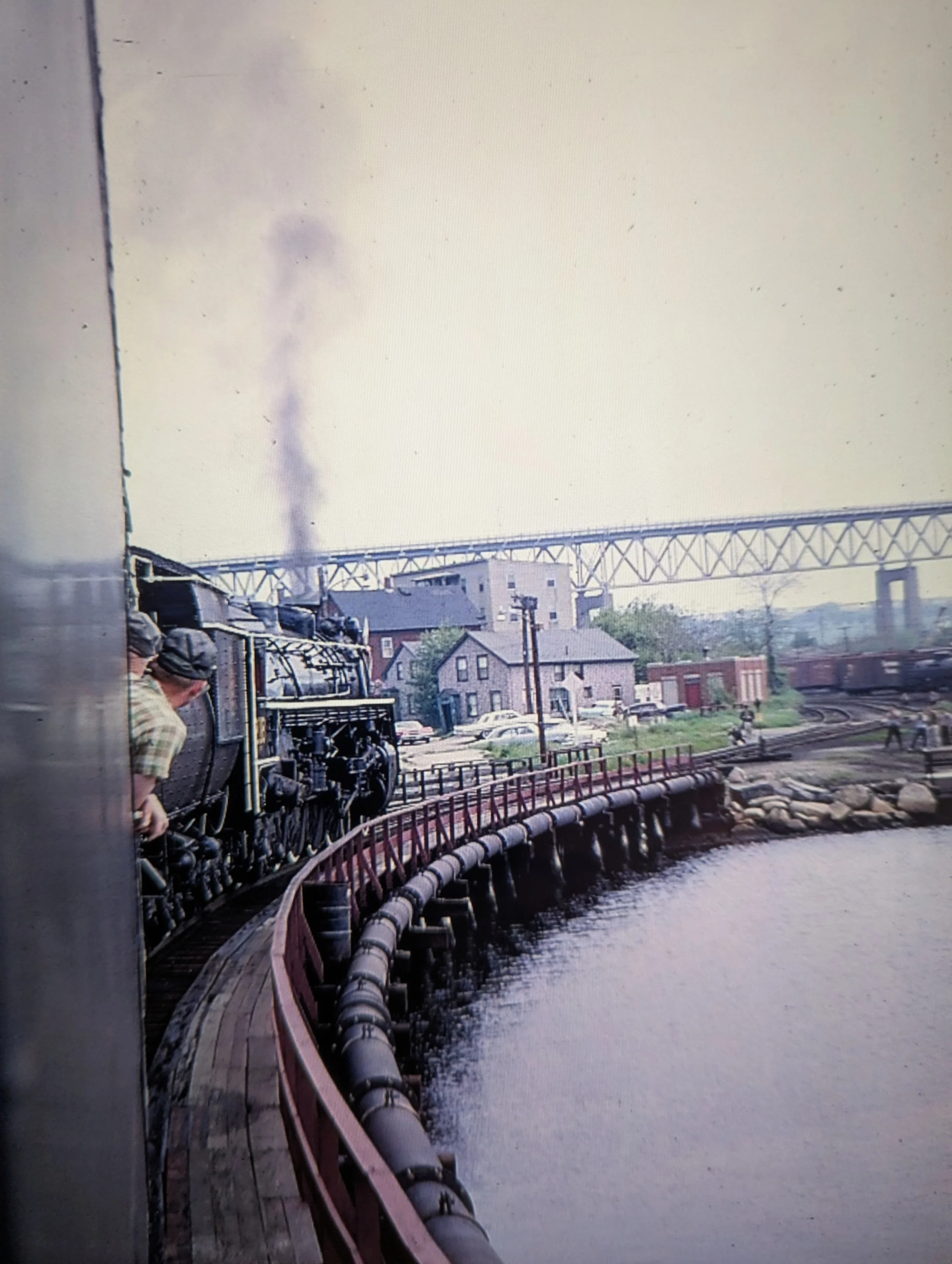
We‘re back on the footbridge and it‘s May 29, 1966. This fan trip behind Canadian Nation #6218 a 4-8-4 has just left Union Station and is headed north to Brattleboro. The lucky stiff taking the picture is our friend Ed Ozog.
Note the photographers grouped on the other side. The 3-story apartment house partially blocking our view of the I-95 bridge is 9 1/2 Harrison St.
I‘ll take the top apartment facing south.
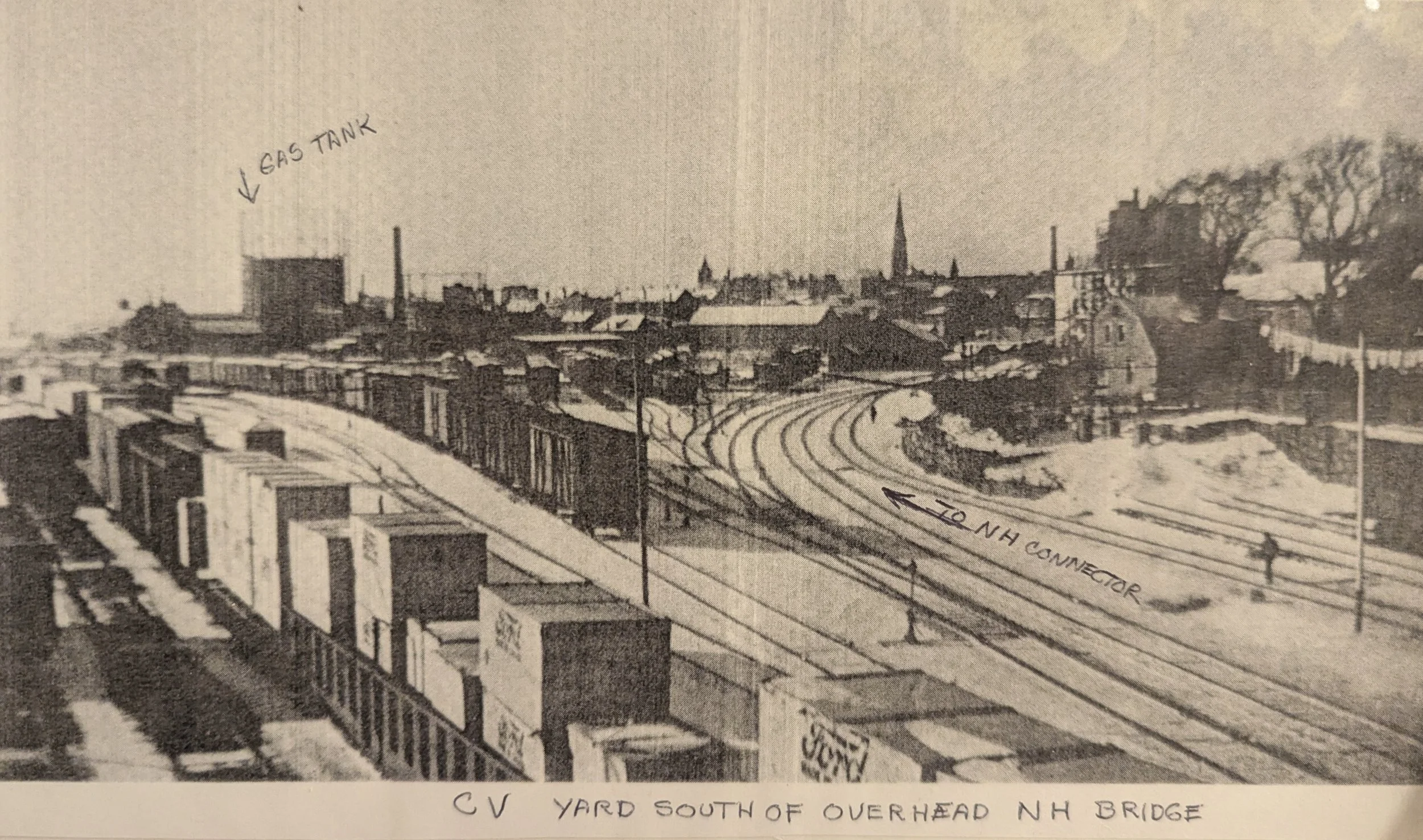
Early 50s (?) photo taken from the State Pier road bridge looking toward downtown and the lower half of the CV yard. Tenth Street ends on the right hand side where you see the hanging laundry… brrr!
Note the crated Ford auto parts. Rumors spread that the car company was looking into building a plant on the Tenth, Harrison and Winthrop Street land, but nothing came of it.
Courtesy Dave Wordell
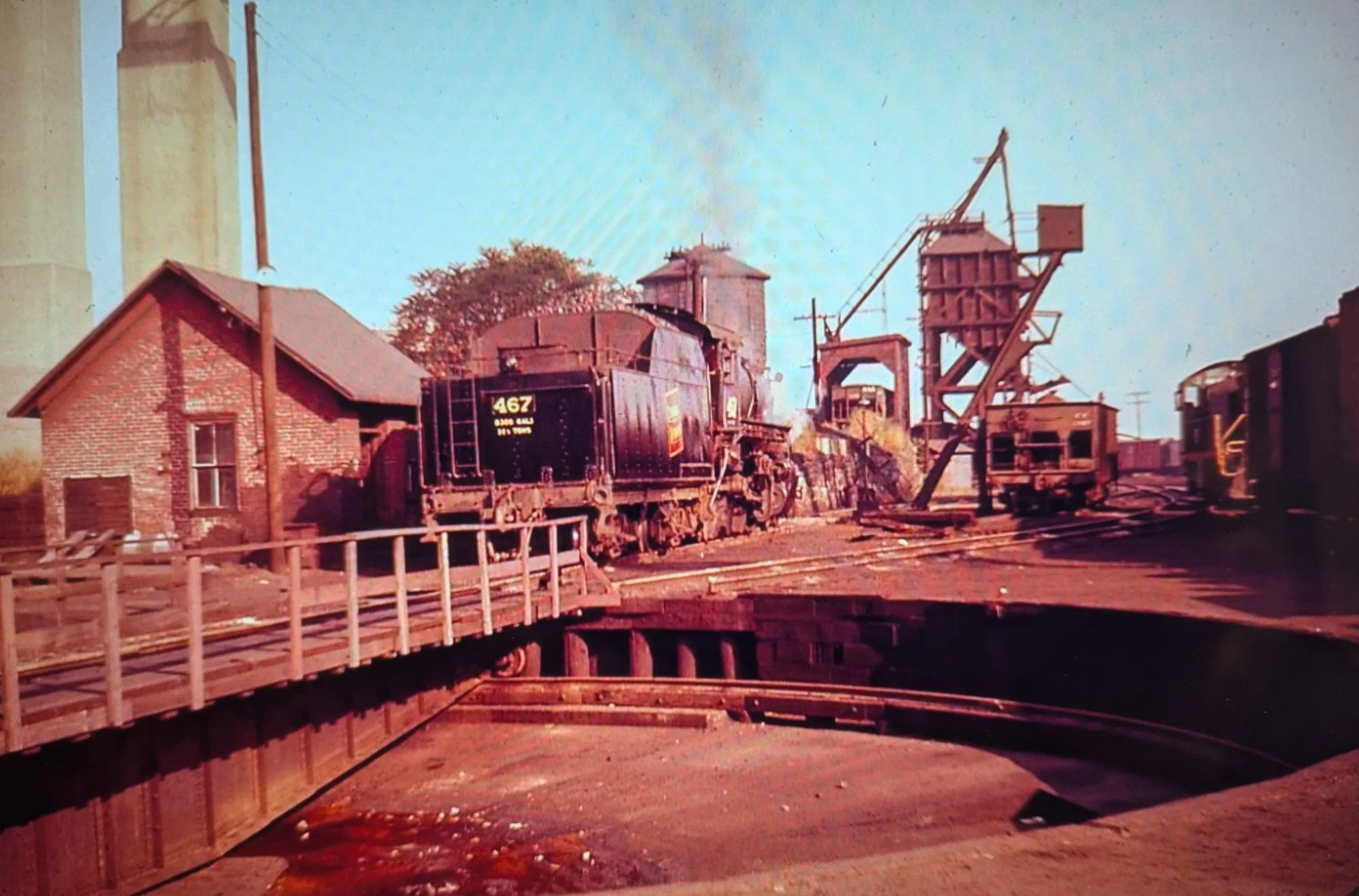
October 14, 1956. #467 is backing onto the turntable. On the left is the tool house. That odd-looking outside braced structure is the coaling tower. In the shed attachment on the left we can see a hopper of coal being unloaded, the coal going into the tower for a chute delivery into the tender. On the right, partially hidden, is a diesel switcher, possibly #8137, that would soon take over #467‘s duties.
Railroading could sometimes be dangerous, especially under a bridge… debris like wood or small chunks of concrete would fall reaching high speed from such a great height. When exploring this area as a kid, I would always speed-walk through this danger-zone with eyes on top of my head.
Credit Ed Ozog for the photograph
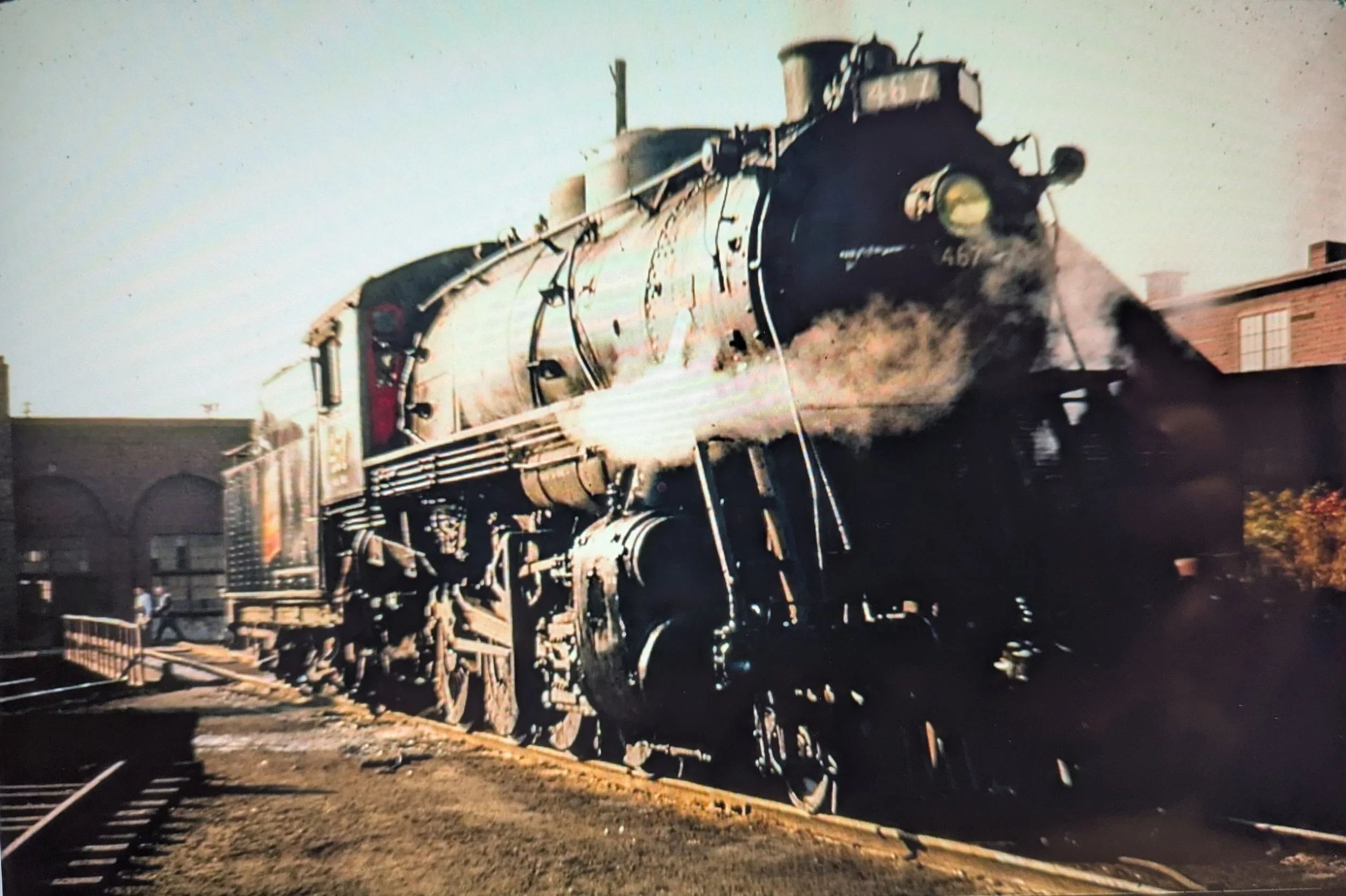
Same day, same place… #467 has chuffed by and is getting on the turntable for a spin and drop off.
thank you, Ed!
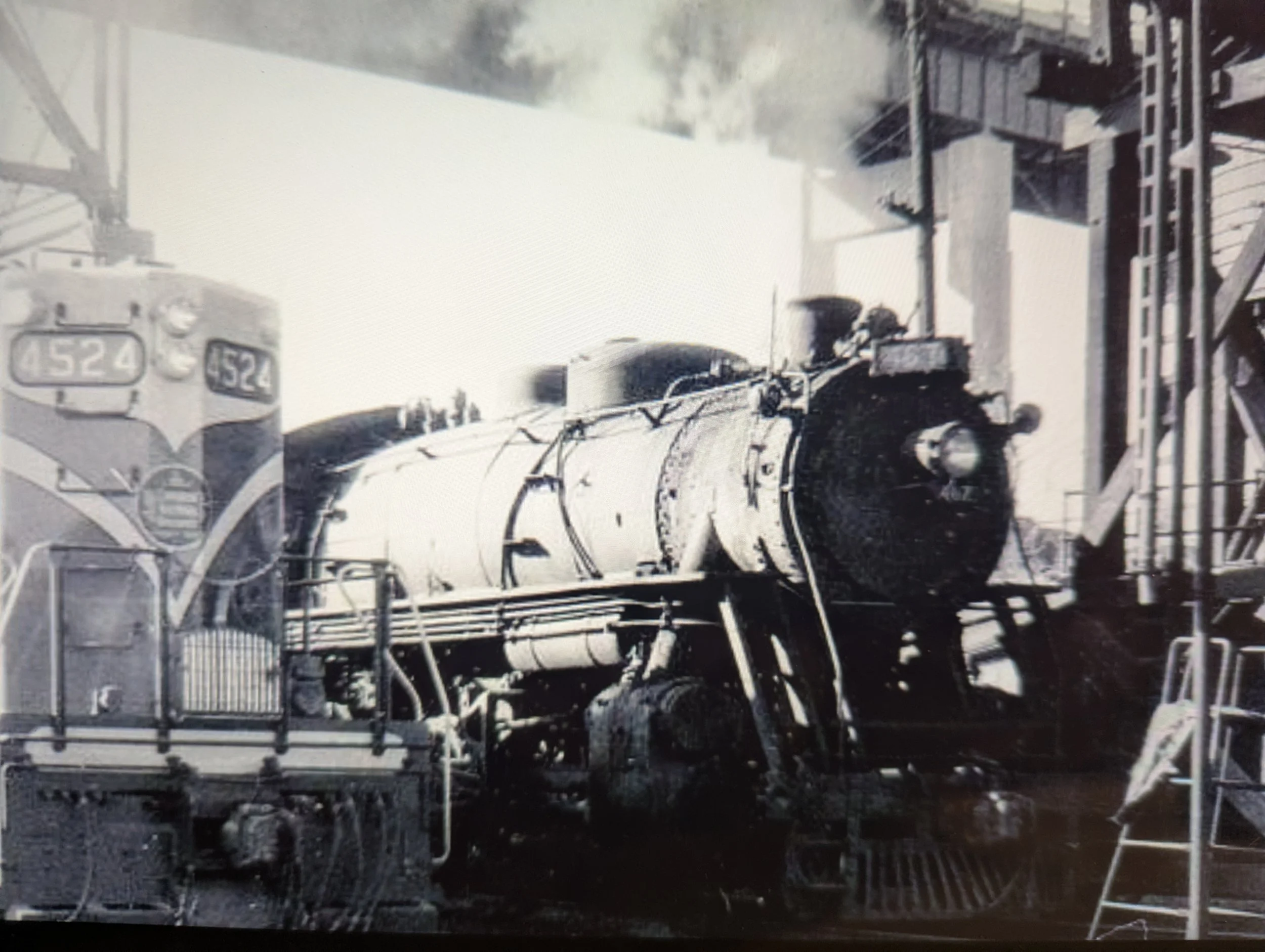
November 26, 1956… passing the baton, from steam to diesel power by the coaling tower (right). In ˋ71, on several occasions, Mr. Kane and other engineers let me sit in the fireman‘s seat on #4525, brother to #4524, a GP-9 built in ˋ55-56 to replace steam which for the railroads was more labor intensive to maintain and far less economical to run. Note the maple leaf herald on the nose of the diesel. The Central Vermont was part of the Canadian National system. As a French student under the guidance of the Sisters of Mercy at Saint Joseph School in New London, it was a treat deciphering the paperwork litter found trackside and the bilingual directions stenciled on boxcars and flats.
Again, thank you, Ed!
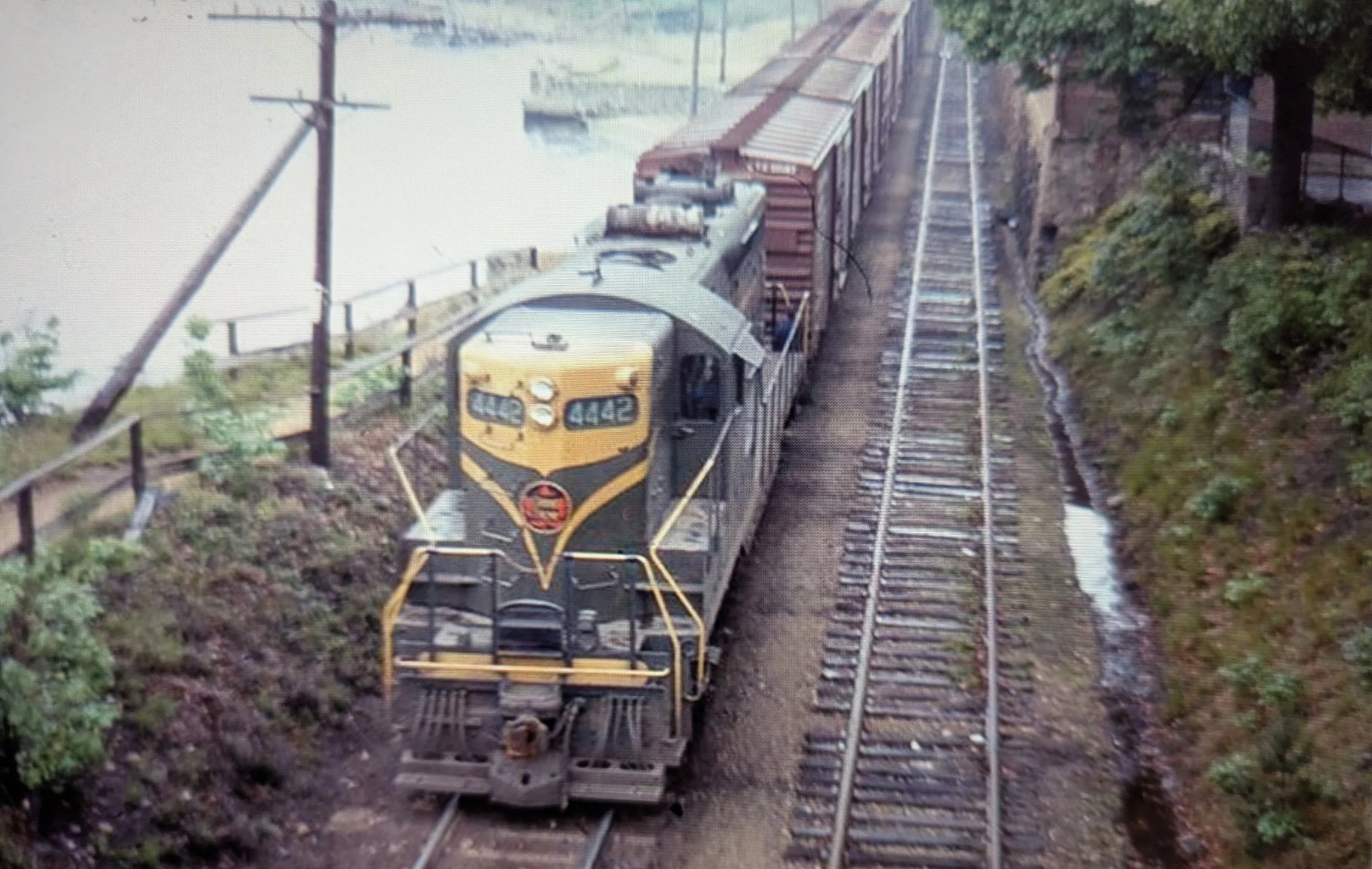
Fast-forward to 1968. Ron DeFilippo took this photo from the Riverside Park footbridge providing access to the small beach hidden behind the string of boxcars. We are facing south.
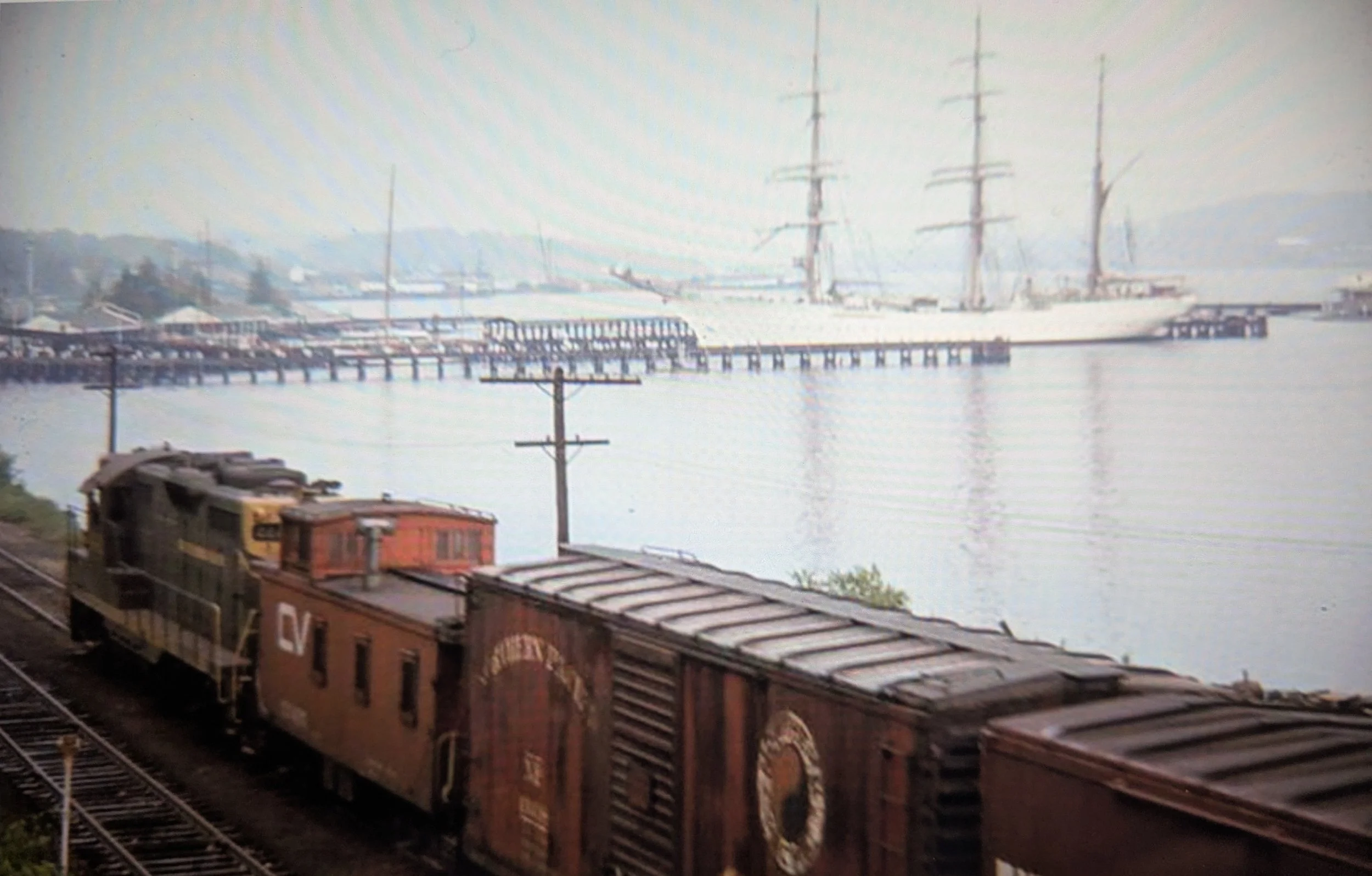
Now we are facing north as #4442 continues to switch cars in making up the train for Palmer, Mass. (my guess). It looks a bit foggy and wet. The Eagle is tied up at the main pier behind the Coast Guard Academy. On Sundays, this training vessel was open to the public… at least it was in 1947. My mother remembers first seeing my father in the engine room one Sunday reading a comic book.
My thanks again to Ron DeFilippo.
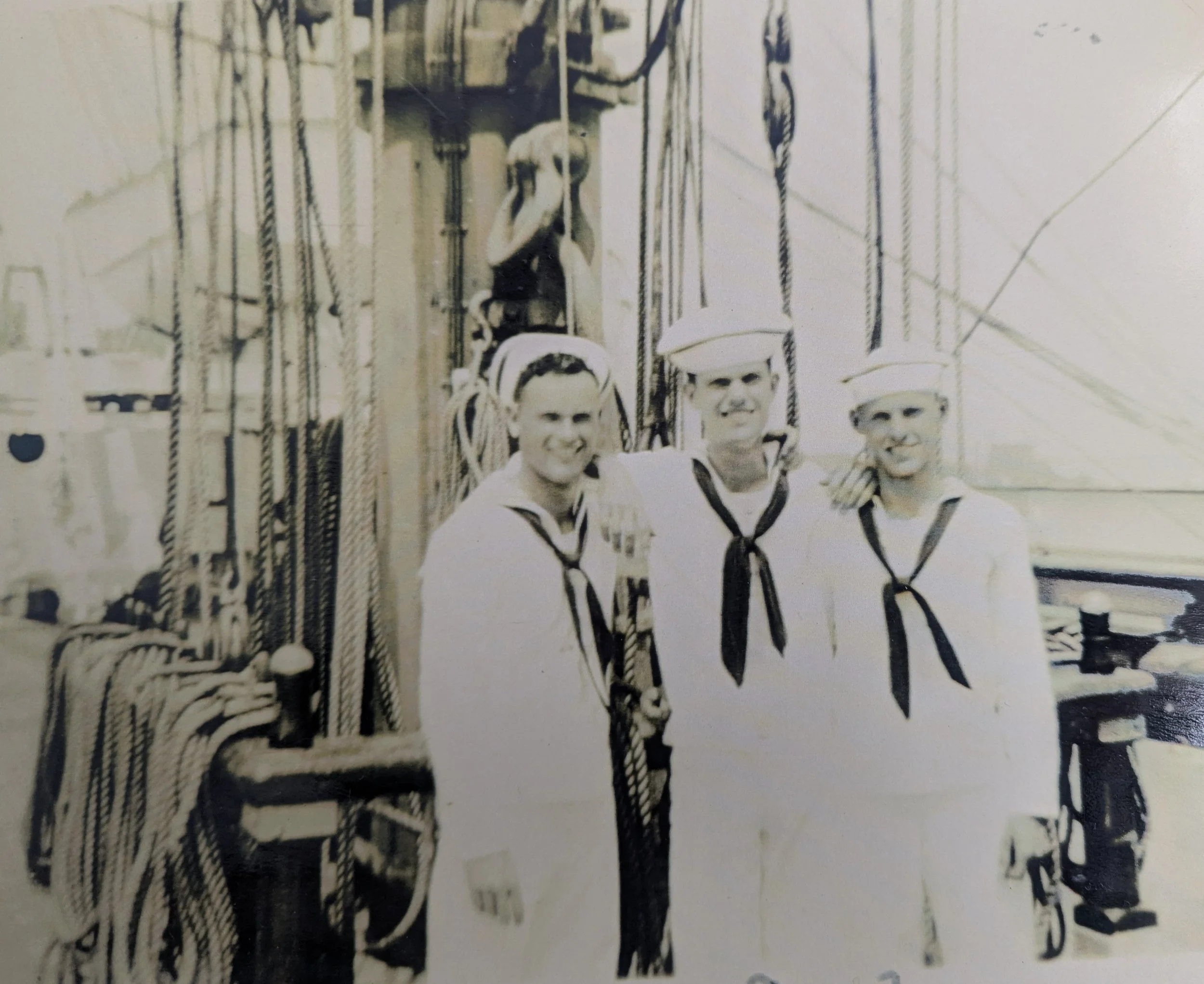
My father on the left with two shipmates.
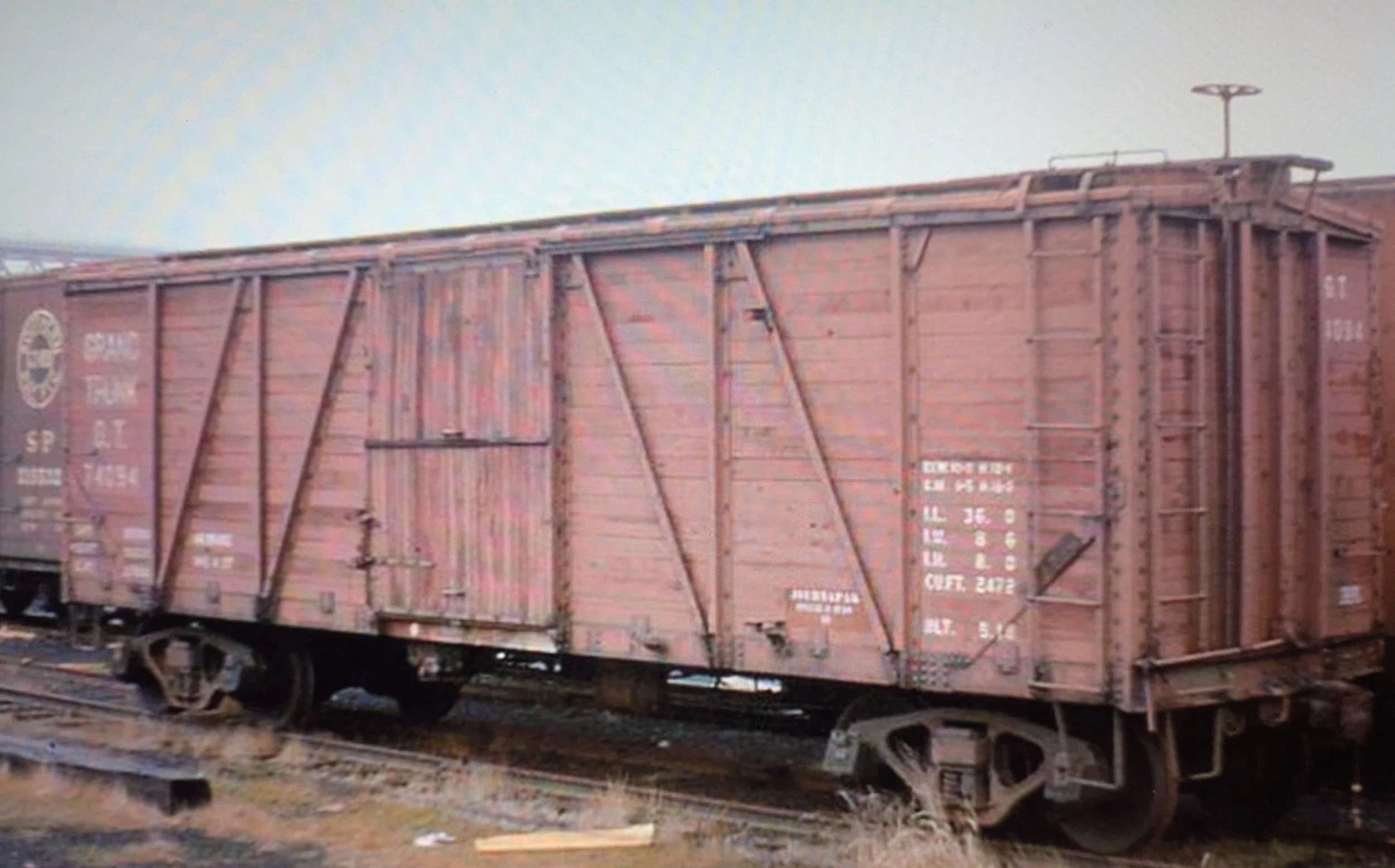
Let me deviate for a moment away from sailing vessels and locomotives to rolling stock. In this 1968 photo from Ron DeFilippo, we‘re looking at a Grand Trunk boxcar built in May of 1918. Notice the side ladders, the roof walk and the brake wheel to the right. Despite the hazards of snow and ice, brakemen were often required to stand atop cars in motion while setting the hand brake. As mentioned on the Hallam Street page, boys and girls from East New London would copy the brakemen in climbing atop the cars, still or moving, and ride them sometimes across the river to Groton. The increased sway of empty boxcars at speeds between 5 and 8 m.p.h. over jointed rail gave these young riders the illusion and thrill of surfing.
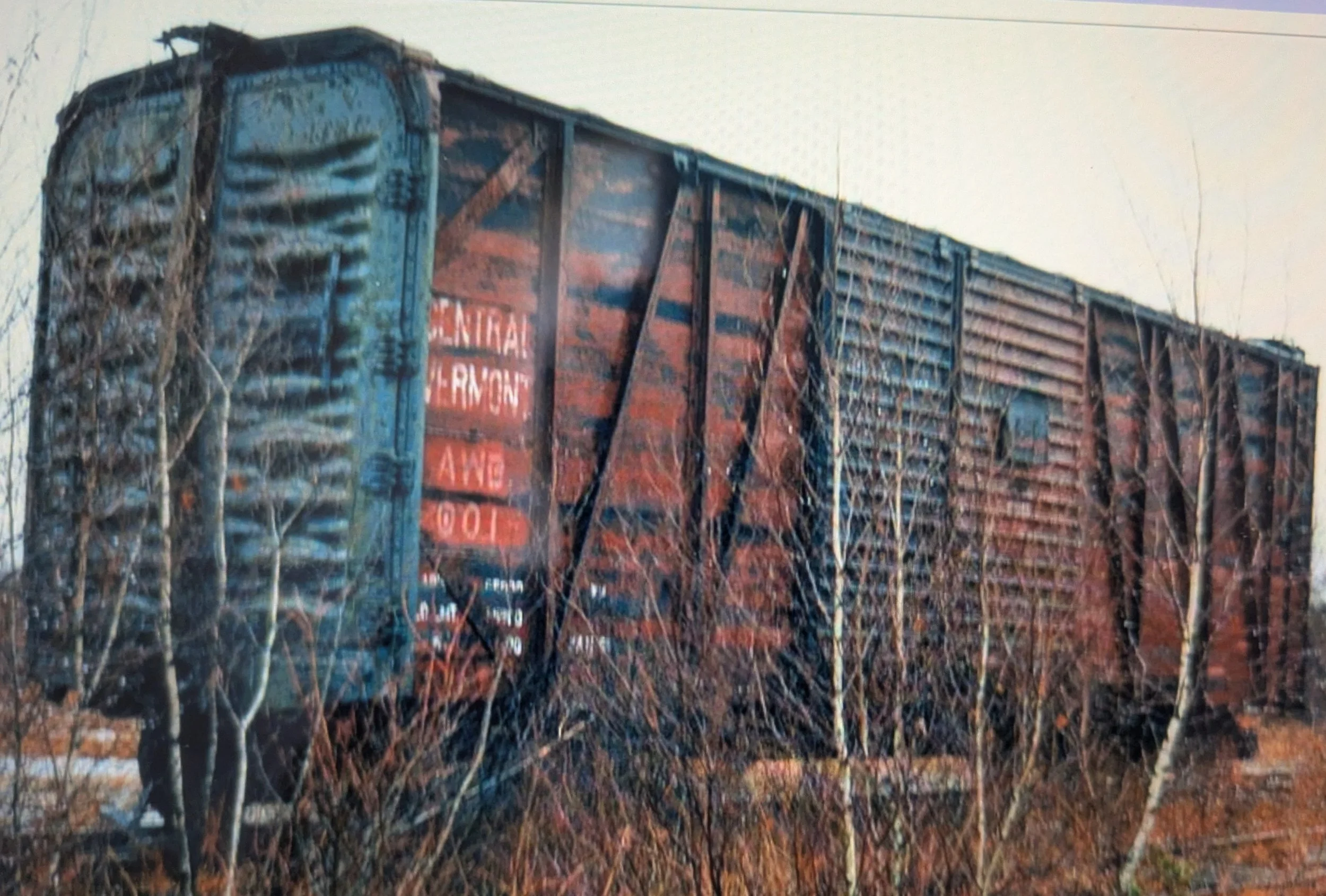
One more example of old-school rolling stock, this one captured by the camera of Mark Beebe in 1993. Look at the double side doors and clamshell-like end doors… can you guess what these cars carried in the teens, twenties and thirties?
cars, two at a time, end to end
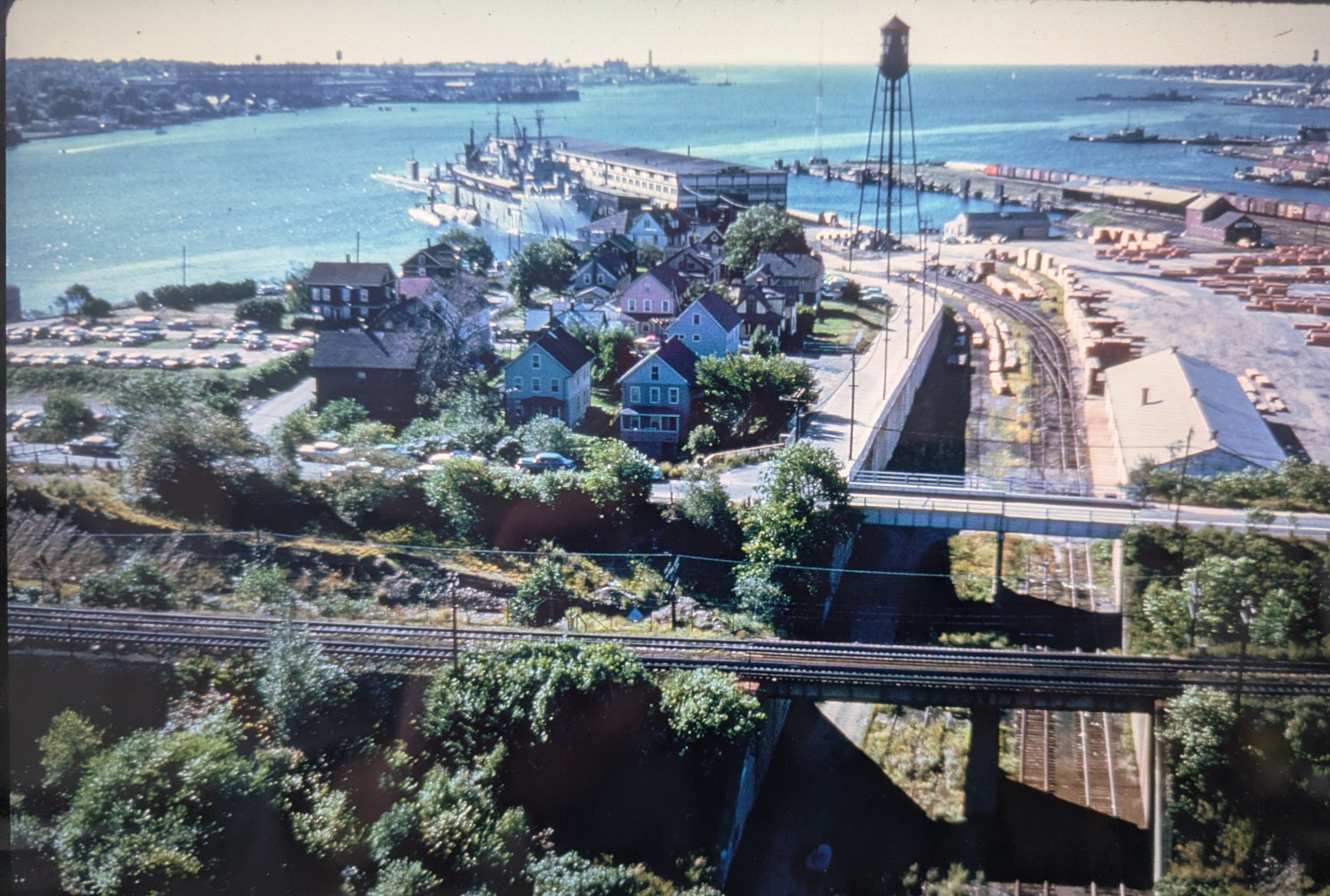
Views from the bridge. Looking south, downriver. Foreground to background: the New Haven shoreline route, State Pier road. CV tracks leading into Warehouse #1. Sub tender Fulton, AR11, with subs, State Pier water tower, CV freight office, CV pier, Electric Boat and Pfizer on the left. Perhaps my favorite view… definitely the most interesting. Credit to George Oldershaw, 1961
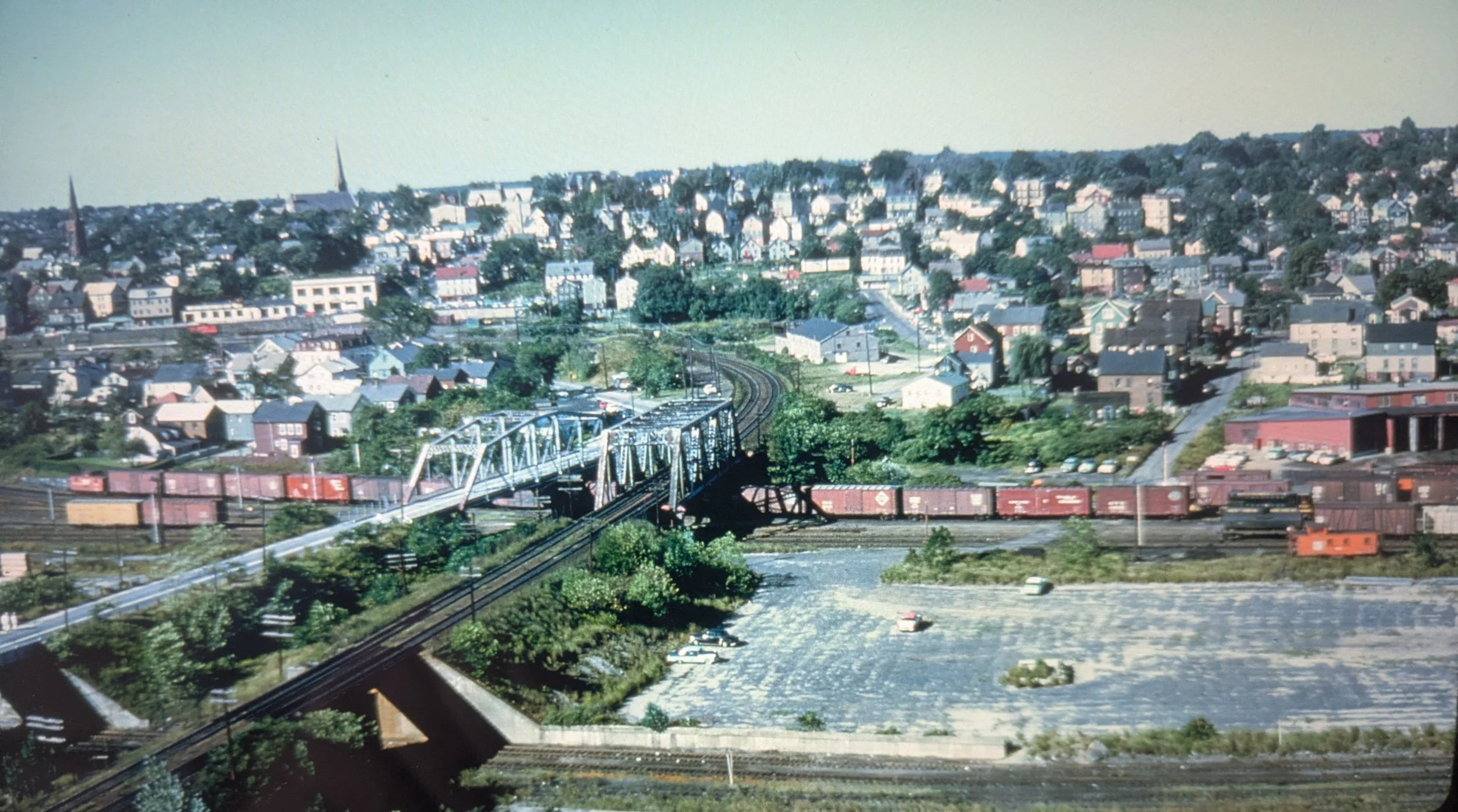
Now turning to the southwest. A string of interchange boxcars with a New Haven caboose waiting to be pulled and shoved in place by #8162 sitting by the roundhouse. Steam is gone and in 5 short years so will nearly everything else, minus the church spires.
Credit goes to George Oldershaw, 1961
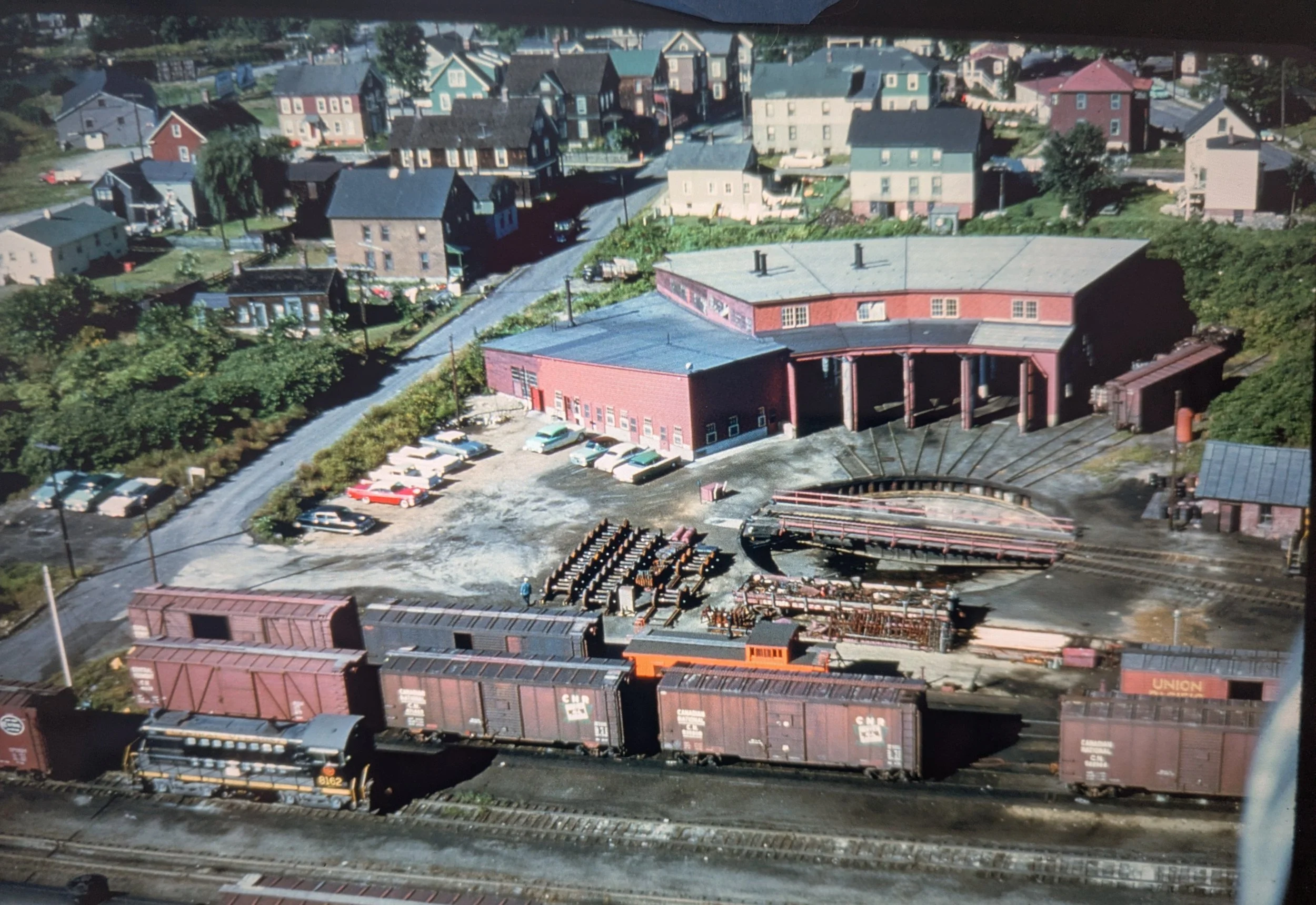
Walking along the south side of the bridge toward New London. #8162 is in the left foreground. Note the outside braced wooden boxcars on adjoining tracks, the 4 empty stalls of the roundhouse, the empty turntable - there is no reason to turn a diesel. Note also the employee parking lot abutting 4th Street. Harrison Street runs left and right a couple of houses above. Credit again to George Oldershaw, 1961
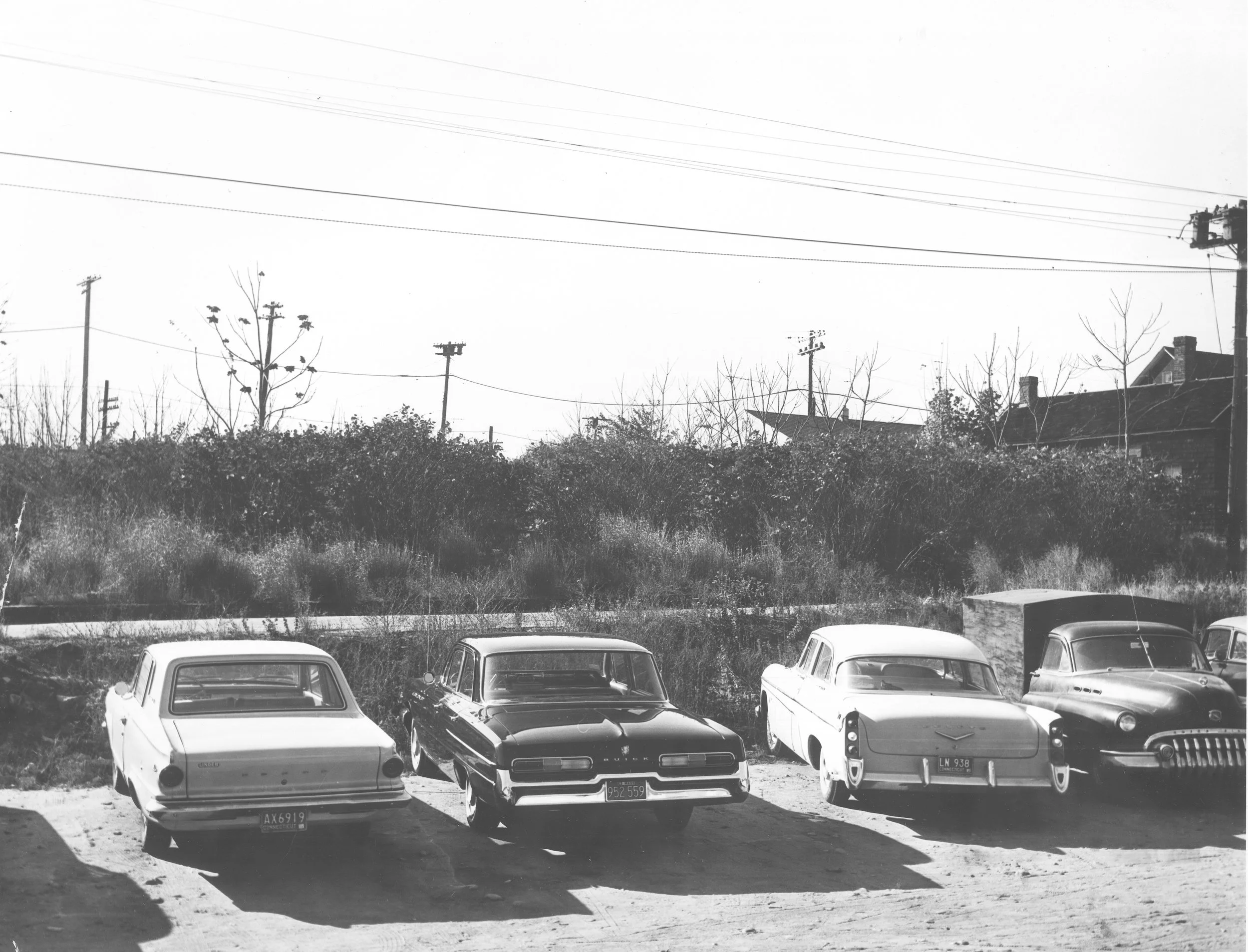
Employee parking along Fourth Street. Courtesy CONL, 1964
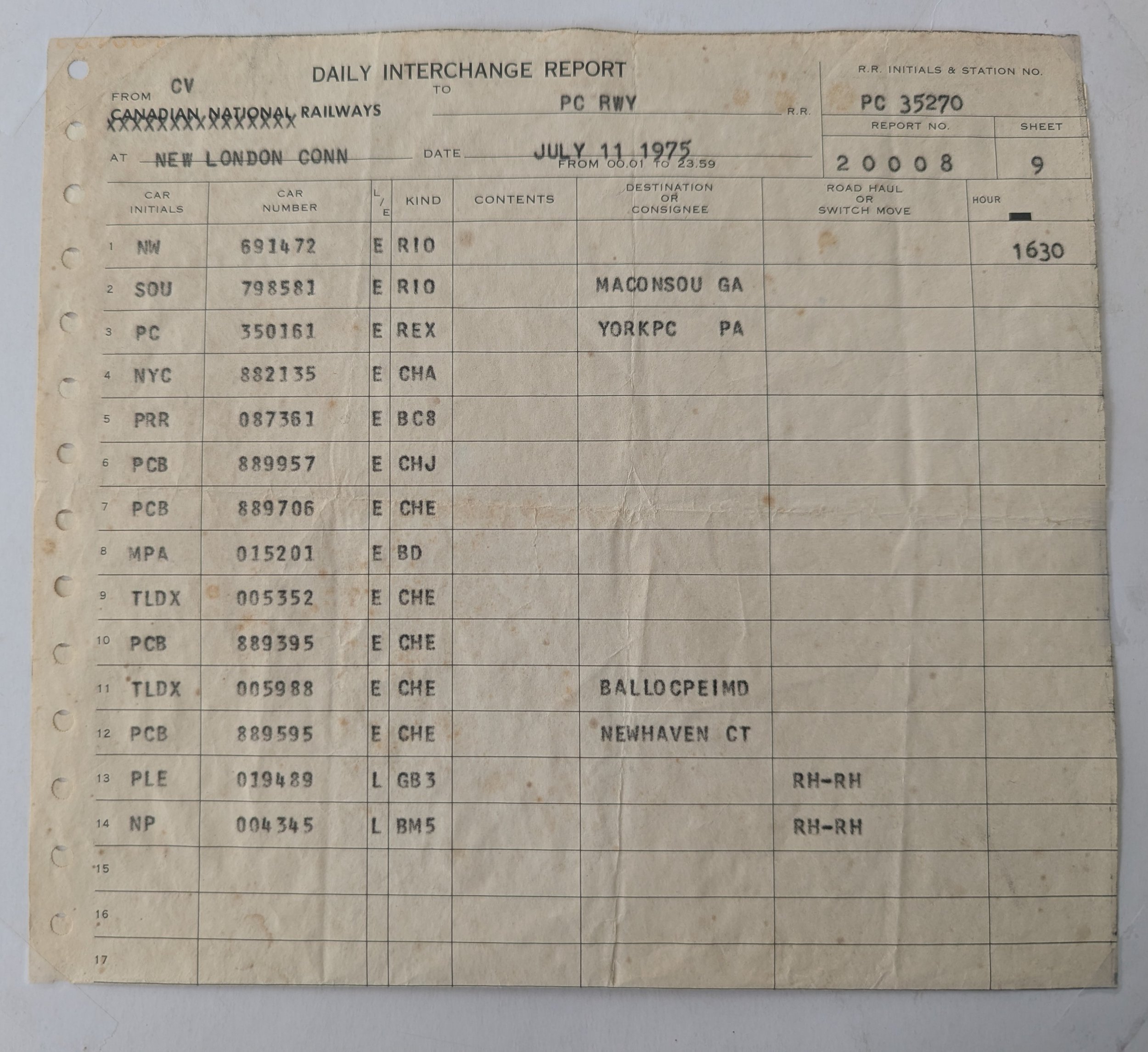
Trackside paperwork that sometimes shows what you‘ve missed while away… cars moving from the CV to PC, mostly grain carrying boxcars and covered hoppers coming from K&L Feed in Franklin. A sheet of paper kept for over 50 years… important, right?
and now there are two…
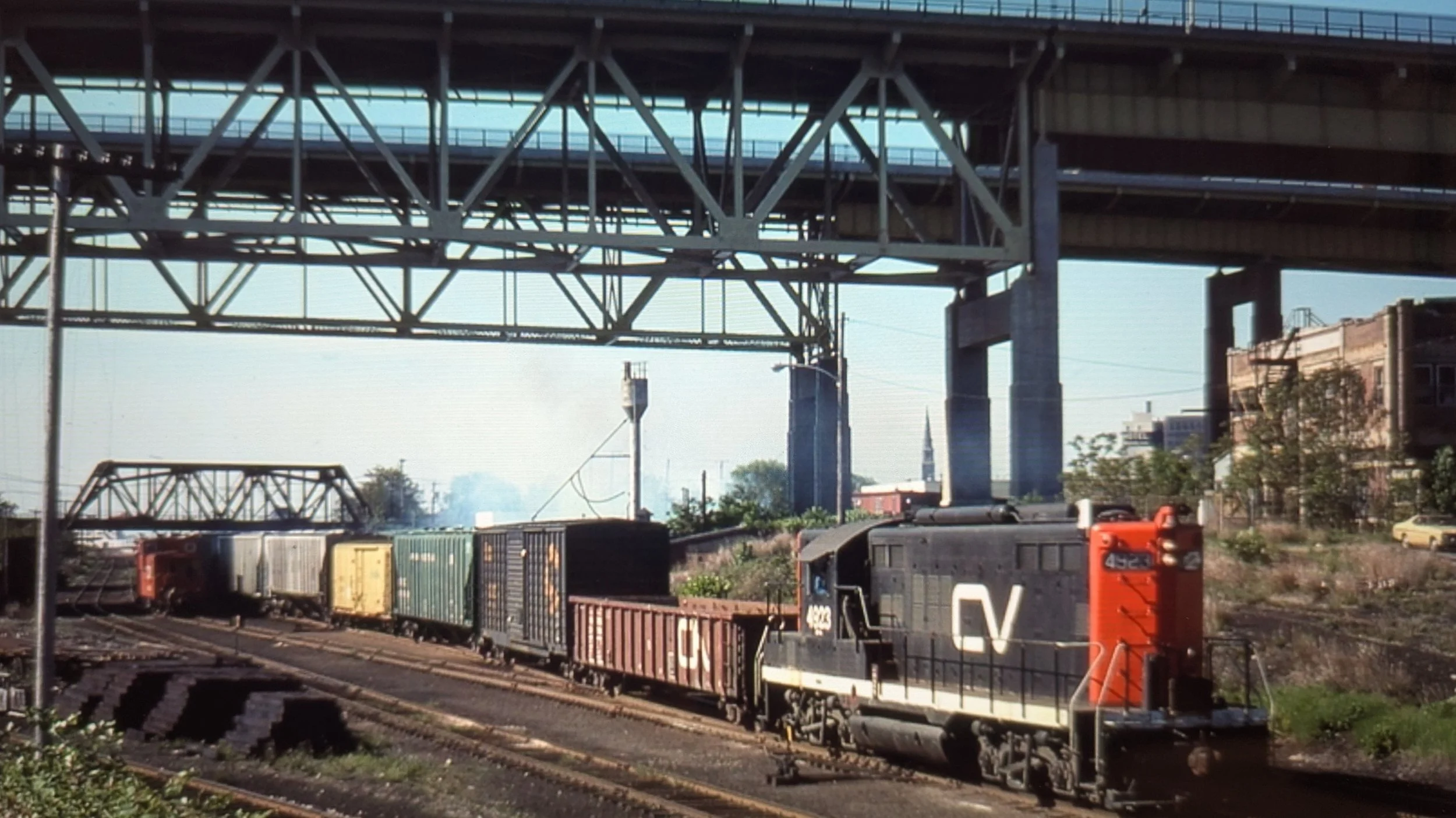
It is now June, 1976, and there is a second span overhead. #4923, a GP9 minus dynamic brakes is pulling forward a string of cars to be coupled to the waiting caboose (or van). You can just make out the brakeman. Hand signals are used to communicate with the engineer and sometimes a third crew member is needed as an intermediary. The train‘s consist is less than a dozen cars, meaning it is modt likely a local (to Willimantic and back), and the white flags signal an extra, non-timetabled train.
Notice the sand tower. Every locomotive has an onboard sandbox that feeds sand onto the rails to avoid wheel slippage and loss of traction. Credit Ken Patton with the photo
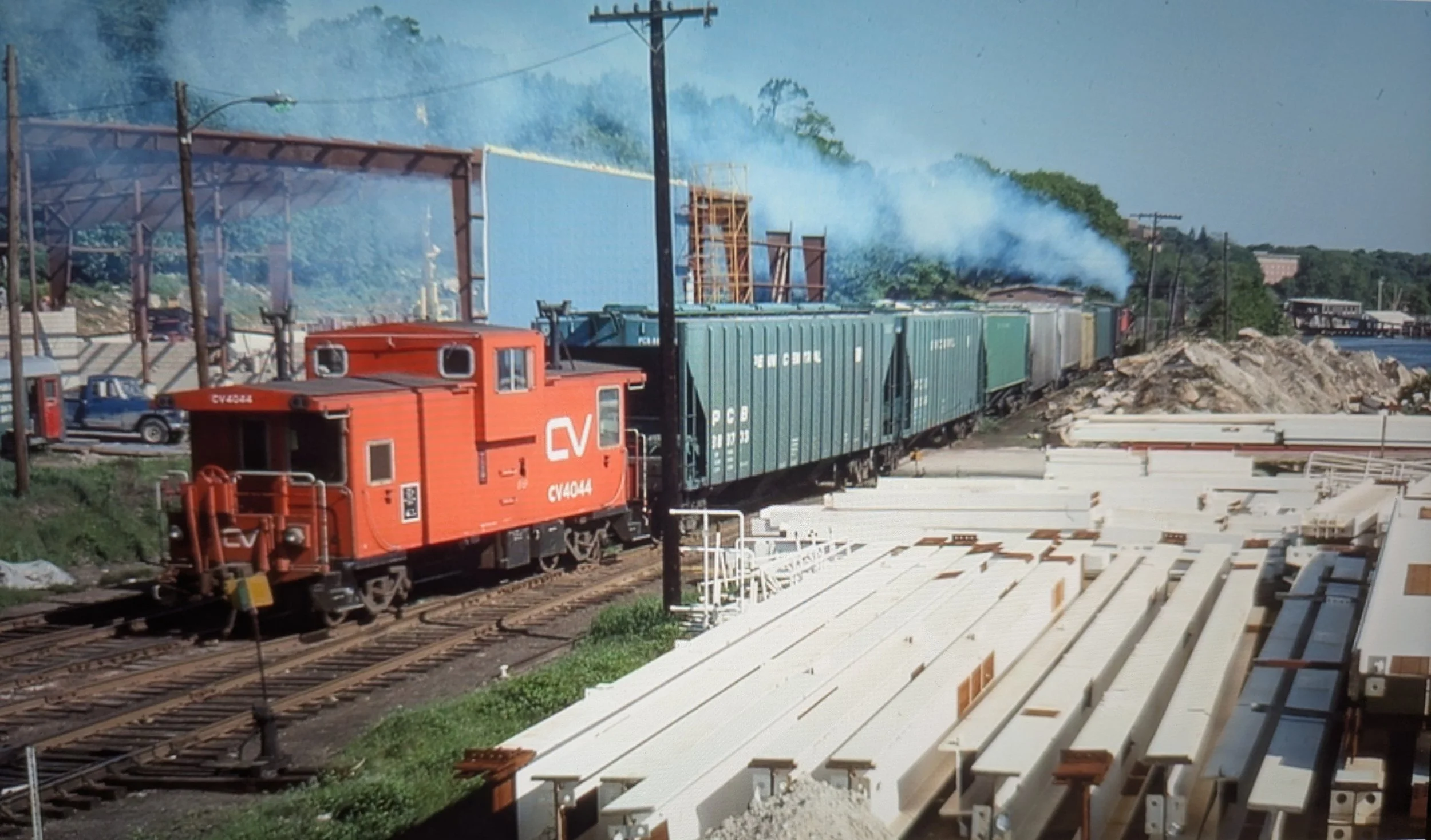
and it‘s off to the races!
Van #4044 takes up the rear as #4923 builds up speed. Most cars are headed for K&L Feeds in Franklin just south of Murphy road. F &F Distributors is erecting a rail-served warehouse on the left. The steel I beams on the right belong to Thames Valley Steel. Credit Ken Patton
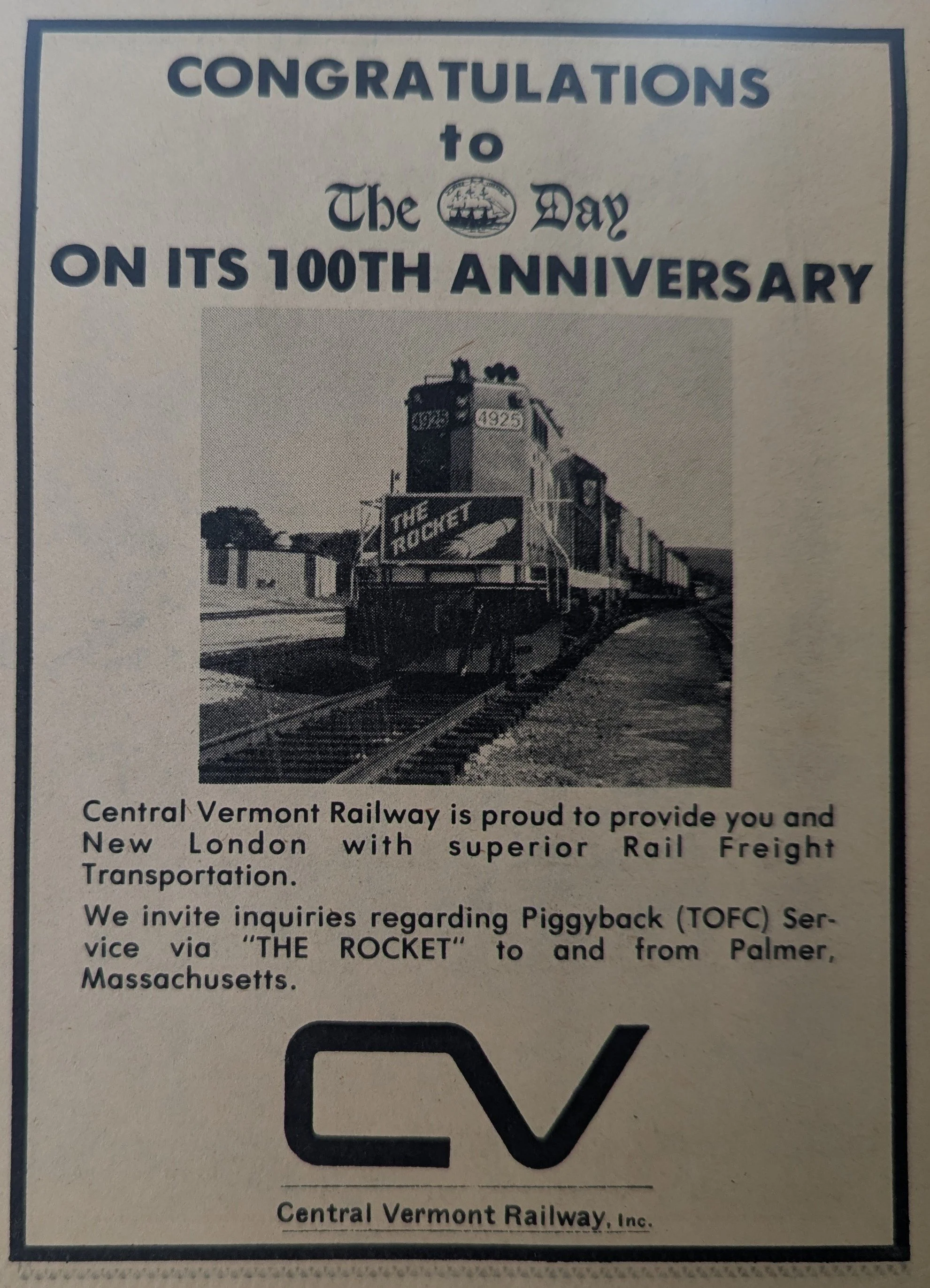
It is now 1981, and The Day is celebrating 100 years as an independent newspaper and a public voice for the people. Many local businesses supported this event with a display ad in a special edition. The CV was no exception. The Rocket was a marketing initiative to move more tractor trailers between New London and Palmer, Massachusetts by rail. As far as I know this designated T.O.F.C. (trailer on flat car) train ran a couple of years with mixed results. Perhaps either the market wasn‘t there or the handling facility was lacking.
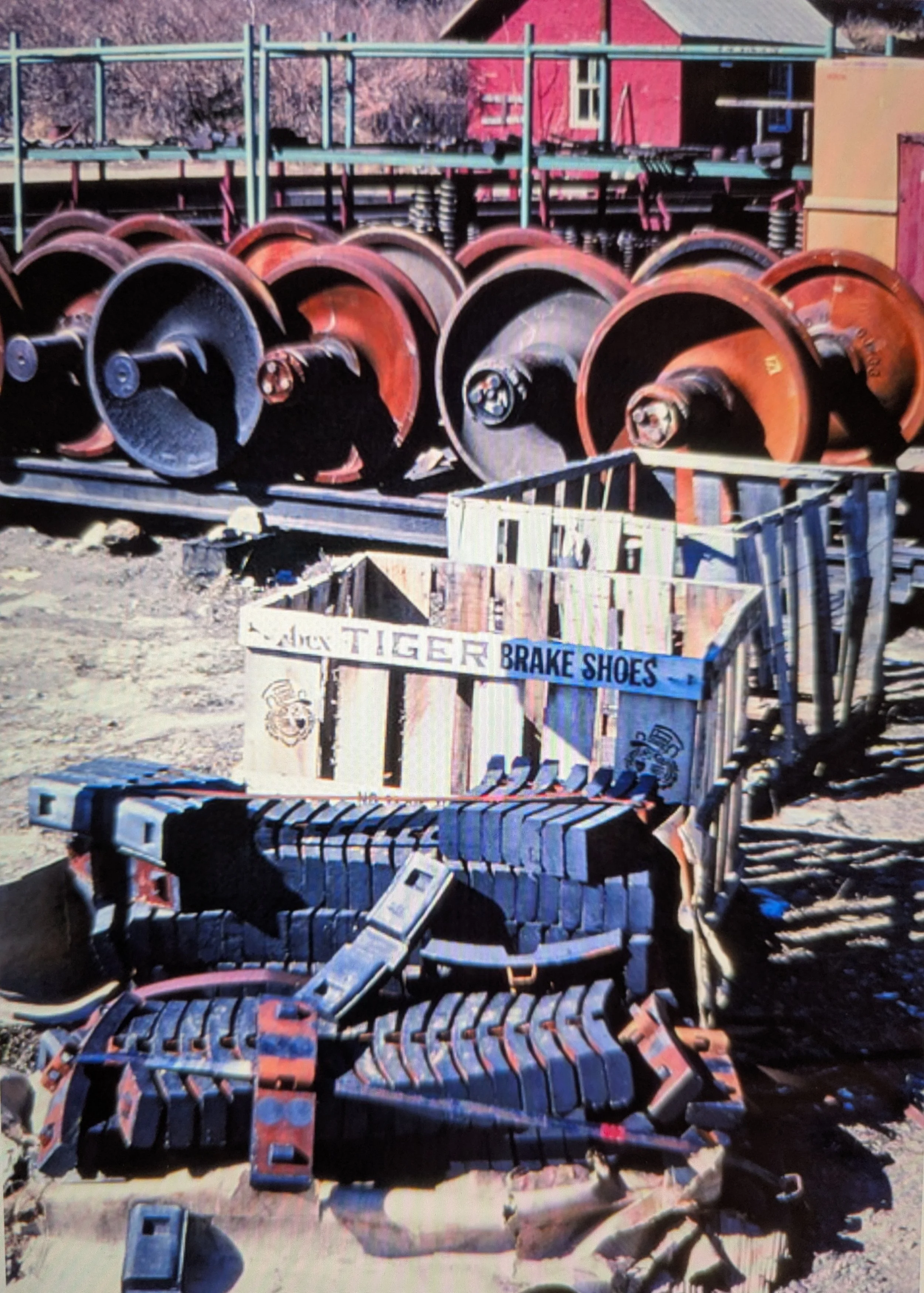
Though not as busy as in the steam days, the CV did maintain a rip (repair in progress) track or two. Hence the workers needed new wheels with roller bearings and brake shoes.
Thanks to Bruce MacDonald 1982
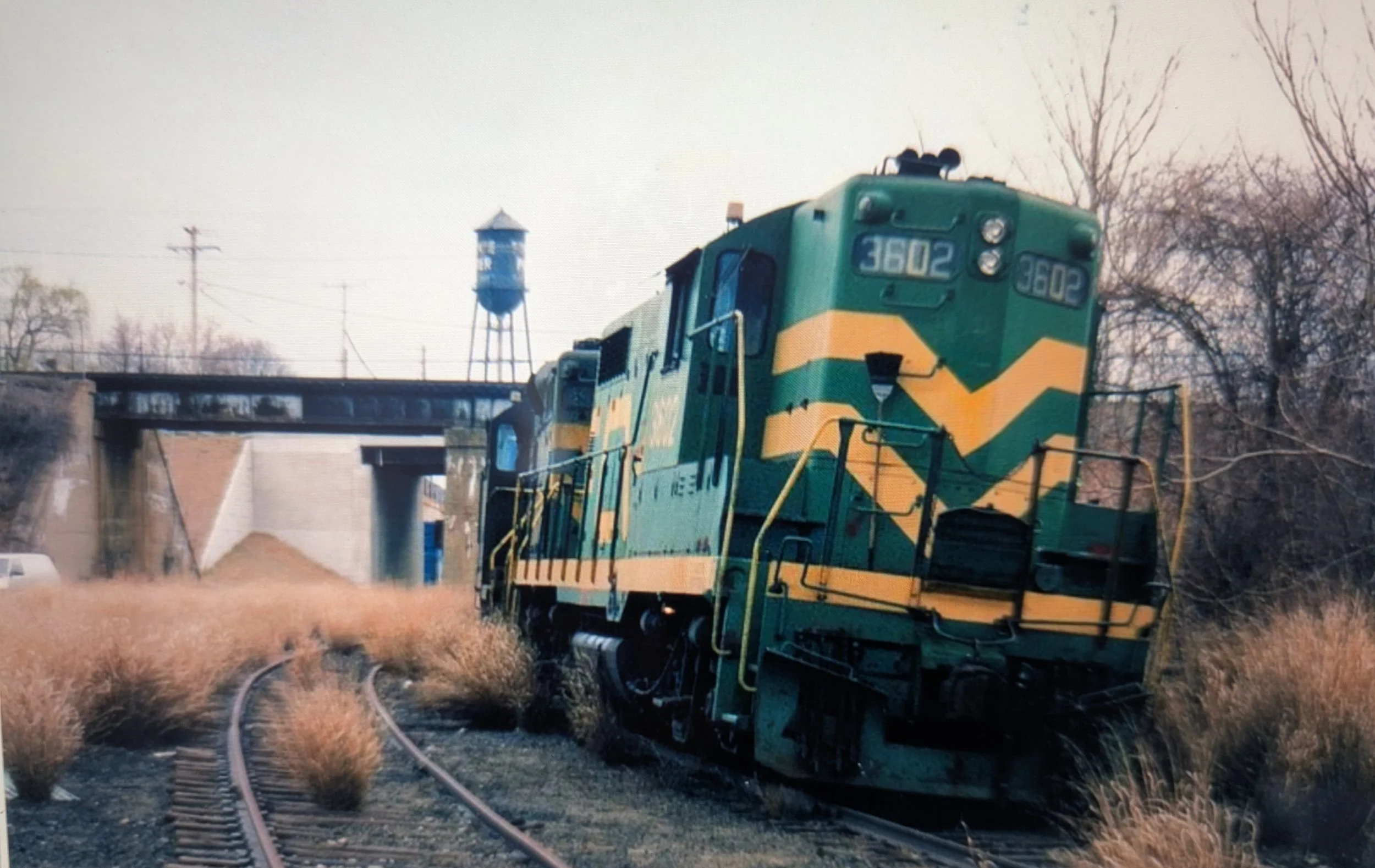
#3602 is seen here working the State Pier lead in 1988.
Credit goes to Mark Beebe
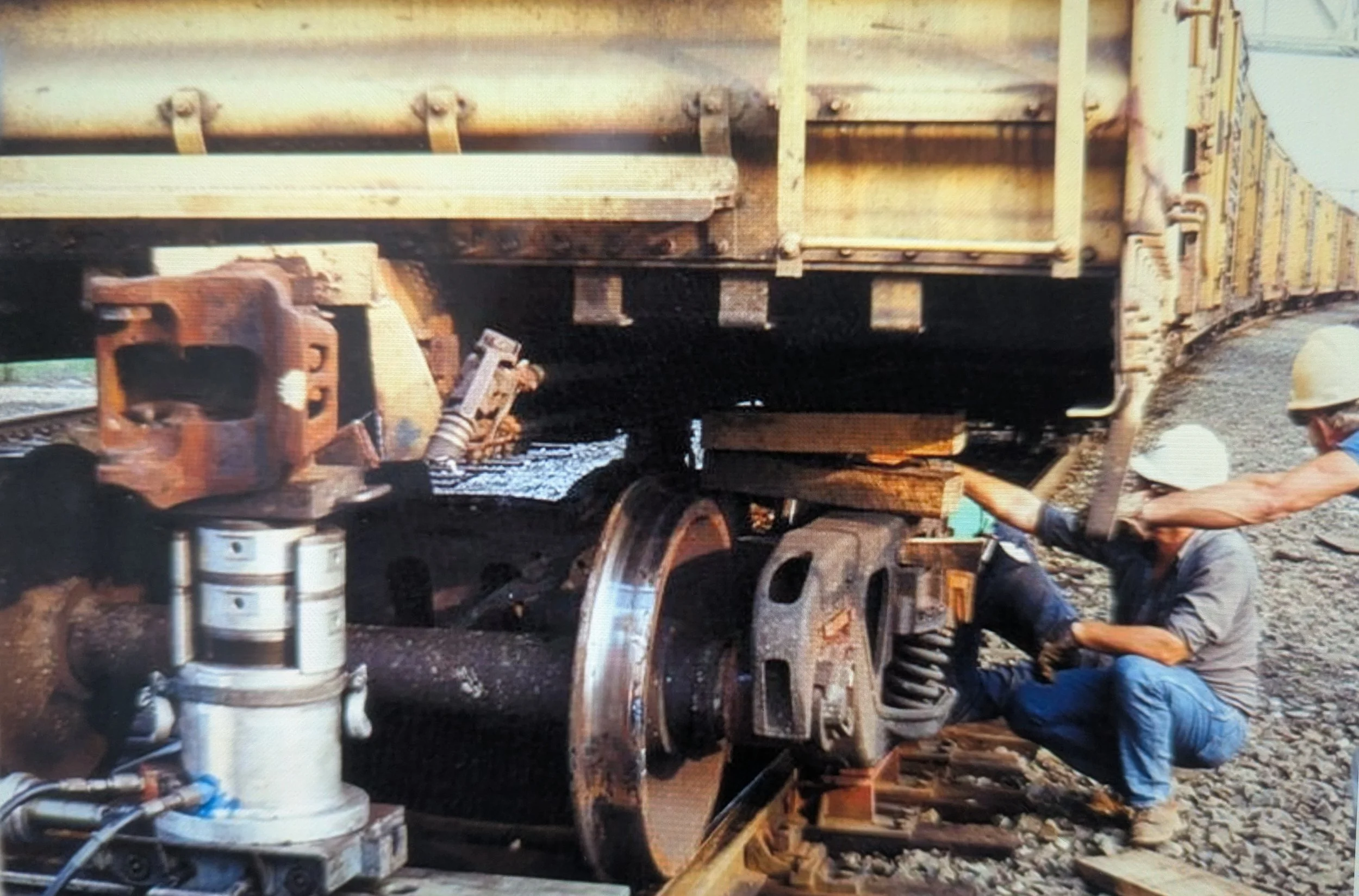
and sometimes the wheels leave the rails… Workers have raised the car body with a hydraulic lift. Fortunately this derailment happened at a slow speed and the weather is cooperative. Credit to Mark Beebe, 7/19/94
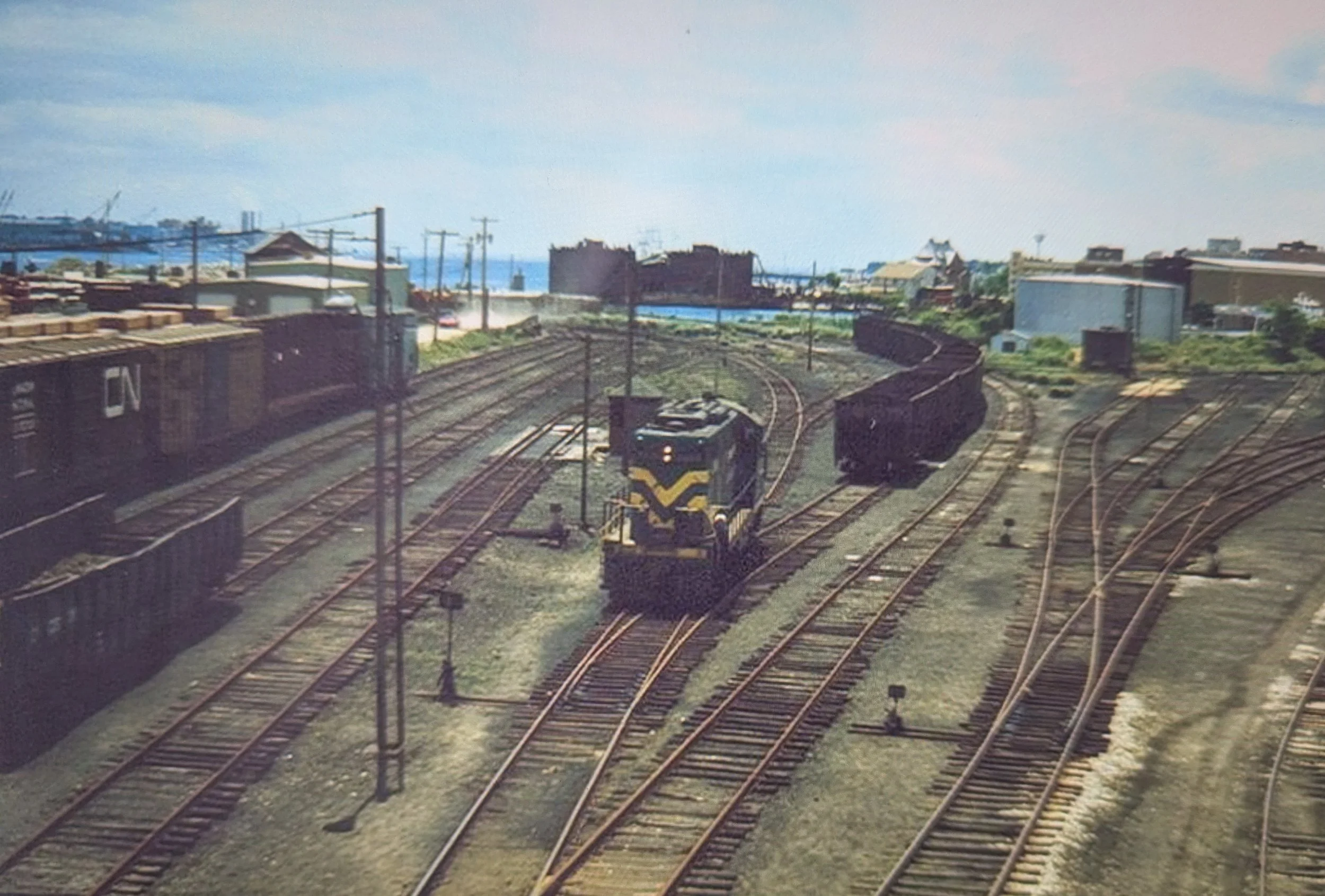
The south end of the yard. Note the scale house behind the engine and the floating dry dock beyond. The fuel tank to the right keeps the diesel locomotives running. Mark Beebe, both photos, 1987
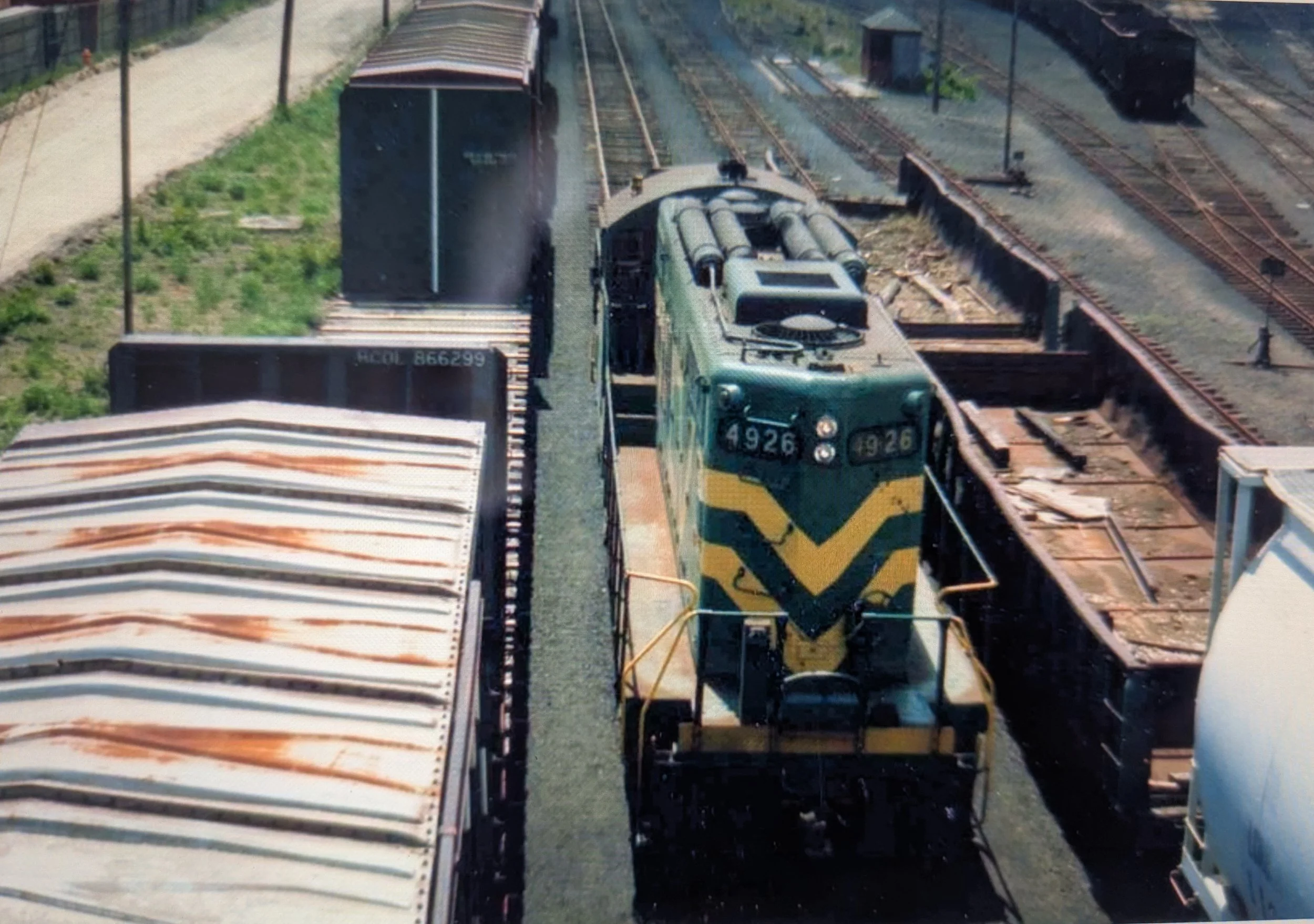
#4926 in a close-up… and no, they don‘t paint the tops of boxcars. Notice roof walks are no longer installed (or legal).
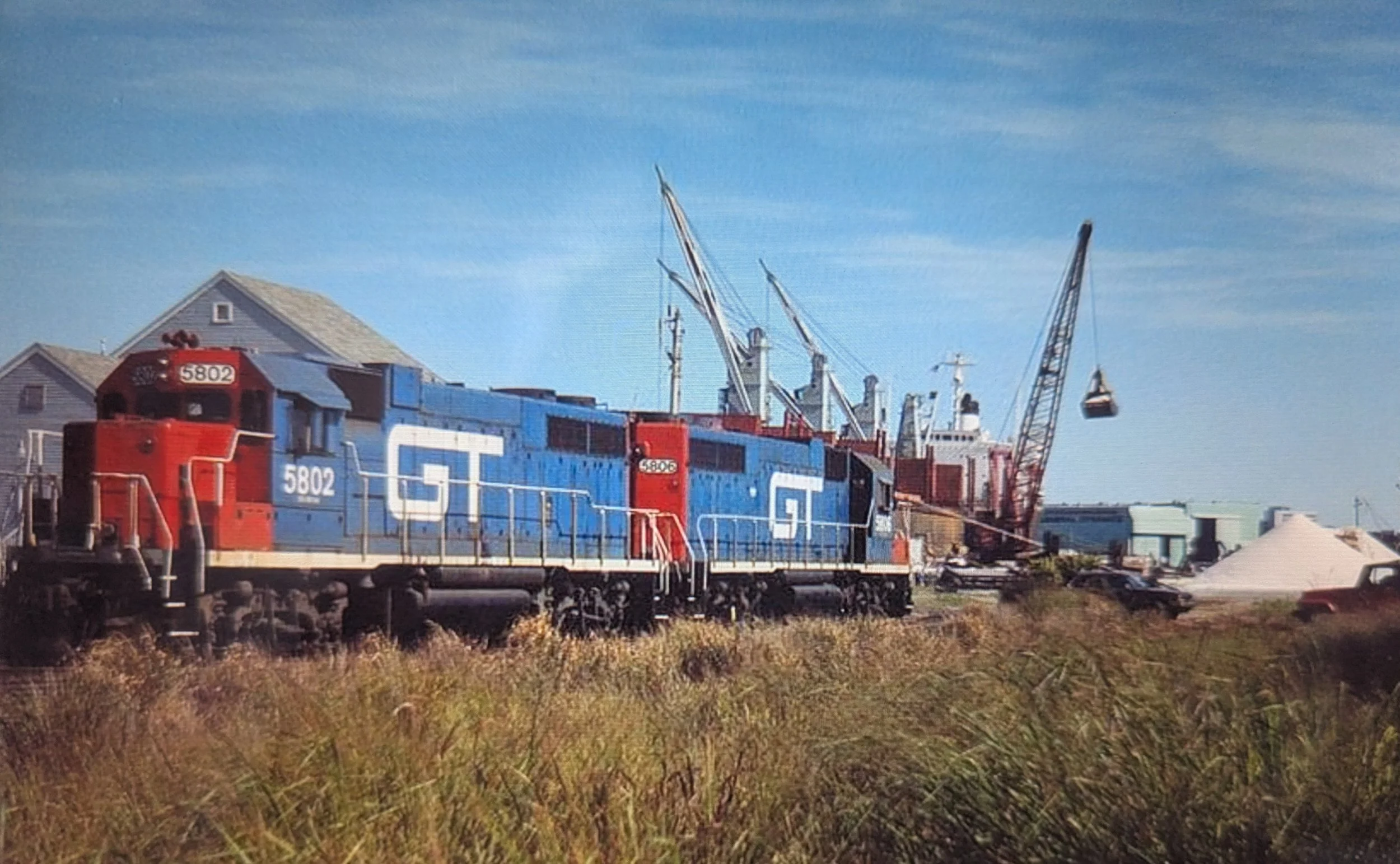
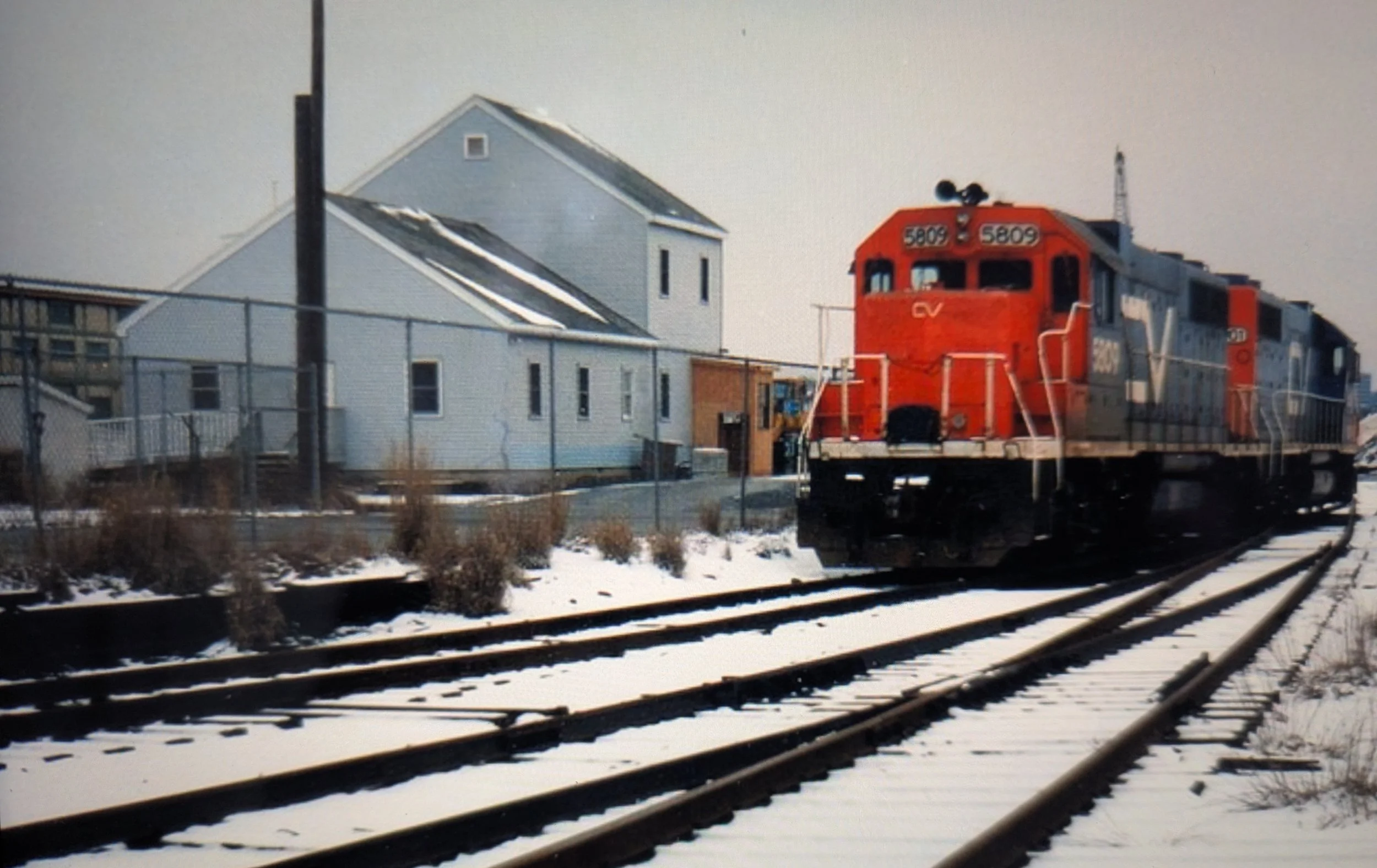
Two Grand Trunk Western await their next assignment by the former freight house while road salt is being unloaded from a ship tied up at the State Pier. GTW, like the CV, is part of the Canadian National family of railroads and their motive power often mingles. The Green Monster of Electric Boat can be seen below the clam shell. Courtesy of Mark Beebe, 8/26/93
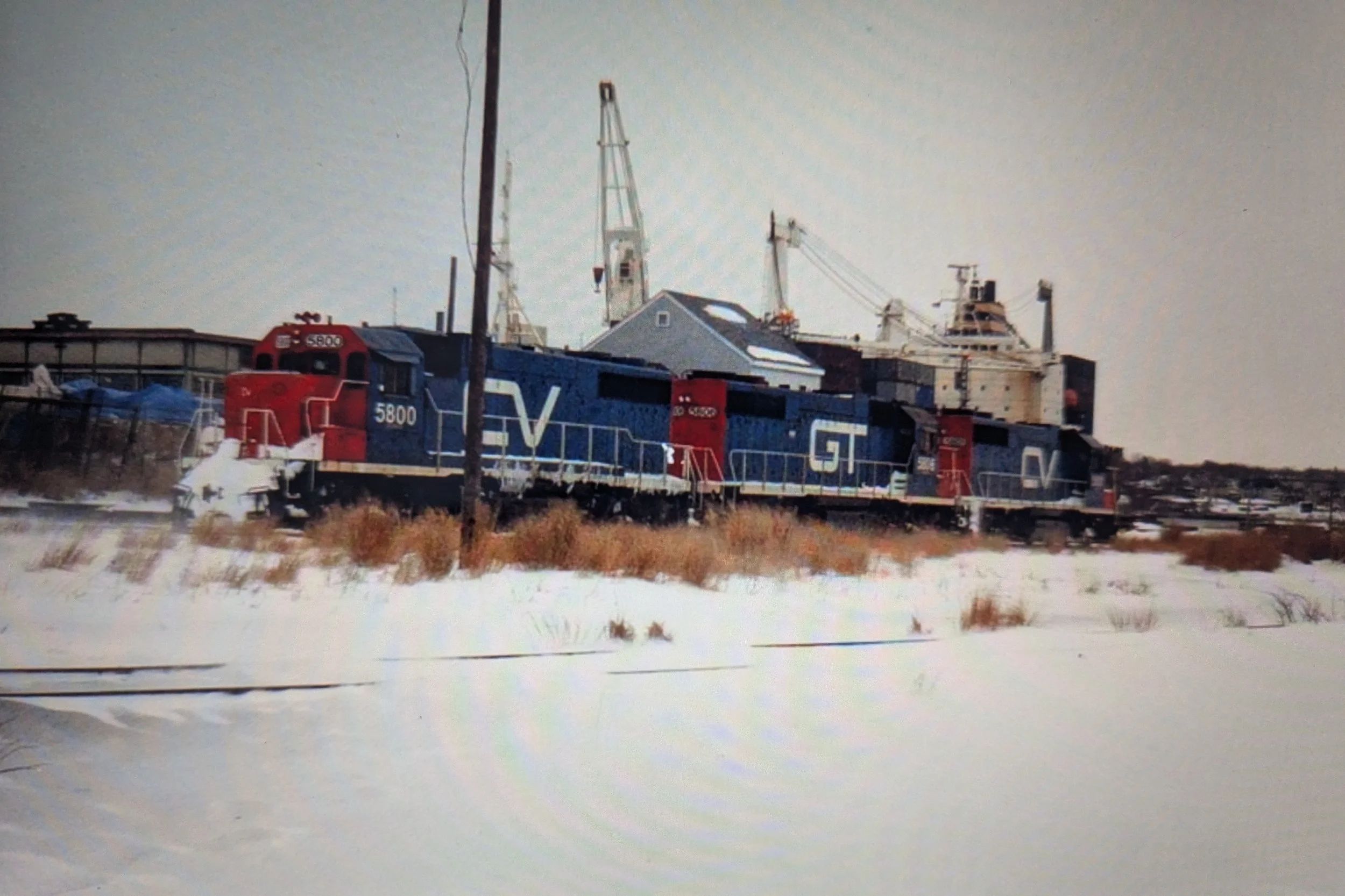
March 14, 1993, and 3 GP38s chill out by the Admiralty Terminal office. What is the cargo off-load today? Thanks to Mark Beebe!
the last winter shot, I promise.
Courtesy of Mark Beebe, Christmas Day, 1993
Special loads… between the Central Vermont and the New Haven/ Penn Central, there were some interesting loads on the interchange track. Here is a collage thereof that I hope you‘ll appreciate.
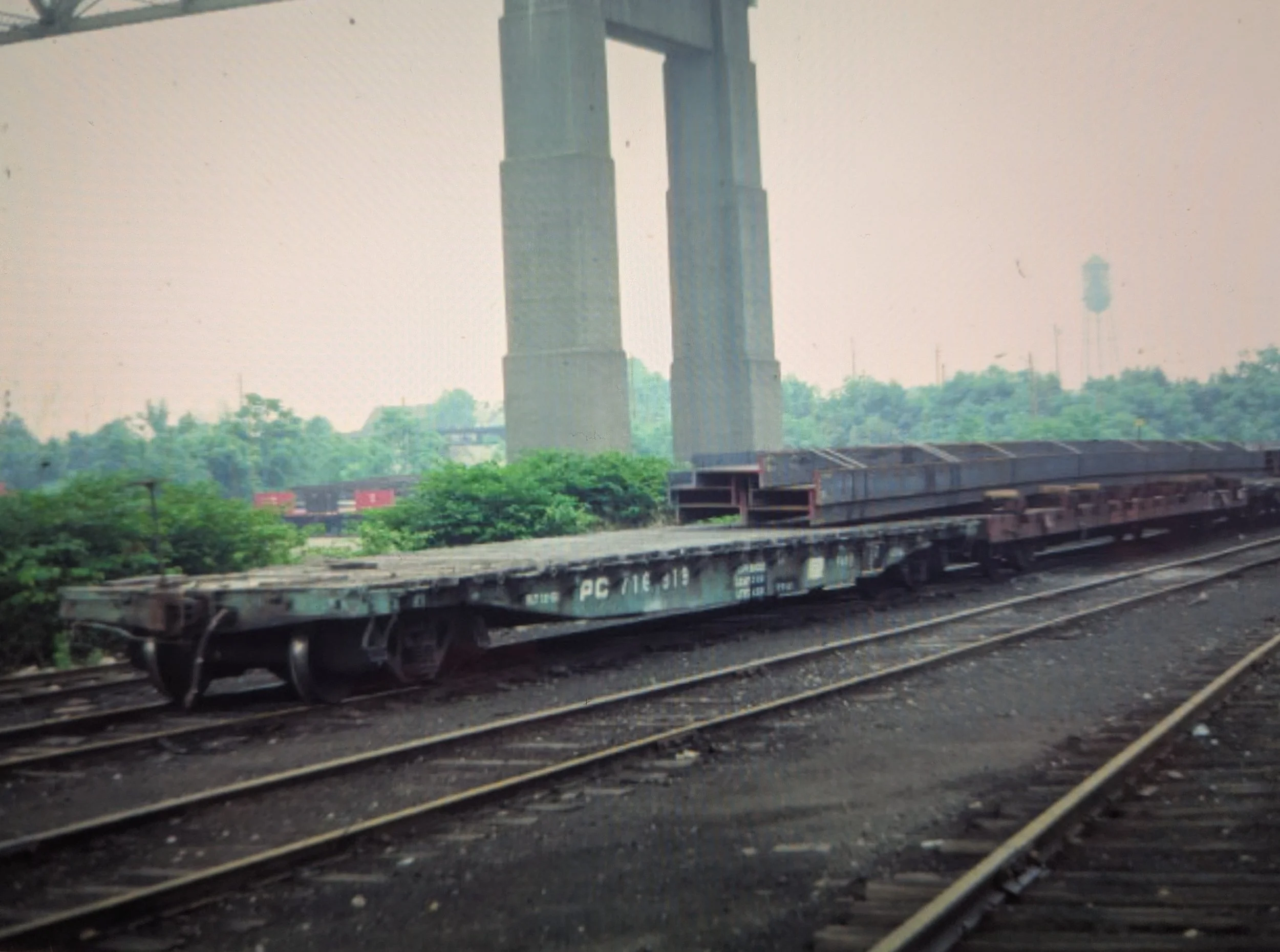
A Penn Central flat helps with the overhang from 5 oversized I-beams. Note the State Pier water tower.
Credit Raymond Williams, 6/22/87
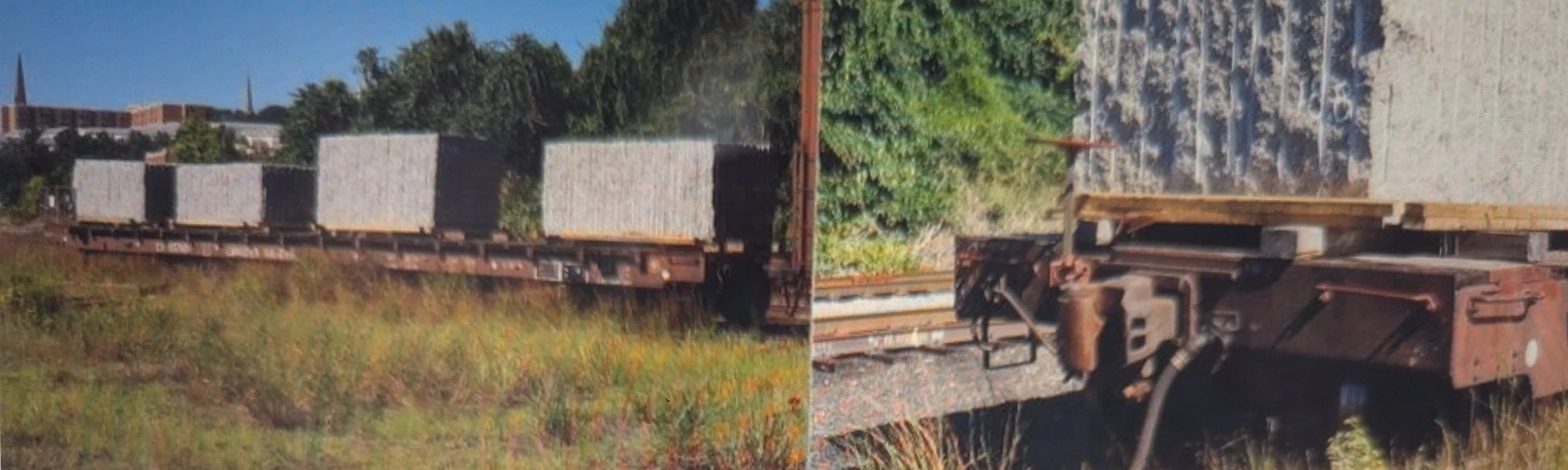
Occasionally, blocks of white marble would make their way south from the Barre area. Credit to Mark Beebe, 8/29/93.
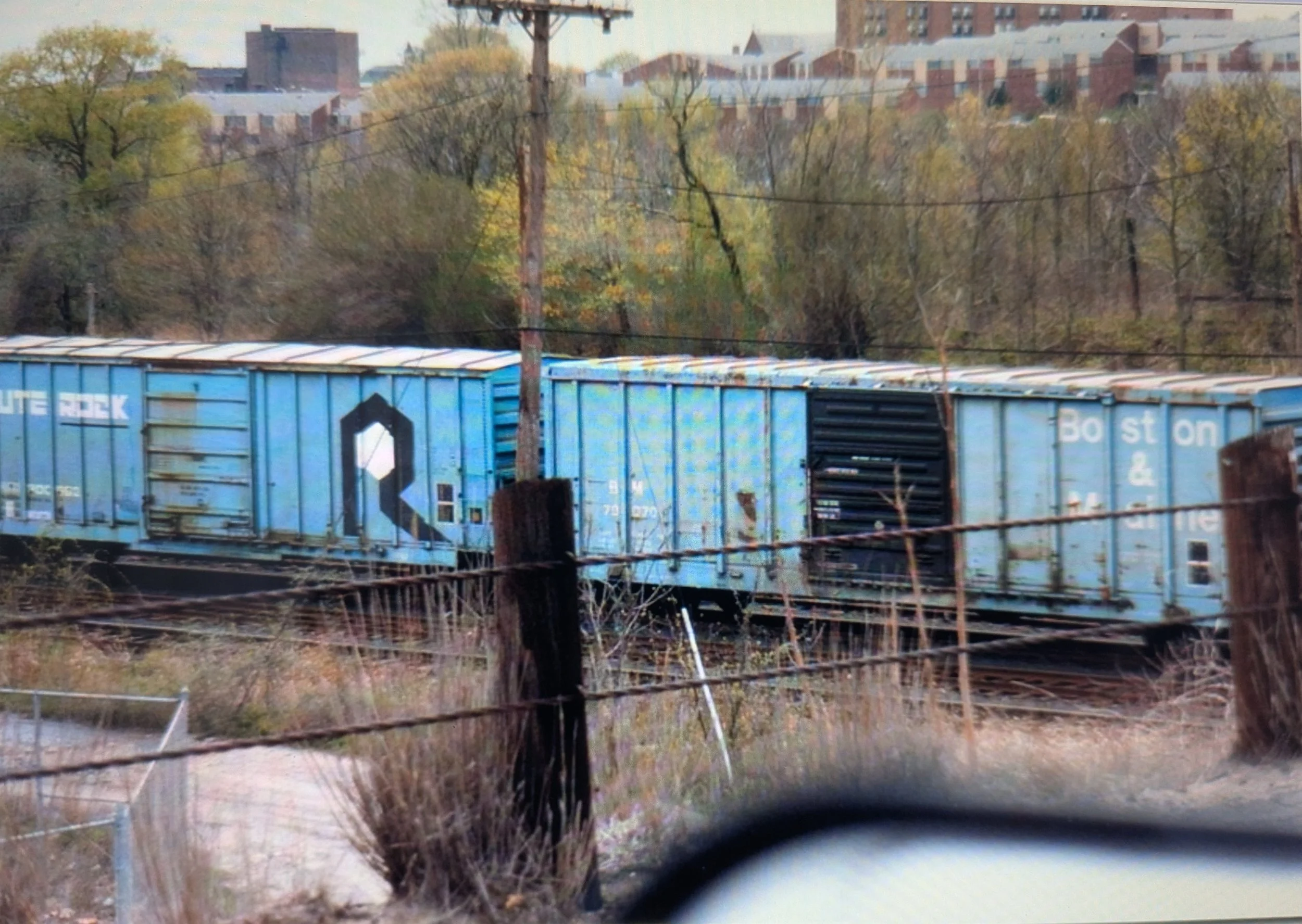
Before we reach the end, I wanted to include this picture of two fallen flags captured on the interchange track by Mark Beebe in 1982. A railroad company becomes a fallen flag when it loses it‘s identity through a merger or abandonment (or both). Unfortunately the two shown here are the Rock Island and the much closer Boston & Maine.
On February 1, 1995, the Central Vermont Railway, after a hundred years or so, ceased to exist. The routes and connections were maintained by the succeeding company, itself a conglomeration of smaller railroads. The CV is now the New England Central and we wish this group well in what has become a very challenging market.
And now some final visits…
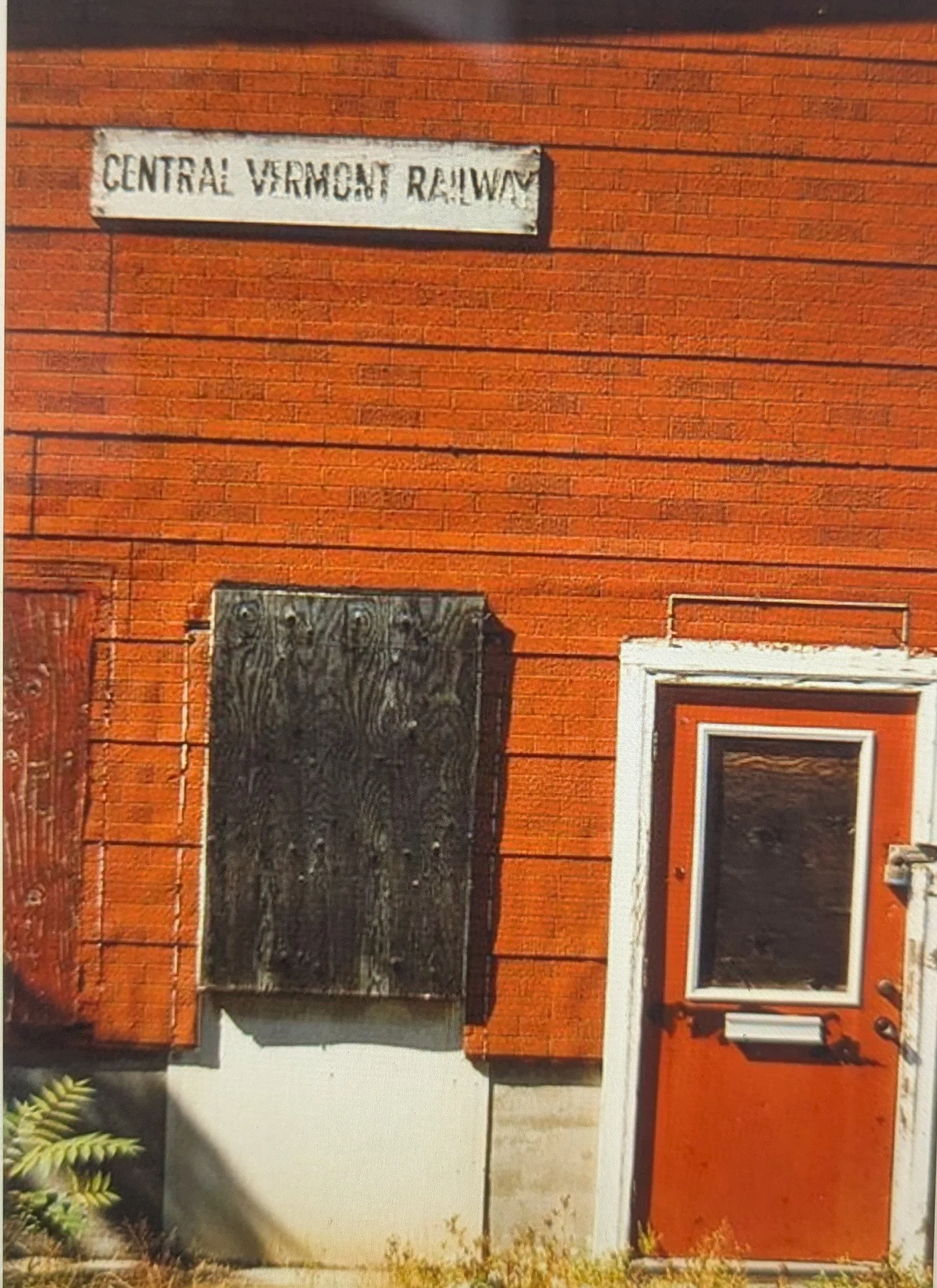
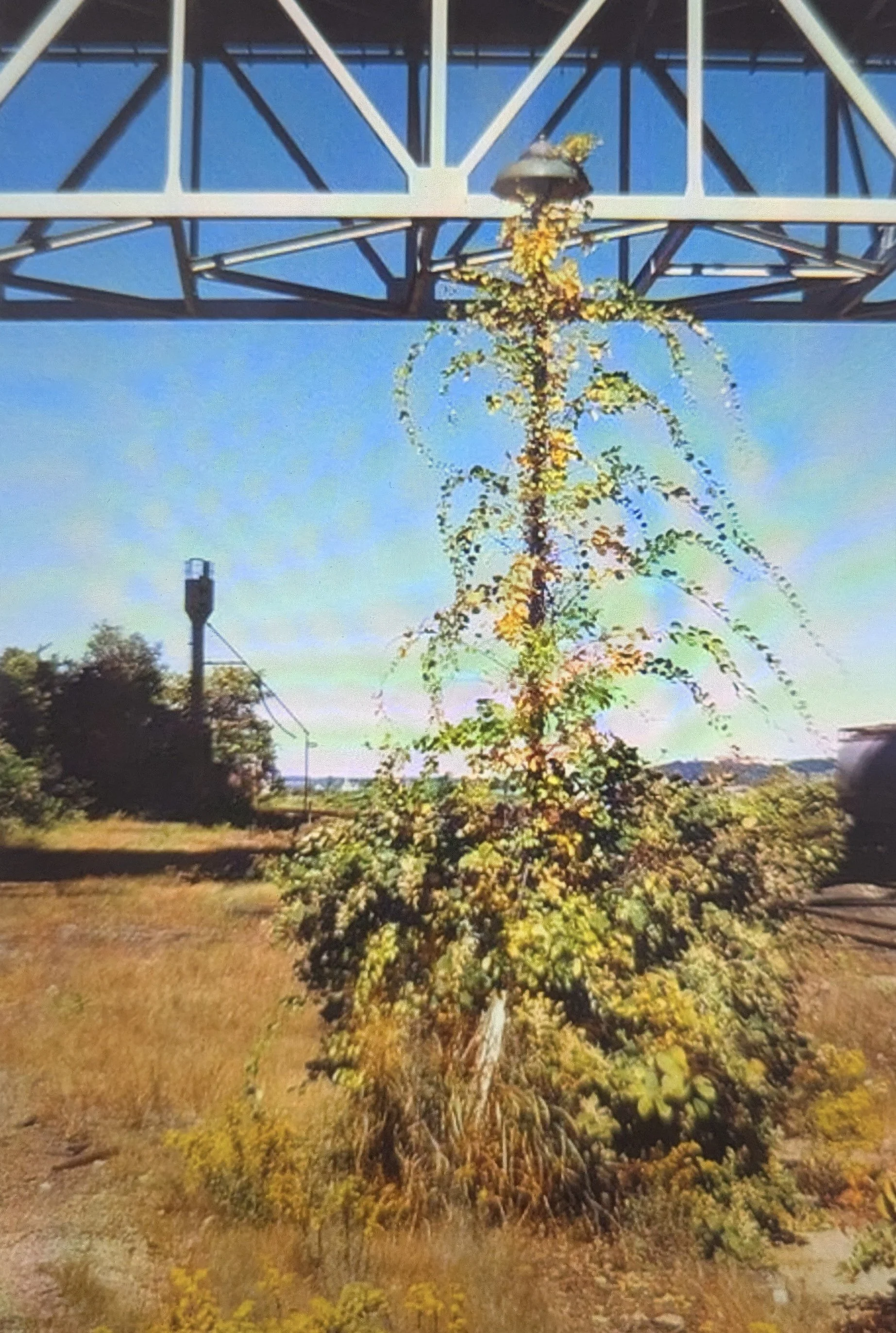
Both photos are courtesy of Mark Beebe, October 1, 1996
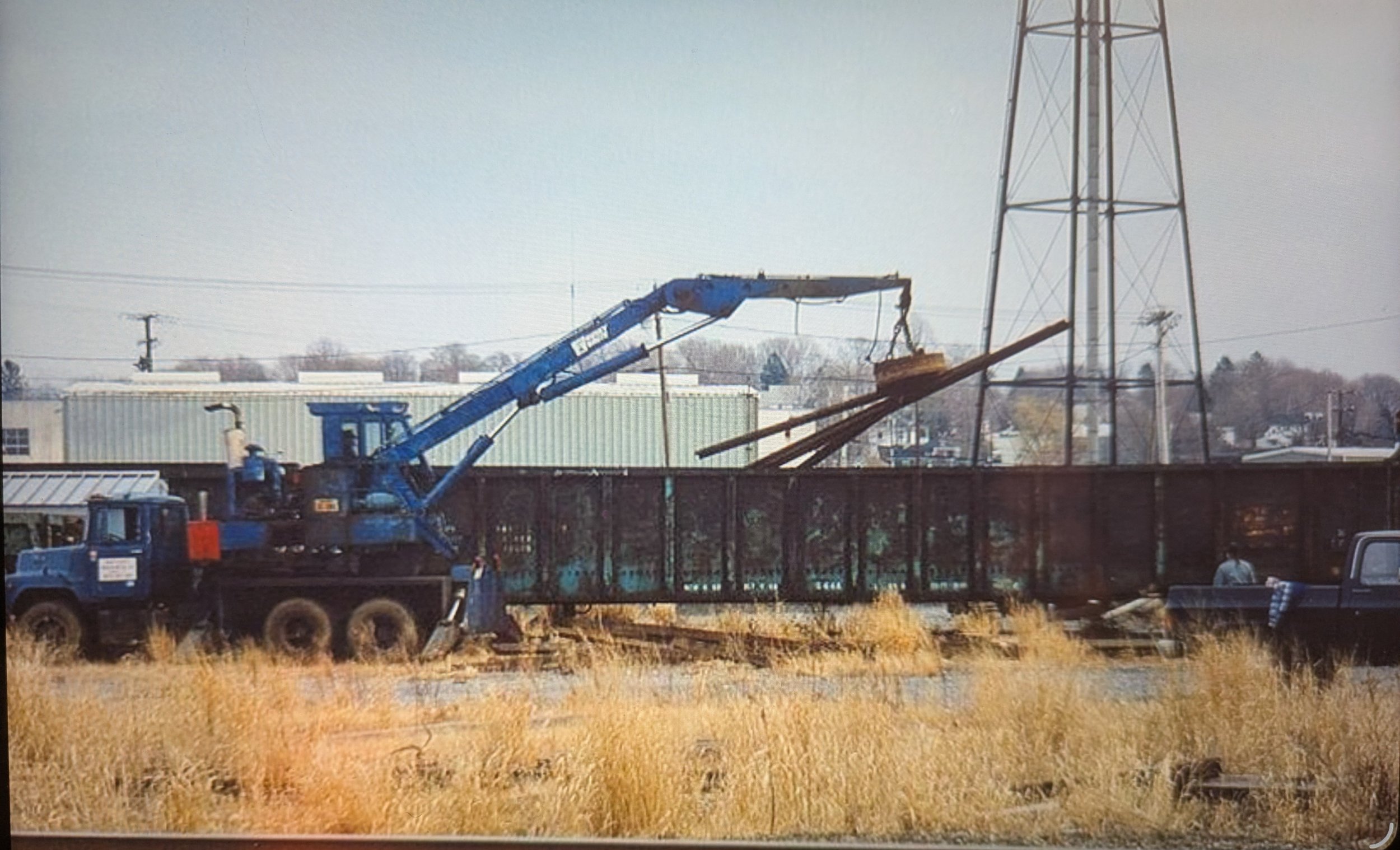
The last photo, this one taken by Mark Beebe on March 21, 1994. Shetucket Iron &Metal is loading a well-weathered Penn Central gondola with ripped up rail enroute the company‘s yard in Norwich.
For me, this is akin to watching a neglected old house, built in a culture of beauty and function, being torn down, piece by piece.
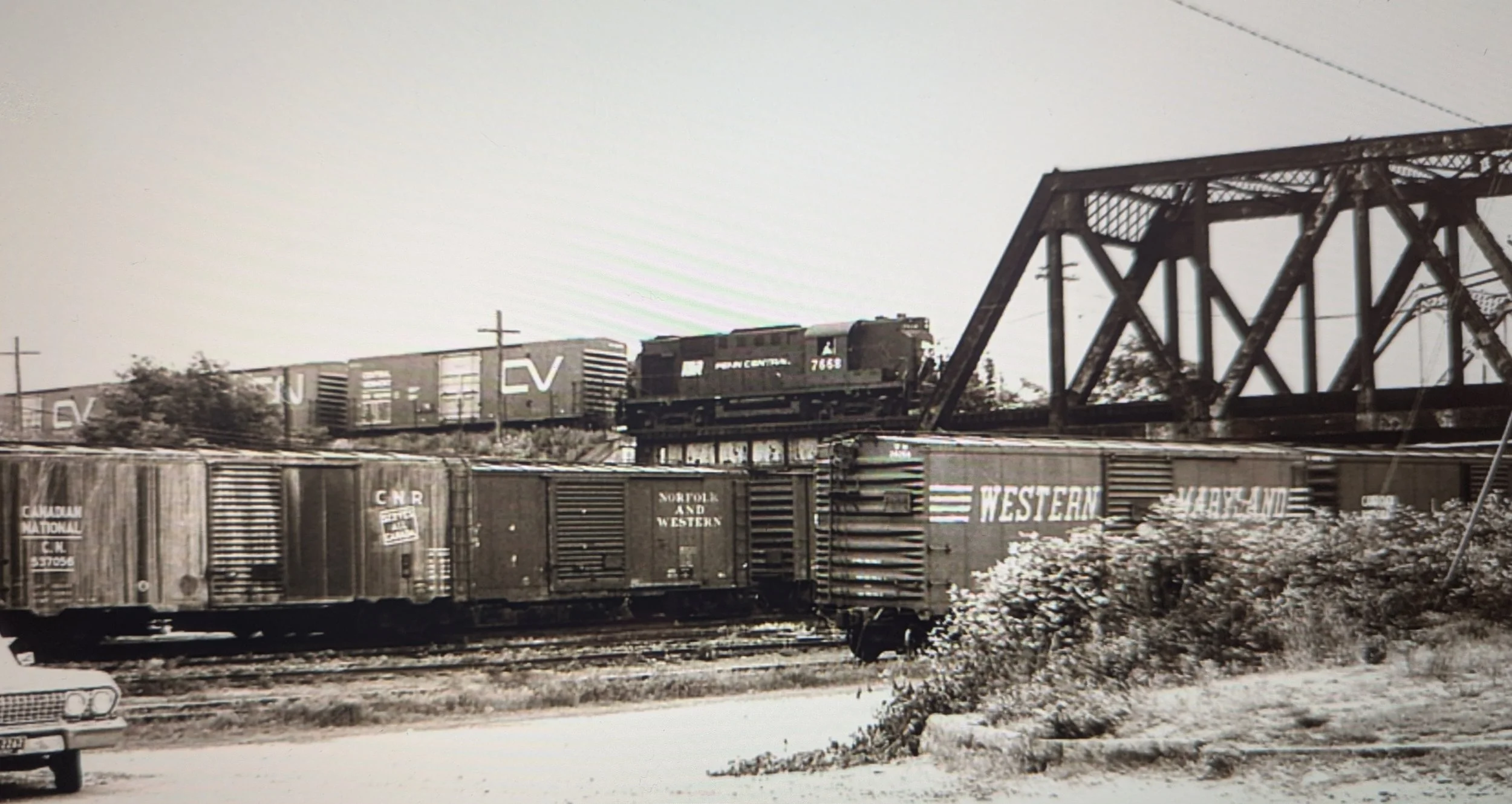
Bruce Nelson caught Penn Central RS-11 #7668 rolling over East New London yard with cars for the CV interchange in June of ˋ70.
Thanks, Bruce!
Sometime in the near future, I will be adding to this page a section on retirees from the CV… it should prove interesting.