Welcome! I update and expand this site almost daily. Please click on the links in the upper right hand corner. Other streets and locations will follow. Thank you for your visits and continued support!
Also, on the Stories pages, you will find 5 first-person narratives with images based in various locations of Lost New London. Feedback on this page as well as on others is always welcome via email. lostnewlondon@gmail.com Thank you!
Please visit the Events page for locations where the book Lost New London is available. Price is $24.99.
Thank you.
Bill Morse, author
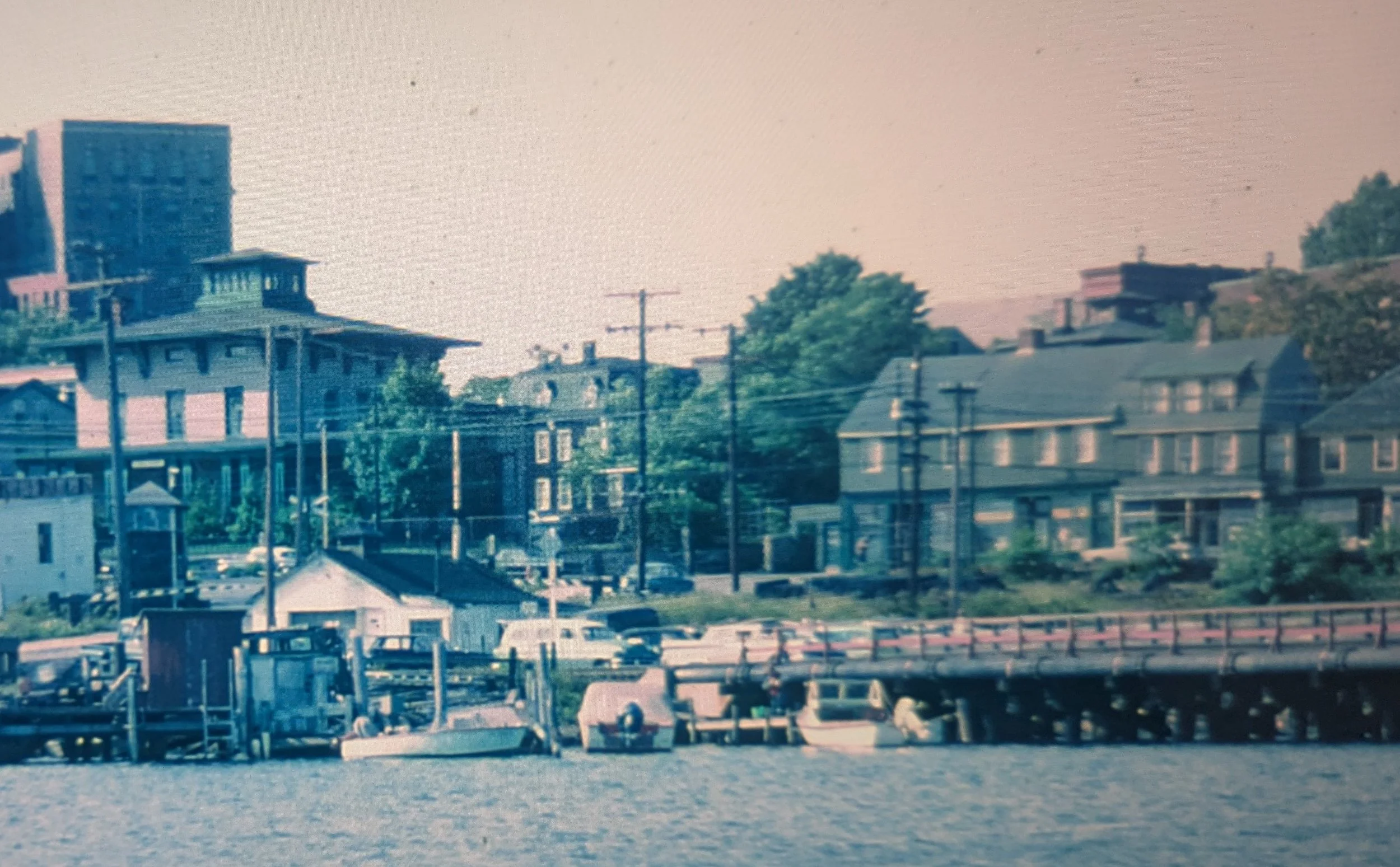
Lower Winthrop Cove showing Central Vermont Railway and pedestrian bridge, small marina, blacksmith shop, Hallam Street railroad crossing tower, Mohican Hotel, B.P. Learned Center (former Lawrence villa, 1850), 30 Federal Street, the Rev. Woodbridge House (1769), Ahavath Chesed Synagogue (former American Methodist Episcopal Church, 1856).
courtesy George Oldershaw, 1961
self portrait at 33,000‘ above New London
Welcome. This website compliments the book Lost New London released by The History Press on October 14, 2025.
On the following pages you will find researched material from the Main Street redevelopment area of the 1960‘s that is outside of the book.
In that this site is an amateur‘s labor of love and a work in progress, I ask for your patience with the inevitable gaps in coverage and unintentional mistakes.
thank you,
Bill
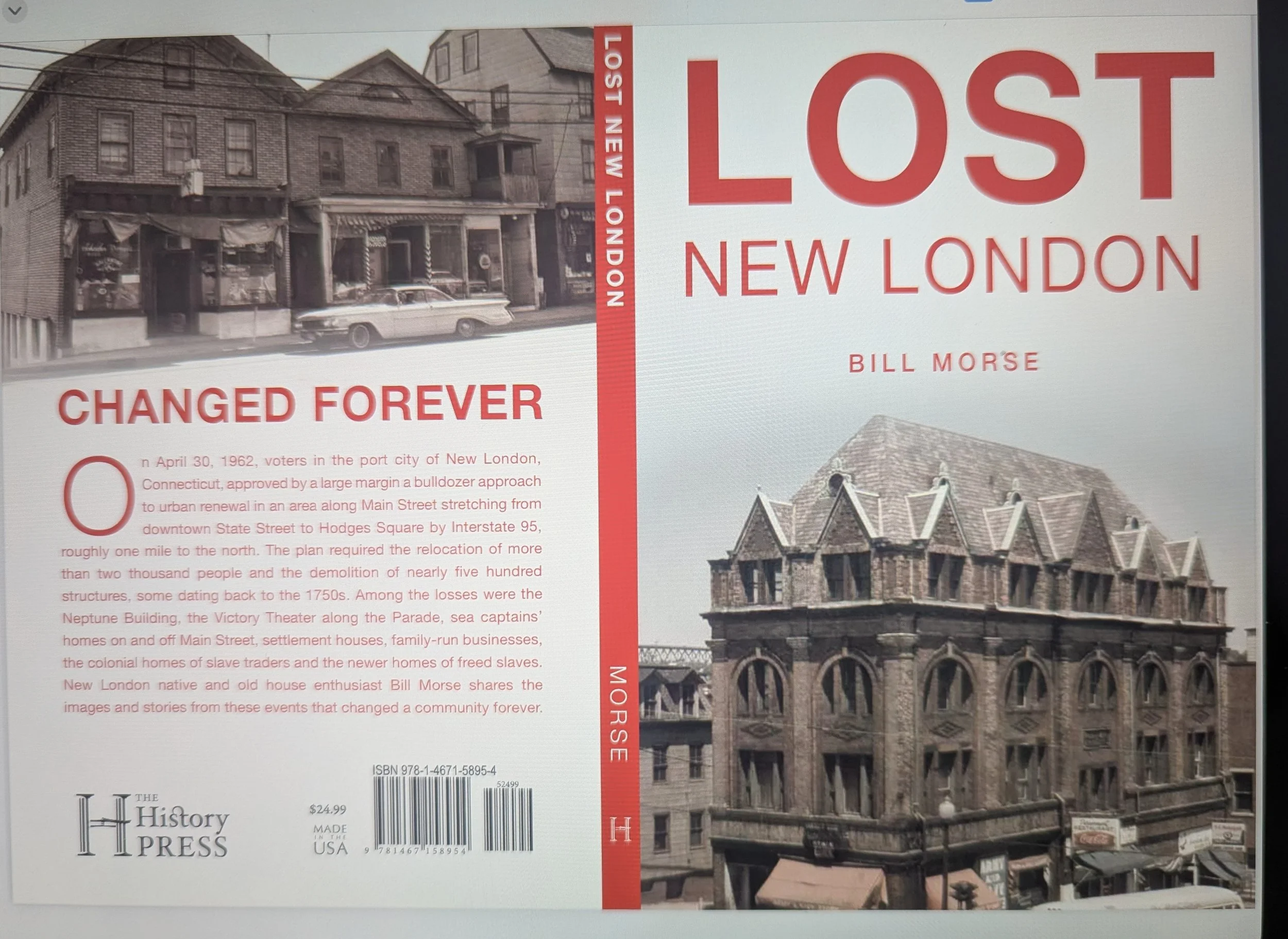
“ On April 30, 1962, voters in the port city of New London, Connecticut, approved by a large margin the bulldozer approach to urban renewal in an area along Main Street stretching from downtown State Street to Hodges Square by Interstate 95, roughly one mile to the north. The plan required the relocation of more than two thousand people and the demolition of nearly five hundred structures, some dating back to the 1750s. Among the losses were the Neptune Building and Victory Theater along the Parade, sea captains‘ homes on and off Main Street, settlement houses, family-run businesses, the colonial homes of slave traders, and the newer homes of former slaves.
New London native and old house enthusiast Bill Morse shares the images and stories from these events that changed a community forever.”
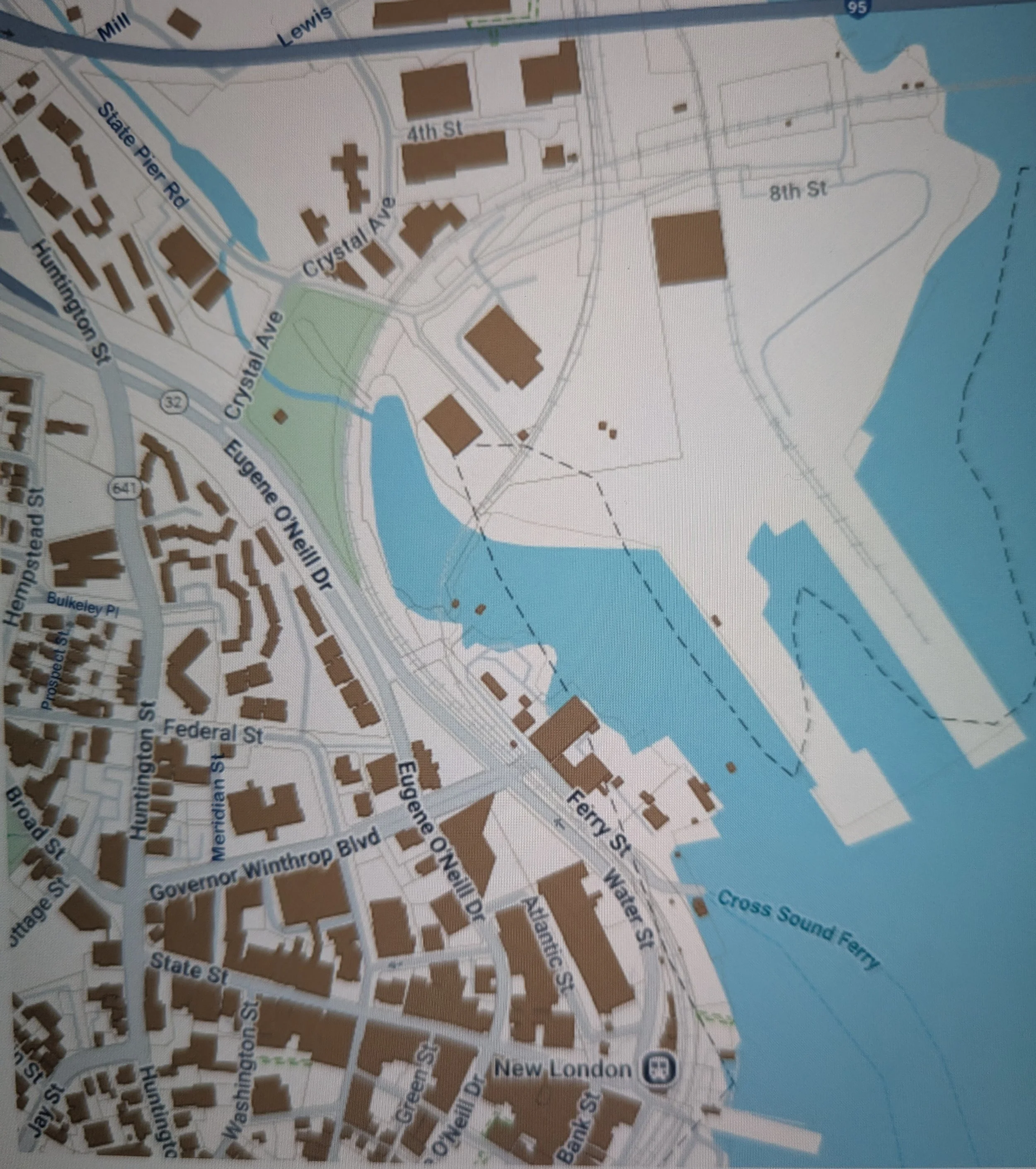
Eugene O‘Neill Drive ( formerly Main Street) area today
courtesy the City of New London, 2024
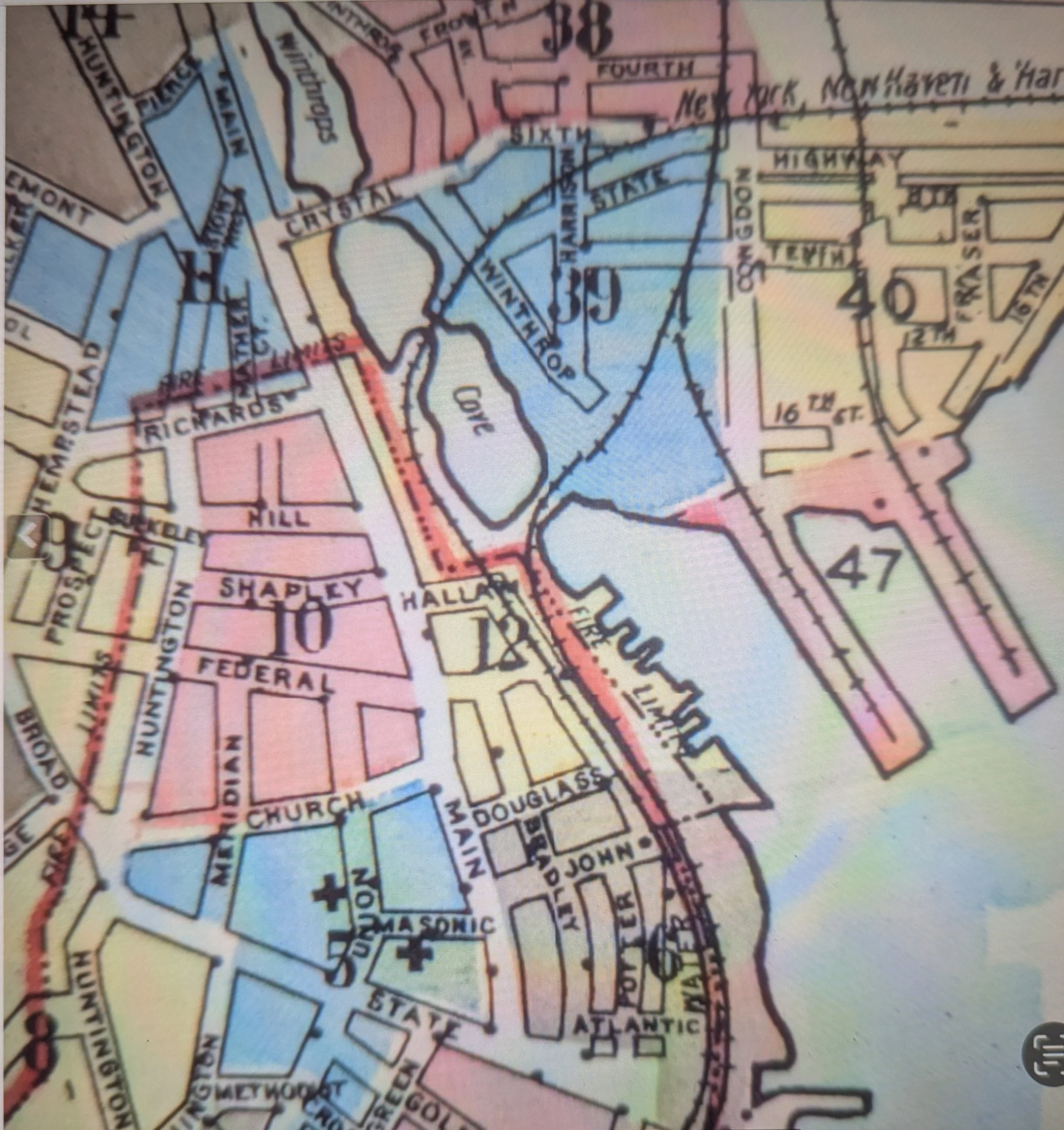
Main Street - Winthrop Cove renewal area
1954 Sanborn fire insurance map
courtesy the Library of Congress