Welcome to the rooming house saga of 192-94 North Bank Street…
Recently, a friend asked me about rooming houses in Lost New London, a housing arrangement of short or long-term furnished room rentals that worked for people with limited means who could not afford the time commitment of an apartment lease nor the nightly rate of a hotel. They were also called single-room-occupancies or SROs and rooms without board. Rooms with board, that is, meals included, were more rare and the atmosphere was more like that of an extended family.
Sadly, during the period of redevelopment, single people and families were given cookie-cutter apartment housing as the only option. On another page, entitled Furnished Rooms, we‘ll look at what the Main Street neighborhoods had to offer in the way of rooms with and without board prior to redevelopment.
However, on this page we will be reviewing the unique story of the Lovitch family and the rooming house they ran at 192-94 North Bank Street.
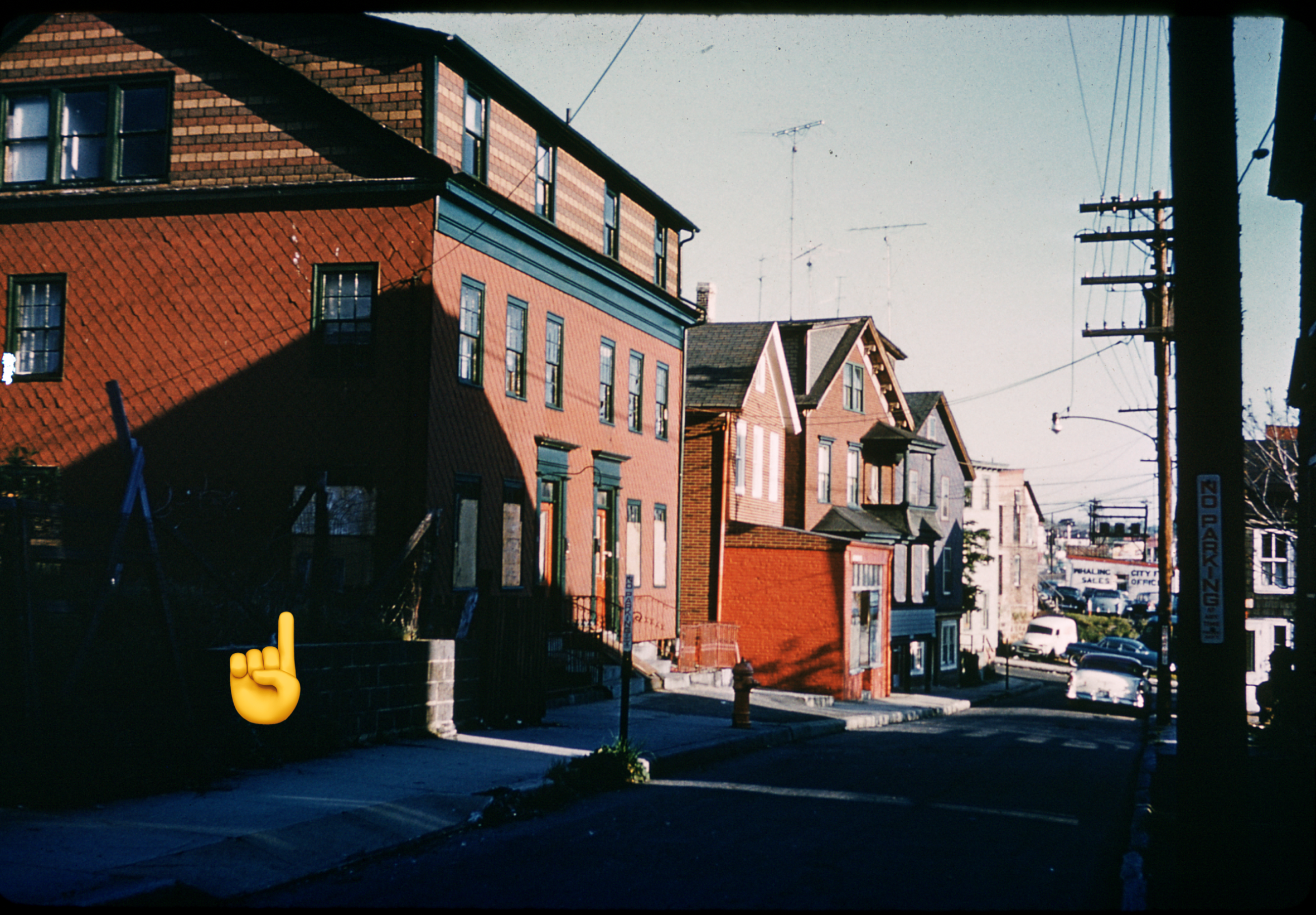
photo courtesy George Oldershaw, 1961
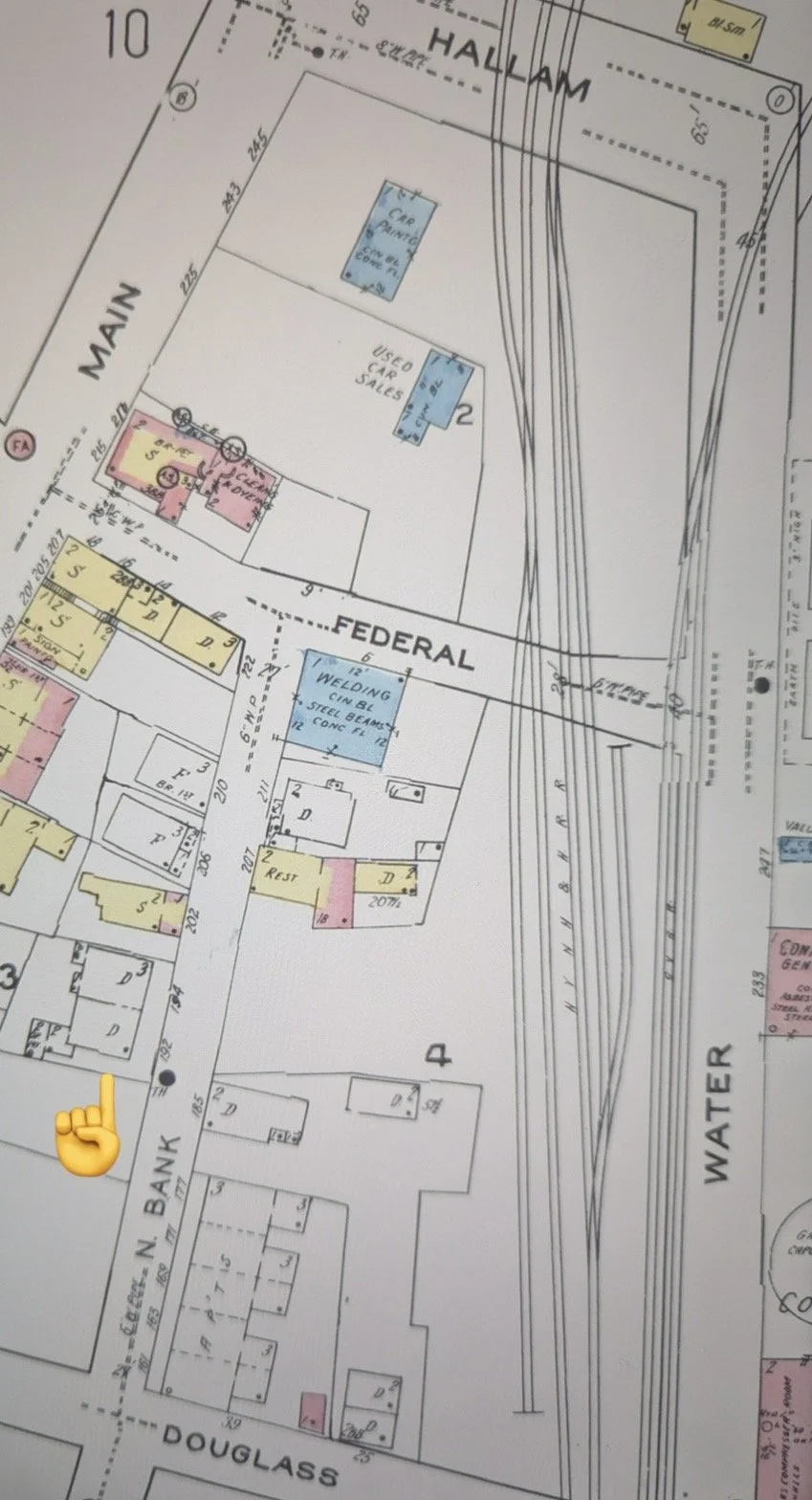
Sanborn map, 1954, courtesy the Library of Congress
The following comes from an article series on Bradley Street written by R.B. Wall for The Day newspaper on November 11, 1902:
In the early 1800s Ezekiel Fox, owner of the Fox and Grapes Tavern on Main Street, sold the back of the tavern property to Reuben Heath who, in turn, later sold the lot to Savillion Haley (partner with Avery D. Noyes in a paint store business) in 1833 for $575. A year later, Mr. Haley had the house built we now know as 192-94 North Bank Street.
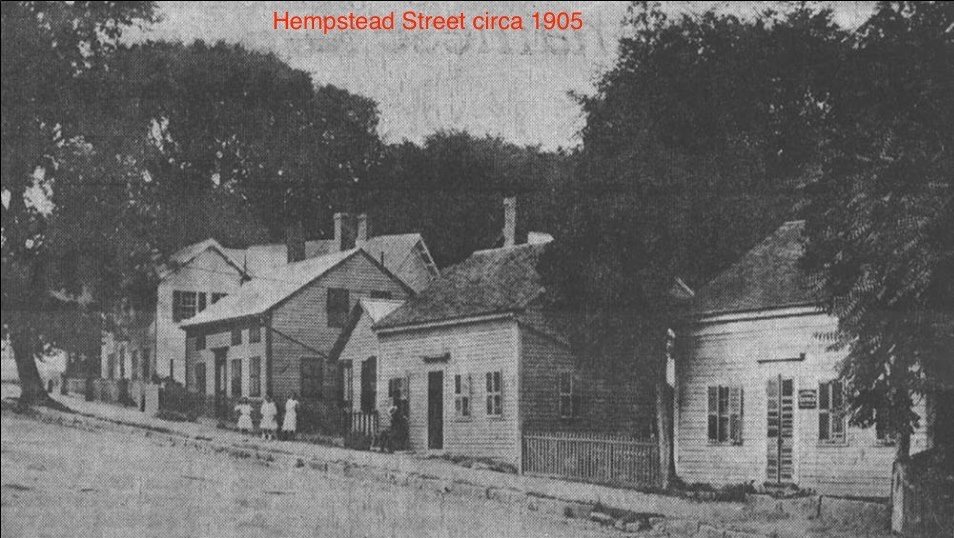
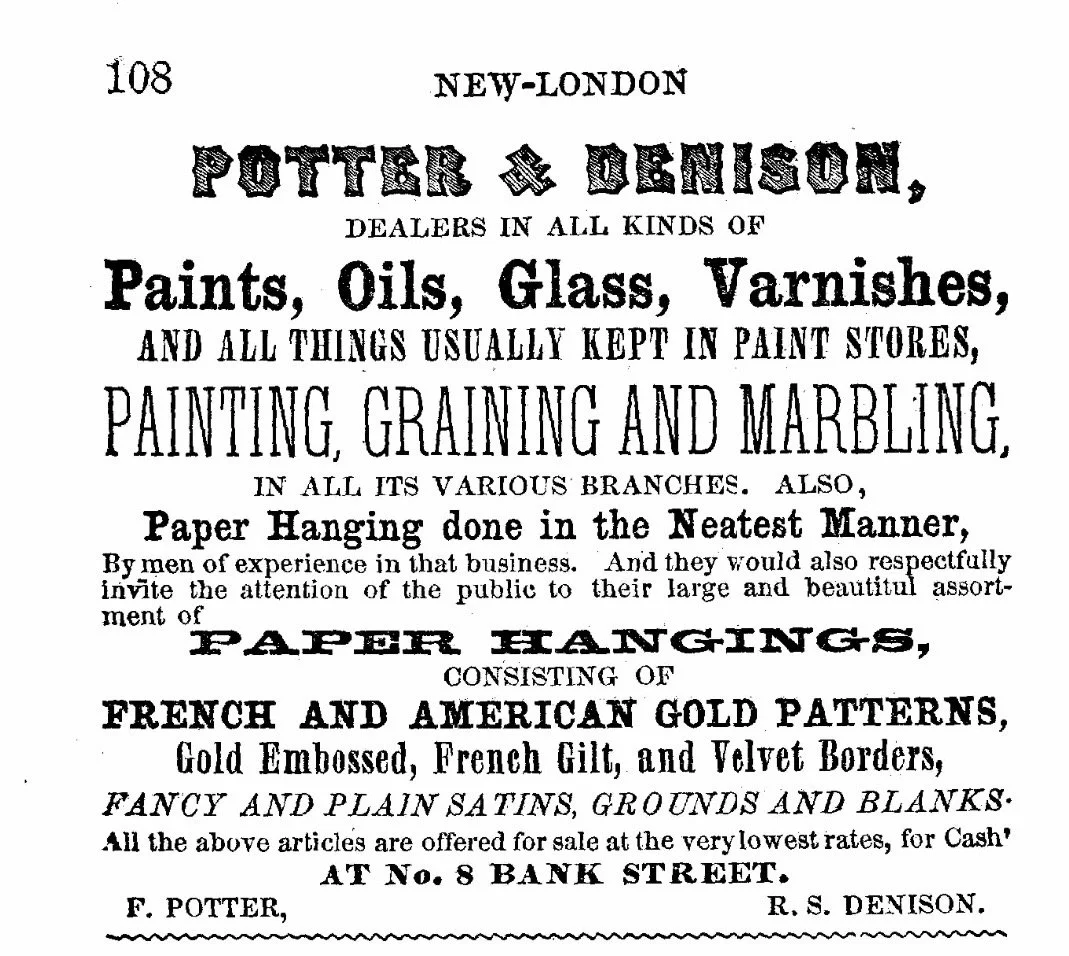
Savillion Haley, a Mystic native, ran a paint store on lower Bank Street that he sold in 1849 to Potter & Robbins, later Potter & Denison. He was also an ardent abolitionist, believing that blacks should have the same housing opportunities as whites. In the early 1840s, Mr. Haley had five small houses built on Hempstead Street, selling them to black families at cost. This incensed some of the white neighbors who moved away. The small settlement became known as New Guinea and four of the five houses, though altered, are still standing today. They are pictured below and are a stop on New London‘s Black Heritage Trail (information and photo courtesy Mr. Tom Schuch and The Day via New London Landmarks)
Mr. Wall also noted that Mrs. Haley, now 93, has moved to Shapley Street where she does her own housework.
In 1853, Edward Ashby, a rigger (stevedore, longshoreman) and native of Poquonoc purchased the house from Mr. Haley, living at #38 until his death in 1888. He rented #40 as two apartments. The 1855 city directory shows R.R. Denison, a paint store co-owner, on the first floor and Edward Perry, another painter, probably in Mr. Denison‘s employ, on the second.
Jumping to 1865, the directory shows Mr. Hezekiah Munsell, a barber at the Bacon Hotel on lower Bank Street and Mr. Charles Rockwell residing at #40.
The 1876 City Directory shows two widows, Mrs. Mary Merrell and Mrs. Laura Tabele along with Mary L. Nelson living at #40.
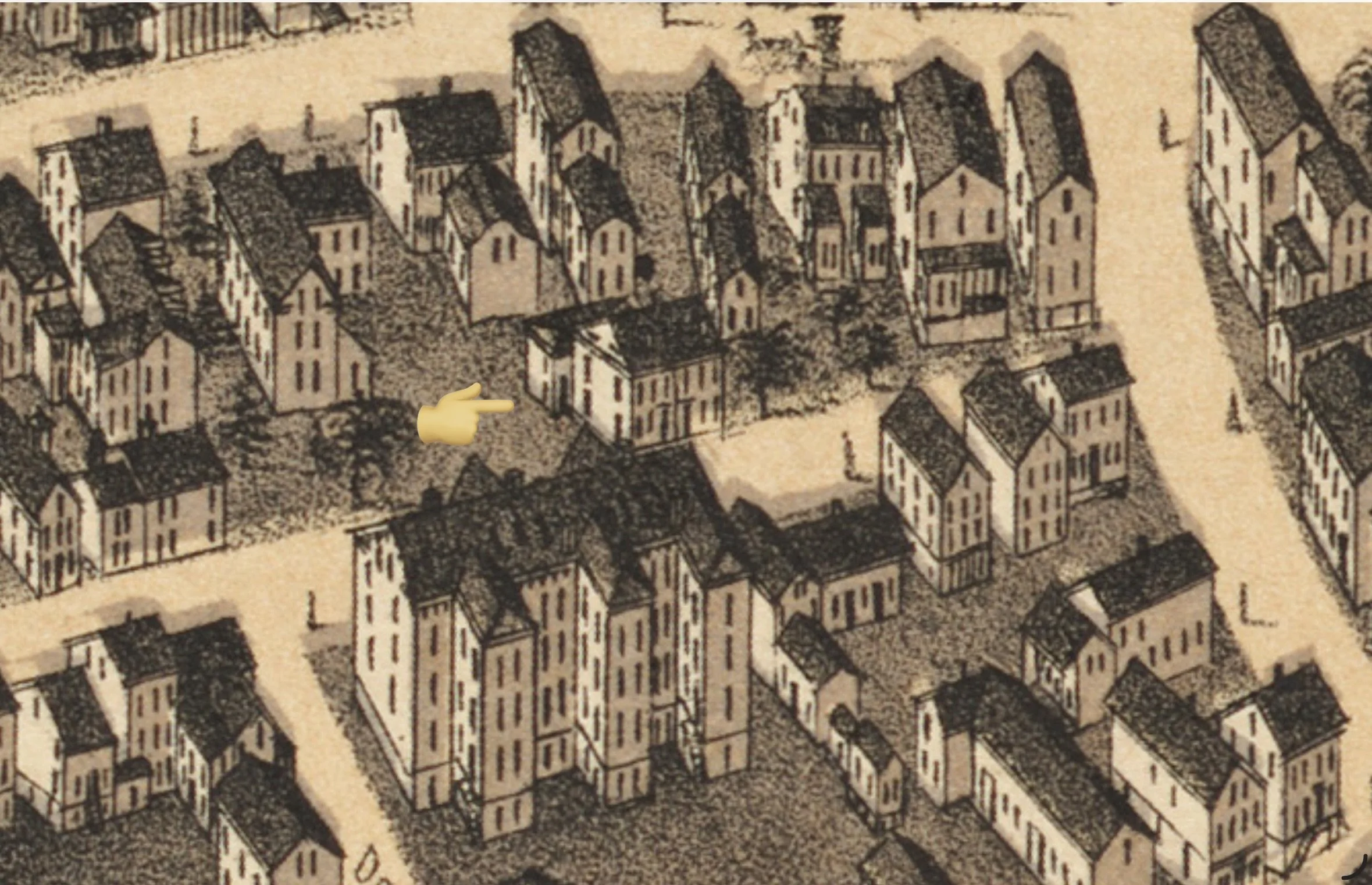
1876 picture map aerial view of upper Bradley Street
courtesy Library of Congress
Sanborn map from 1884.
Courtesy New London Landmarks
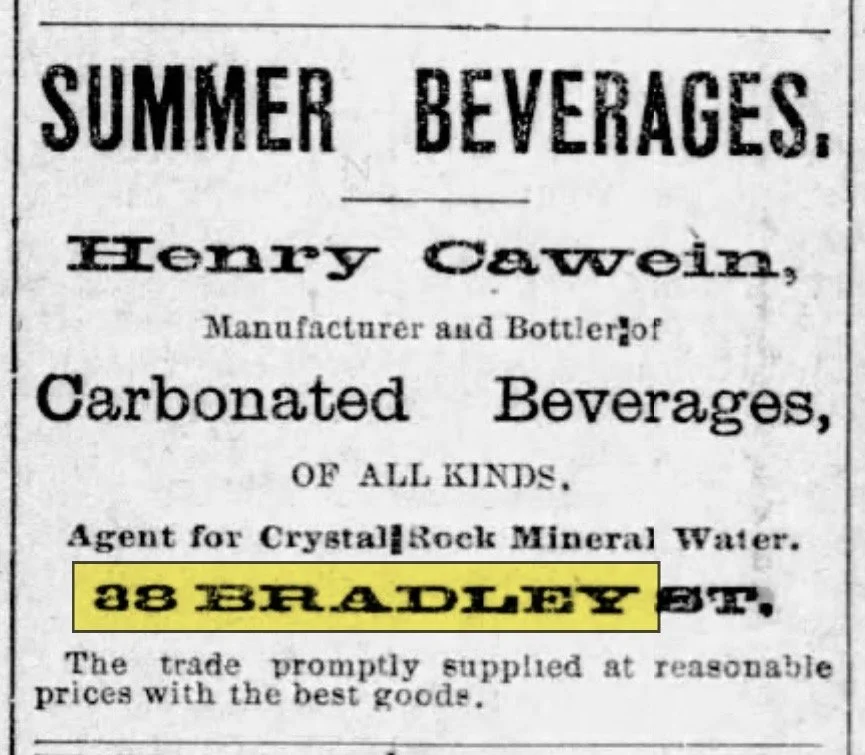
A couple of years after the death of Mr. Ashby, a carbonated drink business opened in his home at #38 that was later run by Mr. Henry Cawein, active in the local bottling association. Unfortunately, after moving to a Main Street location, Mr. Cawein got into trouble when authorities raided his business finding bottles from other bottling plants. And yes, it was evidently a serious offense at the time.
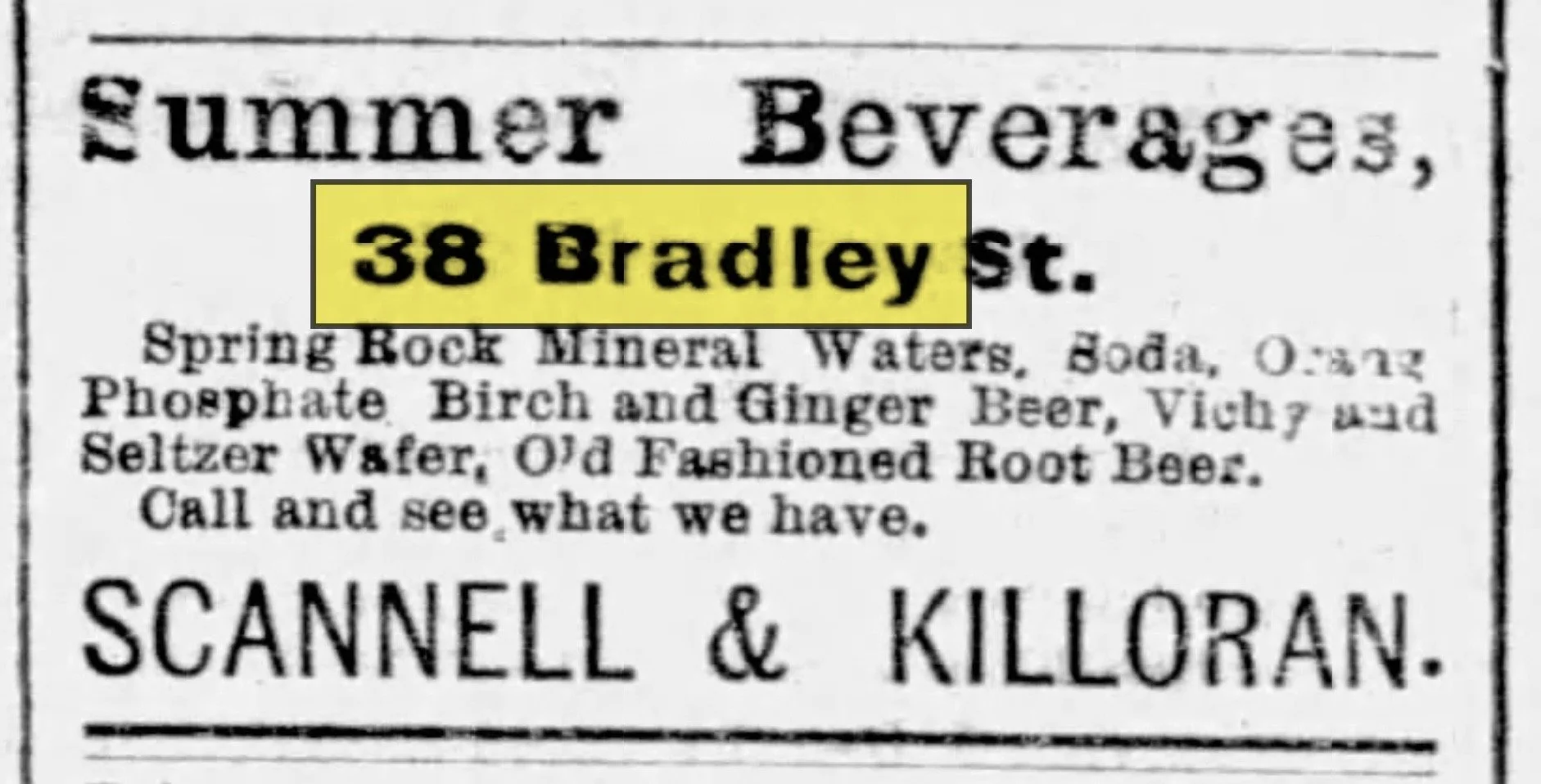
Display ads courtesy The Day, 1891 and 1893
…and one last item before we leave the 19th century:
courtesy The Day, March 28, 1893
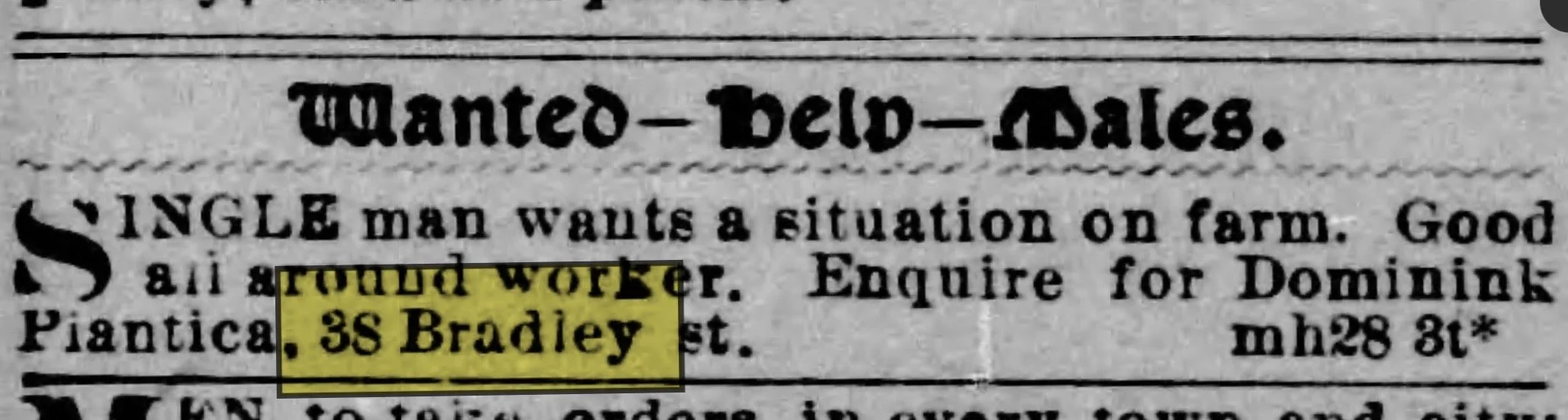
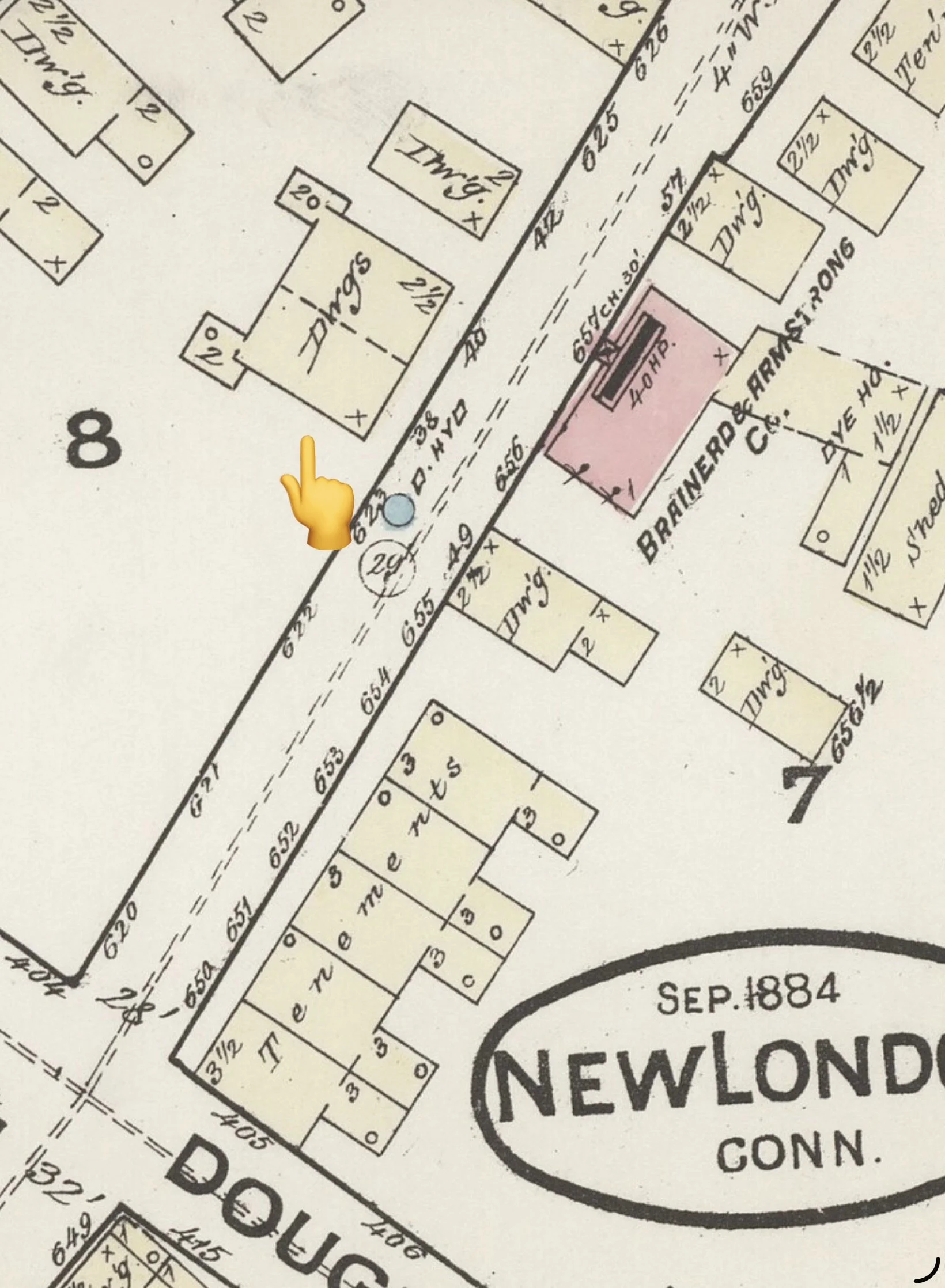
Please note: around 1902 the house numbering in New London changed… 38-40 became 192-94.
In the early 1900s, the Louis and Sarah Elfenbein family lived at #192. From 1902 to the 1919 start of Prohibition, husband and wife ran the Elfenbein Saloon on lower Bank Street. In 1913 it was noted in The Day that Mr. Elfenbein along with many other New Londoners either took the train or a boat to the Polo Grounds in New York to attend the World Baseball Series taking place that October. In the end, the Philadelphia Athletics got the upper hand and outplayed the New York Giants, final score 3-1.
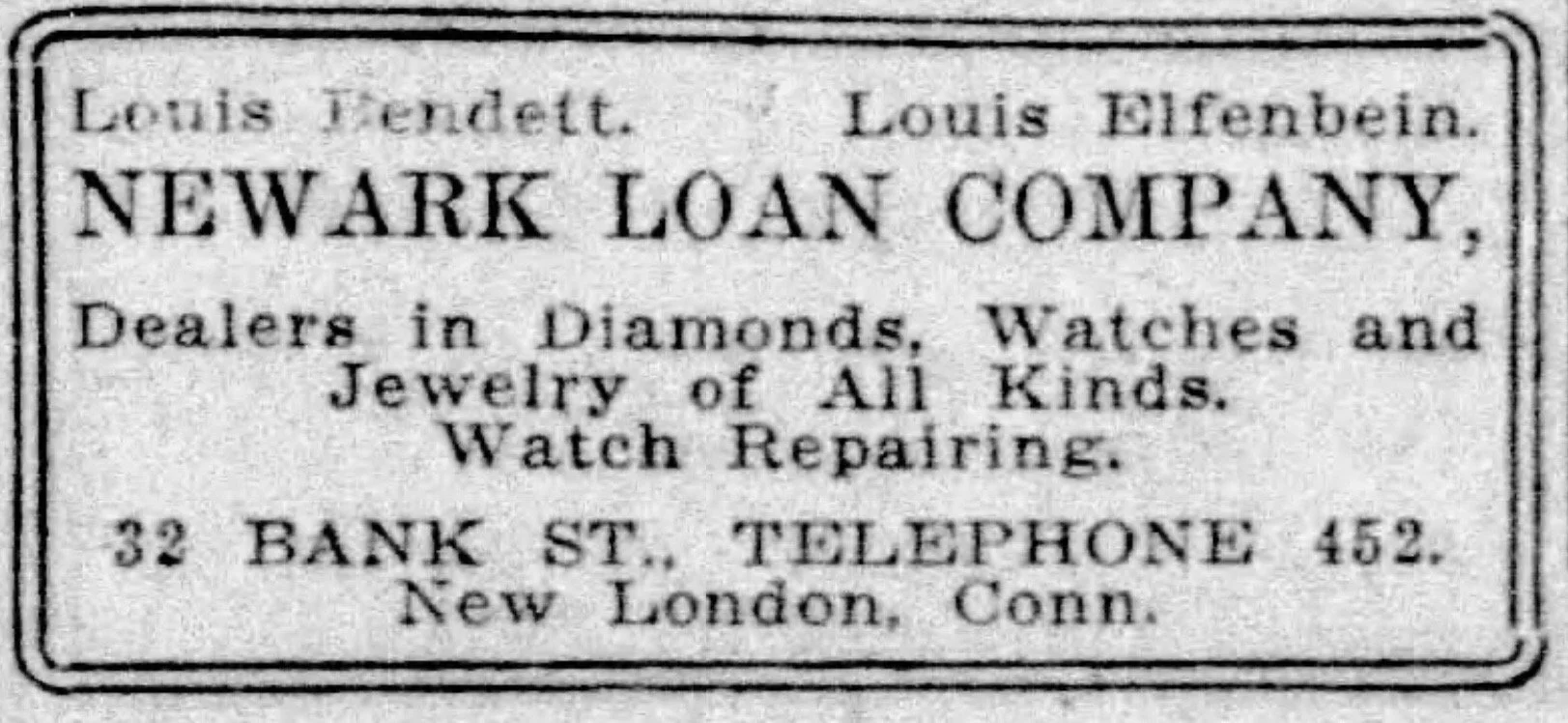
When Prohibition closed the saloons in 1919, Mr. Elfenbein became an equal partner in a pawnbroker business, one of two in New London, both on lower Bank Street. (ad courtesy The Day, 7/7/19.
During roughly that same time the Louis and Ida Wolf family lived at #194. In the early 1900s, Mr. Wolf ran a clothing store on the north side of The Parade at 9 State Street where the bus terminal later would be. Due to financial problems, Mr. Wolf was suspected of transfering business ownership through a series of straw men making credit accountability difficult to trace. The inventory was placed in storage and the next day Mr. Wolf disappeared.
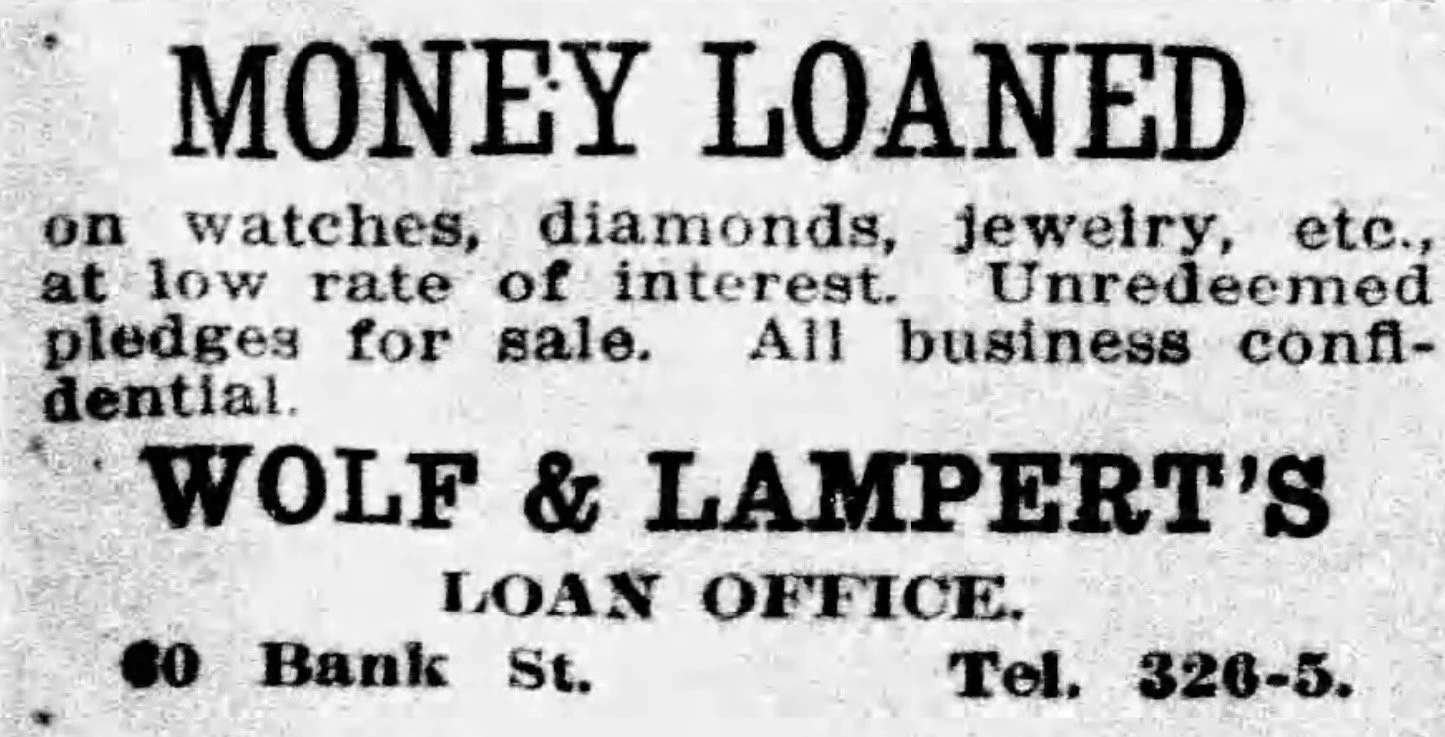
In 1910 the prodigal son returns, most likely from Boston, and with his brother-in-law Louis Lampert opens a pawnshop at 60 Bank Street. (ad courtesy of The Day, 12/30/12)
The shop was often the target of burglars. In one such case, a gang of boys, aged 6 to 16, decided to take advantage of a local fire distraction, breaking in with the help of electric pocket torches or flash lights. Their take? Baseball cards, fraternal order pins and hand tools useful in jimmying open other local businesses. The two oldest got a vacation at the Industrial School in Meriden until they were 18.
In perhaps the most audacious attack on the pawnshop or loan office, two intoxicated men staggered across the street attracted by the items in the display window. While being watched by eight unsuspecting witnesses, among them a reporter from The Day and the owner of the Hotel Royal across the street, the men steadied themselves by holding on to the window frame and eyed the jewelry, watches, chains, and silverware in sober silence. One of the men had a small burlap bag with something heavy inside. This he used to break the side glass panel. Both filled their coat pockets, backed away and staggered down the sidewalk, rounding the building corner into an alley leading down to the tracks. At this time, a foot patrolman at Bank and State Streets had been alerted by one of the eight bystanders and was rushing to the scene.
To no avail, The men had disappeared, most likely on the freight train now gathering speed after a short timely stop in New London. A cheap piece of costume jewelry turned up trackside.
Enter the Lovitz family…
In 1905, Julius and Jennie Lovitz left New York with their two sons, Harry and Emanuel, and landed in New London. By profession a peddler, Julius moved his family around before settling down at 192-94 Bradley Street. In 1909 he joined a group of six other traders that did not compete with each other, all respecting each member‘s area of interest. This was necessary for survival. There were bumps in the road, both professional and personal.
On April 6, 1916, Gertrude Wiggs, rooming on Tilley Street, found herself without funds and friends. She met junk dealer Julius Lovitz and offered to sell him a stove and other items back in her room. A dollar fifty was the agreed upon price. Julius gave Gertrude a dollar then left to get change for the remaining fifty cents. When he returned, Gertrude and the dollar were gone. He learned the items for sale belonged to the landlord and so Julius went to the police who later arrested Gertrude for obtaining funds under false pretenses.
The money was gone. Gertrude pleaded want for cash. A gentleman from the Douglass Club had in the meantime agreed to cover her train fare back to Philadelphia with repayment promised at a later date. But the lady from Philly had the parting shot. She testified to seeing the junk dealer whipping a dog on Tilley Street. This new detail in the story did not sit well with Judge Coit. With a severe eye, he again looked at the middle-aged man standing before him. In digging a bit it came out that Julius lacked the license required for his profession. There was the license fee plus fine. There was also a talk on the treatment of animals, stray or otherwise. That day, Julius Lovitz lost more than a dollar.
The other bump in the road was more like a sea change… for the worse.
Harry Lovitz seemed a boy possessed, bedeviled, prone to outbursts of violent behavior. At about the same time period, he‘d been residing in Lakeville, Litchfield County at the Home for the Feeble-Minded. The stay had done Harry much good, the improvement in his behavior had been remarkable. He was discharged and returned home.
Sadly, the beneficial results from Lakeville evaporated in a couple of months. The violent behavior returned and both mother and father requested the police lock Harry up for his own safety and theirs. On Saturday, July 27, 1918, per reports in both The Day and The Bulletin, a policeman drove Harry up to the State Hospital for the Insane at Brewster‘s Neck on the Preston/Norwich town line. Unless evidence surfaces to the contrary, it seems that Harry spent the rest of his life confined to that institution.
Emanuel, or Manuel, fared better. He went into kitchen and restaurant work starting out in the early 30s at the Hungarian Restaurant at 23 Golden Street. He later moved on to New York, started a family, stayed with restaurants and eventually settled in Holyoke, Massachusetts when it was time to inherit 192-94 North Bank Street (the name was changed around 1922 in hopes of shaking the street‘s bad reputation).
the rooming house…
A couple of years after acquiring the house in 1919 and changing the spelling of Lovitz to Lovitch, Julius had a architect plan out attic dormers with floor and stair plans for single room occupancy. The resulting configuration was a first and second floor apartment for each of the two numbered addresses and ten rooms in the attic. Thanks to the dormers, each room had a window and met the minimal space requirement of 500 cubic feet. A single bathroom served the basic needs of potentially 10 people. This work was done as money became available. Julius and Jennie lived on the first floor of #192.
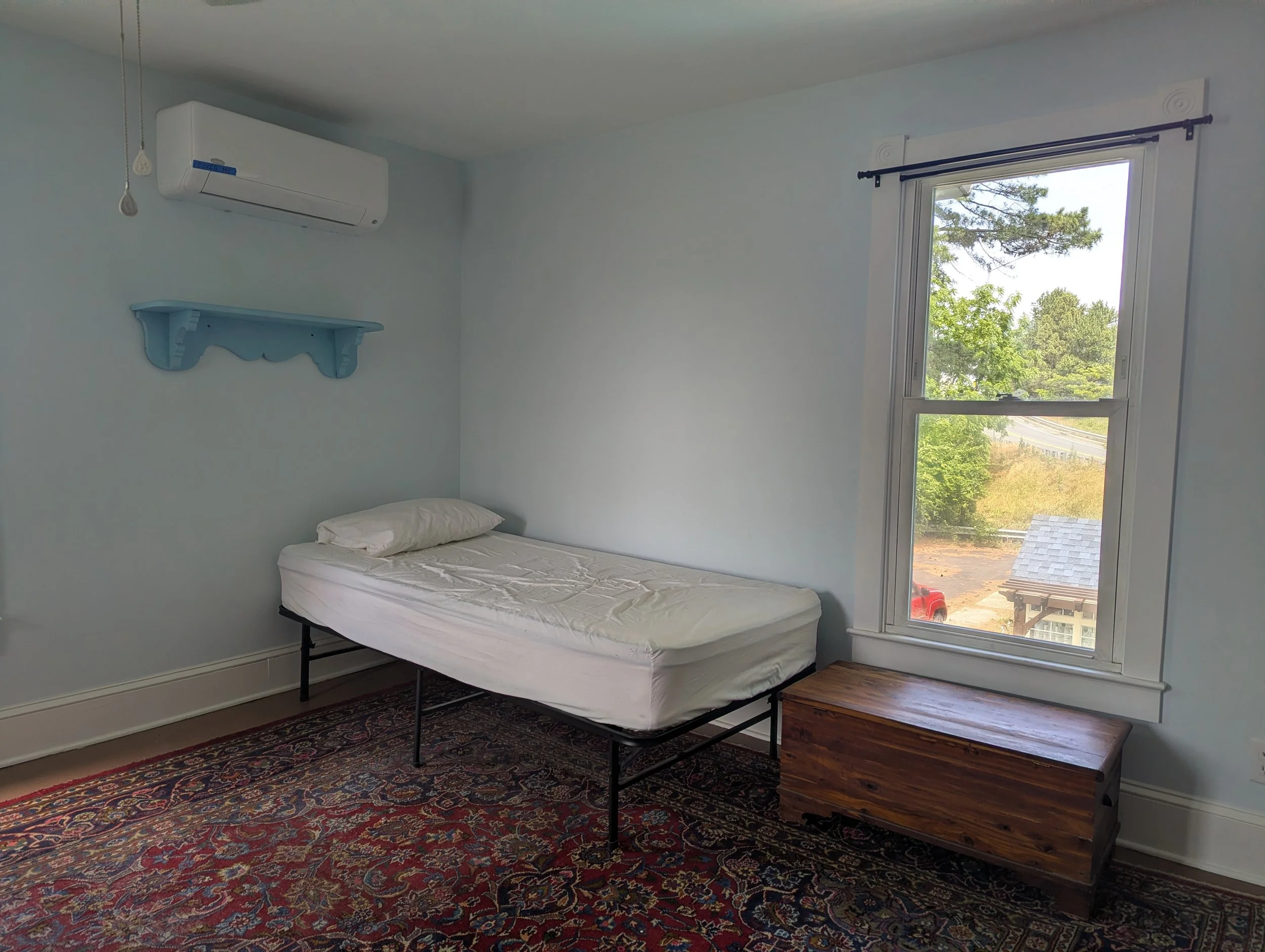
What 500 cubic feet looks like. And no, there was no HVAC. In the summer you opened the window and hoped for a sea breeze out of the south. In the winter you closed the window and used a manually ignited gas heater.
This type of rooming arrangement was not expensive and generally attracted older single gentlemen with a manual labor background and few other options. Most were heavy drinkers near the end of their road. Occasionally one or two would get their names in the paper.
On the afternoon of April 1, 1935, Patrick Cox wound up at the Lovitch door seeking a room in which to sleep off a drinking binge. Four hours after putting his new guest to bed, Julius noticed a strong gas odor that he traced to Cox‘s room. The cock to the gas fed space heater had been fully opened and the Norwich native had a gash on his head. After being revived on a fire department inhaler, Cox discovered $13 missing from his pockets. Robbery, he claims, I was robbed and attacked, the killer leaving me to die of asphyxiation!
The police investigate. No motive on the part of Mr. Lovitch. No other boarders present at the time. Drunken, in a half asleep stupor, he feels a chill, opens the gas without igniting the pilot, falls and bumps his head on the steel pipe bed frame? The police investigation closes with the victim to ponder his next move. Thank you, F.D.N.L. !
Perhaps the most famous S.R.O. resident in the house was Mr. George P. Sheehan otherwise known by his ringside name Cowboy. In 1920, Cowboy came close to winning the Welterweight Boxing Championship of New London. Known for his stamina and wild, aggressive moves, Cowboy had become a local legend. After his withdrawal from boxing he earned a living as a longshoreman and iron worker in Groton. By the late twenties he was drinking heavily and fighting outside the ring, mostly with the police. In 1928, Judge Prince remanded Cowboy to the State Farm for Inebriates in Preston. Six months later he left, somehow completing the program.
On December 17, 1932, Cowboy became so abusive during his brief stay on North Bank Street that Julius called the police. The boxer resisted arrest and spent the night chilling in a cell. The following morning he was still too intoxicated for Police Court and had to be brought in the next day making his 24th appearance before a judge. Already under a suspended sentence for a previous offense, Cowboy listened as Judge McGarry revoked the 20 day suspension and added 10 more… meaning 30 days in the Franklin Street jail.
This was not to be the end. In his 25-year career, Cowboy racked up over 112 appearances before a judge. In 1947, he vowed to go to college… and did, but that‘s another story.
the war years…
The war economy erased the Depression-era unemployment hangover plaguing the nation since the Stock Market crash of ˋ29. Soon the waves of defense plant workers came to New London‘s sandy shores and Julius and Jennie Lovitch could be more selective with prospective lodgers.
One defense plant worker now residing at 192 North Bank Street was Carmena Chimento. By mid-1942 rationing was in place, the purchase of certain foods like butter and eggs, gasoline, rubber and aluminum products restricted to favor war production. And so Carmena, like all Americans needed to apply to the local ration board for a passenger car tire inner tube to replace one that was defective beyond repair. If you were a doctor, like Dr. C. John Satti with an office on Montauk Avenue and needed your car for responding to medical emergencies, the board would approve your application for new tires.
Yes, there was full employment, but not much in the way of consumer goods to spend that paycheck on, just the necessities. To my knowledge, beer, wine and liquor were not rationed.
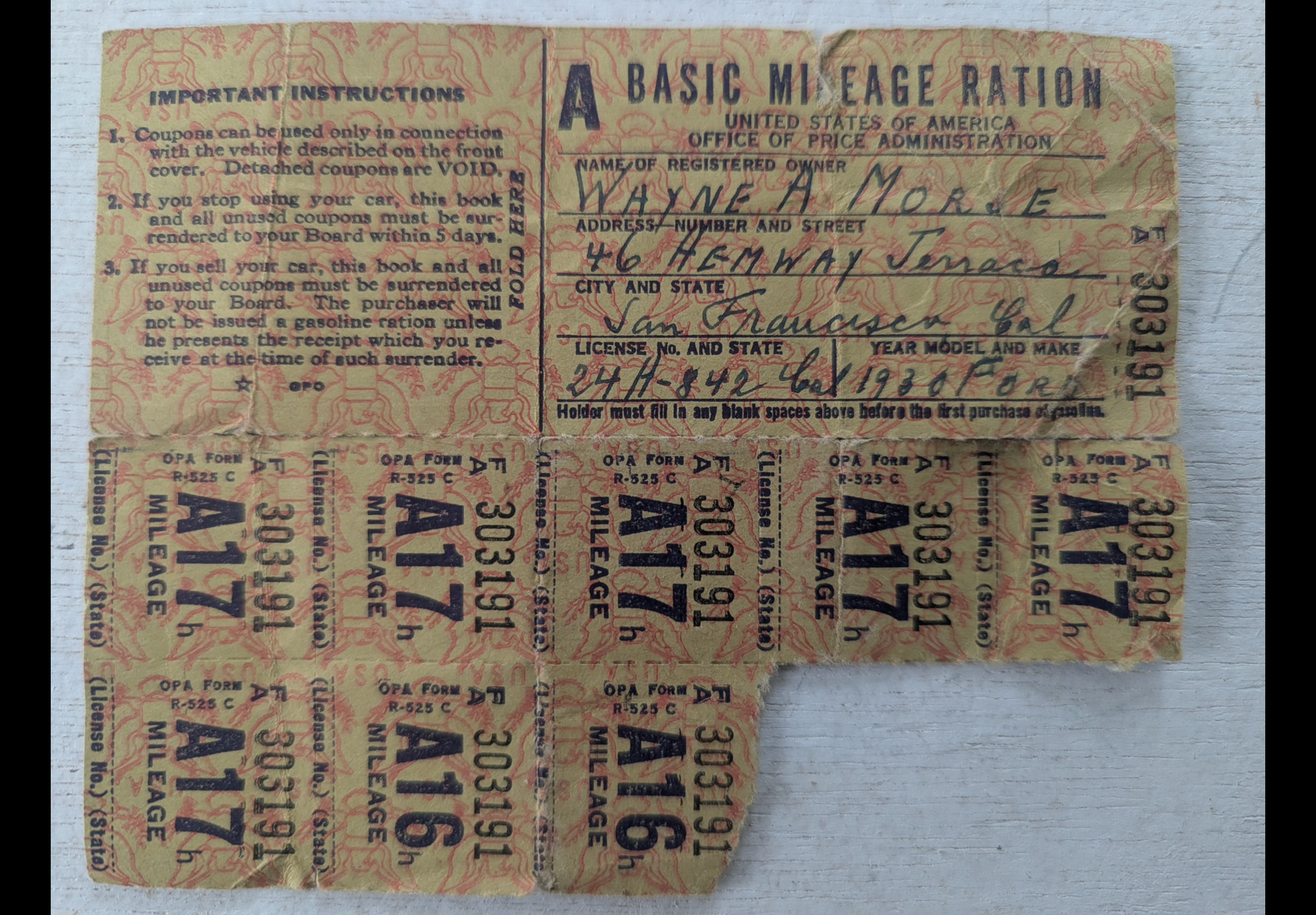
courtesy the author, The Day, 1/5/43
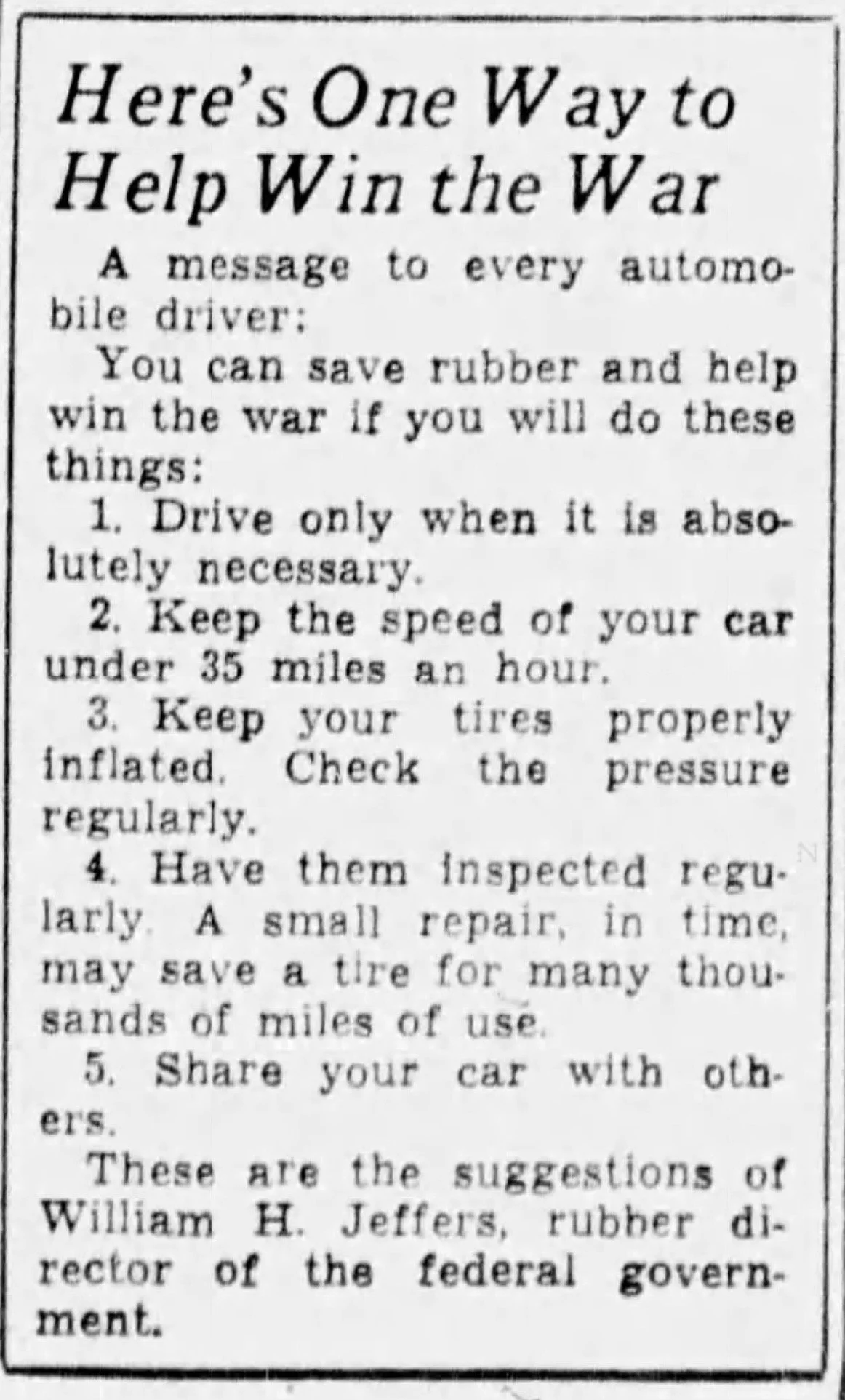
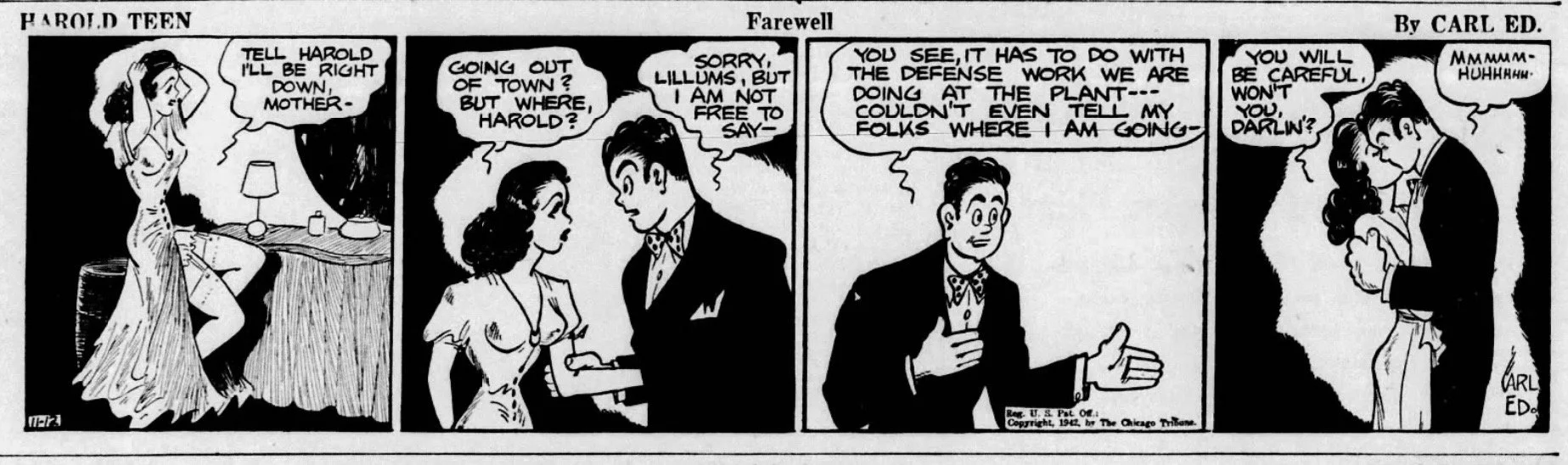
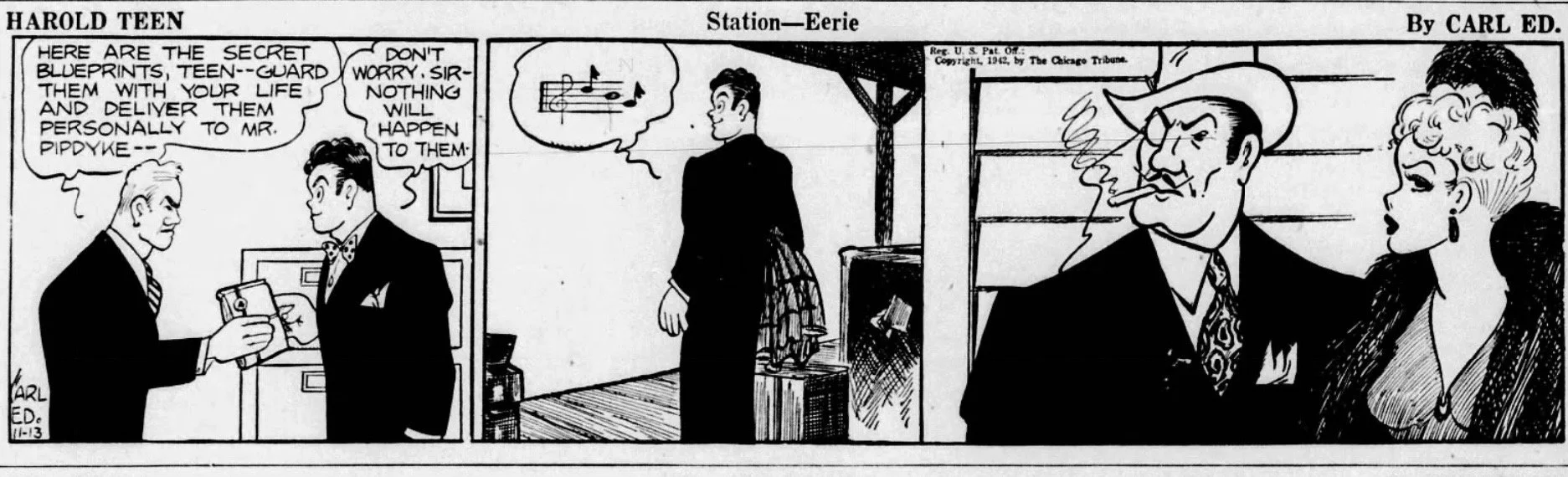
courtesy The Day, 11/12/42 and 11/13/42
During those war years many people became citizens of the United States. The Day published a list of new citizens on December 14, 1943. Julius Lovitch was one of them. During the interview process the applicants had to answer questions such as the following:
Have you any children in the armed forces?
Do you buy war bonds?
What are you doing to help this country win the war?
Do you belong to any clubs?
Is that a Fascist or Bolshevist club?
What are the colors of the flag?
How many stars in the flag?
How many states in the United States?
Can you name some other states besides Connecticut?
Why do we have a big day on the Fourth of July?
courtesy The Day, 1/5/43
After a couple of years of full occupancy, the wear on hundred plus year old apartment buildings and houses was starting to show. A labor shortage in the trades made finding available carpenters, electricians, roofers, masons and plumbers a challenge.
In response to complaints coming from tenants and roomers about substandard housing, the City Council requested the health department conduct a housing survey. On Monday evening, August 7, 1944, Dr. Benjamin N. Pennell, health officer, cited 192-94 North Bank Street on the following:
unsatisfactory toilets, 1 count
unsatisfactory sanitary conditions in 3 dwelling units
vermin (rats, roaches, bedbugs) in 3 dwelling units
premise in need of clean-up
The report stated that housing violations were found in the dwellings of every ethnic group.
Four months later, the state health department provided Council with a similar survey report. City Manager Edward Henkle cited cooperative efforts between the health department, fire marshal‘s office and the building department as helping to resolve the most dangerous issues facing tenants in known substandard dwellings, but admitted more must be done.
Perhaps a post war housing program is needed, he ventured to say.
the post war slide…
The issue that would earn 192-94 North Bank Street the nickname the gas chamber came back in 1948 and 49.
On January 22nd, John Enders, 65, came home from his kitchen job at a local restaurant, climbed the stairs to his room on the third floor, turned on the space heater and went to bed. He never woke up. While collecting rent the next morning, Julius noted a strong gas odor outside Mr. Ender’s door. He found the man‘s inert body on the bed, fully clothed (the room initially was cold), the pilot light out, the gas cock open. A subsequent police investigation found the heater in good working order. Mr. Enders was from Manchester.
On November 18th, Patrick Dineen, 73, a long retired bartender experienced the same fate in his third floor room - death by asphyxiation or illuminating gases. Born in County Kerry, Ireland, Mr. Dineen had arrived in New London at the age of thirteen in 1889. He was an active member of the Hibernians and the Hook & Ladder firemen‘s association. After retiring, Mr. Dineen worked the polling stations as a checker and machine attendant for the Democratic Town Committee in the second ward.
One other person passed on to the other side, but not in a third floor room. After a lengthy illness, Jennie Goldstein Lovitch, 73, wife of Julius Lovitch, died at L&M Hospital on September 26, 1949. As was her husband, Mrs. Lovitch emigrated from Russia and spent five years in New York before coming to New London in 1906. It is unclear, but likely, that they came over together. She left two sons, Harry and Manuel, but only Manuel and wife Ida are mentioned in the brief obituary.
the cold war slide…
By 1951, the cold war or Red Scare, was in full swing.
A cultural shift on the home front was also starting to bloom. After the privations of the Depression and war time rationing, most Americans wanted three things…
a new car
a television
a house in the suburbs
The car and house in the suburbs would mean a peak in population in the 1960 census that would never be seen again for the older cities of the Northeast and Midwest. New London was no different, seeing its peak at 34,182 people in that year. By 1970, the city was in a managed state of decline with only 31,630 while surrounding towns absorbed those residents and businesses leaving for one reason or another. This trend continued unabated with a 1980 census count of 28,842.
What pushed New London and so many other urban centers into prolonged periods of downsizing?
the final round…
for Julius Lovitch and 192-94 North Bank Street began in 1951. The defense plant workers who paid on time, managed with the barest of accommodations, and seldom entertained troublesome visitors, were long gone, their vacuum filled with heavy drinking, aging castaways washing up on the Lovitch doorstep with every full moon tide. And Julius, in the absence of Jennie, took them in. Experience had made him adapt to the tricky balance of the role fate had given him. Neither the welcoming innkeeper on Christmas Eve, nor the reluctant warden, Julius Lovitch, now in his eighties, continued to answer the door, granting what could be a final rest stop at the end of two ever ascending gauntlets of crooked stairs, sagging to the heavy thuds of boots packed with newspaper, a box of noisy, stifling heat waiting above in summer, an icebox of silent numbing cold in winter… rent always due.
The cases of asphyxiation returned with a new twist…
In February of ˋ51, James Keane, 51, a part-time city street worker from Ireland passed from a heart attack in his third floor room.
In April, William Shelley, 62, a coal yard employee, nearly died from CO2 poisoning as the gas heater had consumed all the oxygen in his room. The intervention of fire department personnel administering oxygen saved his life,
In September, Wilfred Scotty Chapman, 54, a city street department worker died in his room from a heart attack. Earlier in June, Judge Gruskin sentenced Scotty to 10 days in jail on Franklin Street for intoxication.
In October, Edward McNulty, 48, a restaurant worker and hospital orderly, died in his room of chronic alcoholism. As in all other cases, Mr. Lovitch notified the authorities.
In November, Rock Zekoes, no age given, a part-time city worker, died of a heart attack in his room. Divorced, Mr. Zekoes had come to New London from Poland in 1906. He left three daughters.
And finally in December, Julian Czarnecki, aka Louis Schensky, 62, an Eastern Iron & Metal employee, died from a combination of CO2 poisoning, a gastric hemorrhage and chronic alcoholism.
In response to the Czarnecki death in December, Police Detective Dennis Murphy, Fire Marshal James Wood and City Building Inspector Burton Gates did an inspection of four rooming and apartment buildings on North Bank Street later that month. The inspectors found improper exits in one house and tenants improperly housed on the third floor of another. The matter, according to The Day on January 3rd, was to go for discussion to City Manager Edward Henkle and City Attorney Edmund Eshenfelder per the question of licensing and the possible writing and enforcement of new housing ordinances that would greatly lower the danger of asphyxiation.
For 1952 death seemed to be taking a holiday, but only at 192 North Bank Street. The relatively new police station (1949) at the former Stanton School at Union and Federal Streets got hit with its first death while in custody.
Harry Deyo Tootell, Sr., 61, a former shipyard welder, spent a night in a cell after being arrested for intoxication, It was noted by the officer on duty that Mr. Tootell had the dt‘s or delirium tremens. Over the course of the night the officer gave Mr. Tootell water on several occasions. At 6:40 a.m. Officer Cockell again checked on his charge and found him dead. The Medical Examiner determined cause of death as chronic alcoholism.
Mr. Tootell resided on the third floor of 192 North Bank Street.
On October 2, 1952, Julius Lovitch, now 83, had a run-in with George Moore, 45, of Norwich. The gentleman had paid for his room in advance and after 48 hours, wanted a refund upon checking out. Mr. Lovitch refused and as to who struck first, Lovitch with a belt or Moore with his knuckles, remained unclear. Mr. Lovitch‘s cries for help suceeded in rallying the neighbors to grab and hold the fleeing Mr. Moore for the police.
Judge Wool, admonished young Mr. Moore for twice striking a senior citizen, and suggested he see a lawyer rather than take matters into his own hands. Mr. Lovitch ended up with stitches in his nose while Mr. Moore got 20 days in jail for breach of peace.
The holiday ended in January, 1953 when two deaths took place in the same third floor room at 192 North Bank Street.
On January 13th, Robert Odgers, 72, died of asphyxiation when the pilot light on his space heater went out and his room filled with gas.
On January 25th, Herman Kramer, 40, died of asphyxiation when the same gas space heater had consumed all the oxygen in the room.
Upon investigation by health, fire and building officials, though legal in all respects, the room lacked ventilation. City Manager Edward Henkle ordered, with Mr. Lovitch‘s permission, holes drilled in the doors of the four rooms currently occupied. He also met with Law Director Edmund Eshenfelder on drawing up a licensing process for rooming houses of which there are 68 in New London, housing anywhere from 200-300 people who otherwise could be in the street.
On Monday, May 4th, Council passed a licensing arrangement that required an inspection of rooms prior to the issue of a license for $10. Renting rooms without such a license would result in the landlord being subject to a $100 fine.
The suggested inclusion of a flue requirement for any space heater was put aside for further study.
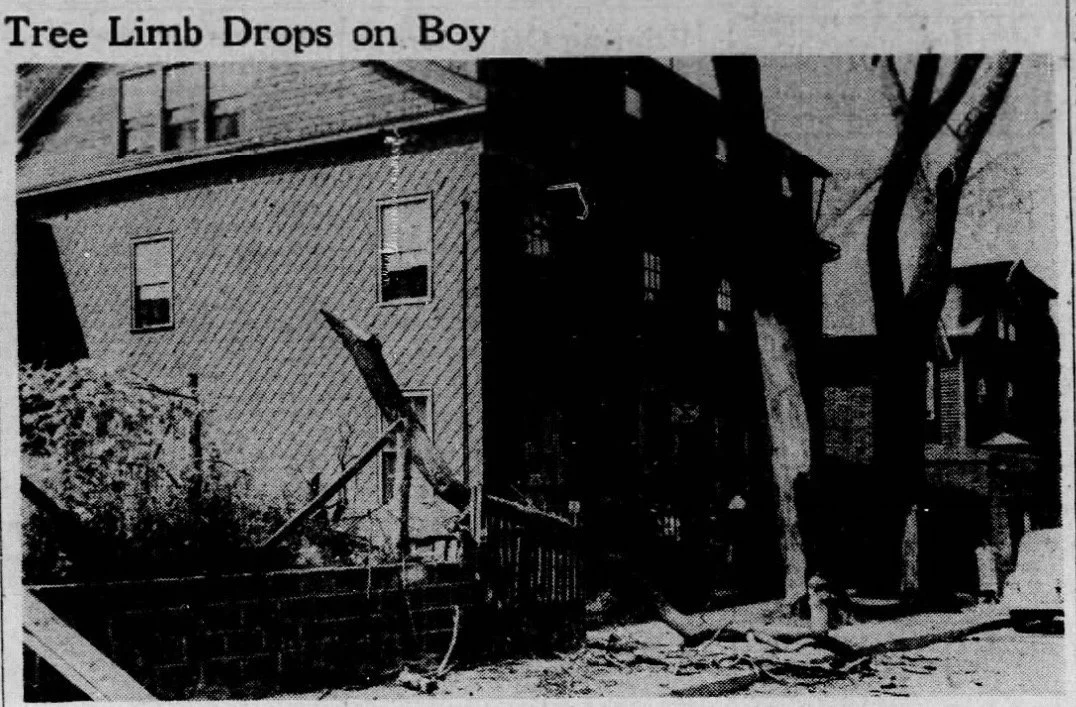
On August 31st, several hundred pounds of dead tree limb fell, the brunt of which narrowly missed a nine year old boy who happened to be walking by. Stephen Olbrys of 163 North Bank Street required 5 stitches to properly close a head gash.
Both trees were taken down.
courtesy The Day, 8/31/53
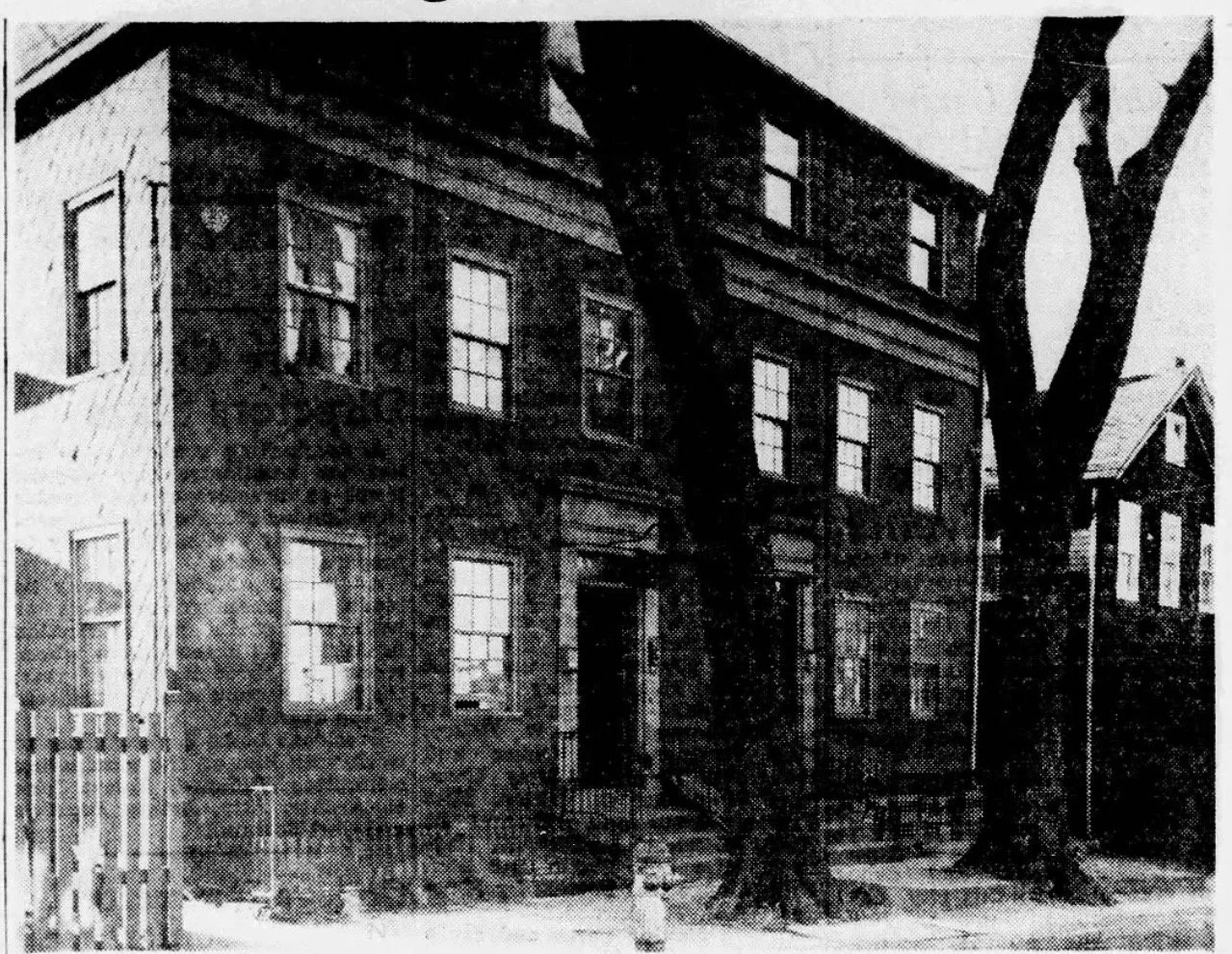
192-94 North Bank Street, courtesy The Day, 1/27/53
December of ˋ54 saw the final victim . On the 7th, William J. Duprey, 72, was discovered dead from carbon monoxide poisoning due to lack of ventilation. Mr. Duprey was staying in a room where the door had not been modified with vent holes. In addition, the investigation showed that vent holes in the door of one of the four rooms that had been modified had been stuffed with paper. An inspection by health, fire and building officials found no violations. Until stricter measures could be passed into ordinance, all 10 rooms in the attic were ordered padlocked (through Mr. Lovitch‘s attorney) by City Manager Henkle. An eleventh room on the second floor was also secured against occupancy.
On Monday, April 25, 1955, Council passed a beefed-up version of the rooming house ordinance whereby the nature of the occupant‘s stay was irrelevant and the one-time fine of $100 was changed to a daily violation with each day counting as a new violation. The new ordinance took effect June 1st.
The rooms at 192-94 remained secured and vacant while Mr. Lovitch continued renting the three apartments.
On February 17, 1958, Mr. Lovitch, now 91, suffered a severe concussion and dislocated shoulder from a stair fall in his home. He never recovered. His son Manuel, now living in Holyoke with his wife Ida, took over management of the apartments.
Later that year in October, William Thompson, 74, a custodian at the Winthrop Trust Bank, suffered a stroke and passed in his apartment at #194.
In 1959, no one died at 192-94 North Bank Street. The Hooks family lived in the #192 half, the Dillons in #194. The Hooks family stayed on through 1960, 6-year old Vincent Hooks suffering a rock throw from a playmate who was later admonished by a police officer, and may have been involved with a kerosene leaf fire set in the back yard by children aged 4 to 6. The Hooks apartment was broken into twice with nothing taken. The year seems to have ended for the Hooks without further incident.
1961 would prove to be different.
On February 9th, a chimney fire broke out in the north end of 192-94 North Bank Street. The Pemberton family living at #194 saw smoke and sounded the alarm rushing out to the street with the Hooks family behind them. The flames took hold of the floor, walls, and ceiling of the first floor and were it not for the two hours of hard work by the F.D.N.L., the house and possibly the one next door would have been reduced to ashes in 15 minutes. As it was, the fire gutted the Pemberton apartment and waterlogged the Hooks apartment at #192. Chief Joseph Corkey estimated property damage at $2,000 and valued personal property loss at $500.
Both families were able to spend the night with neighbors.
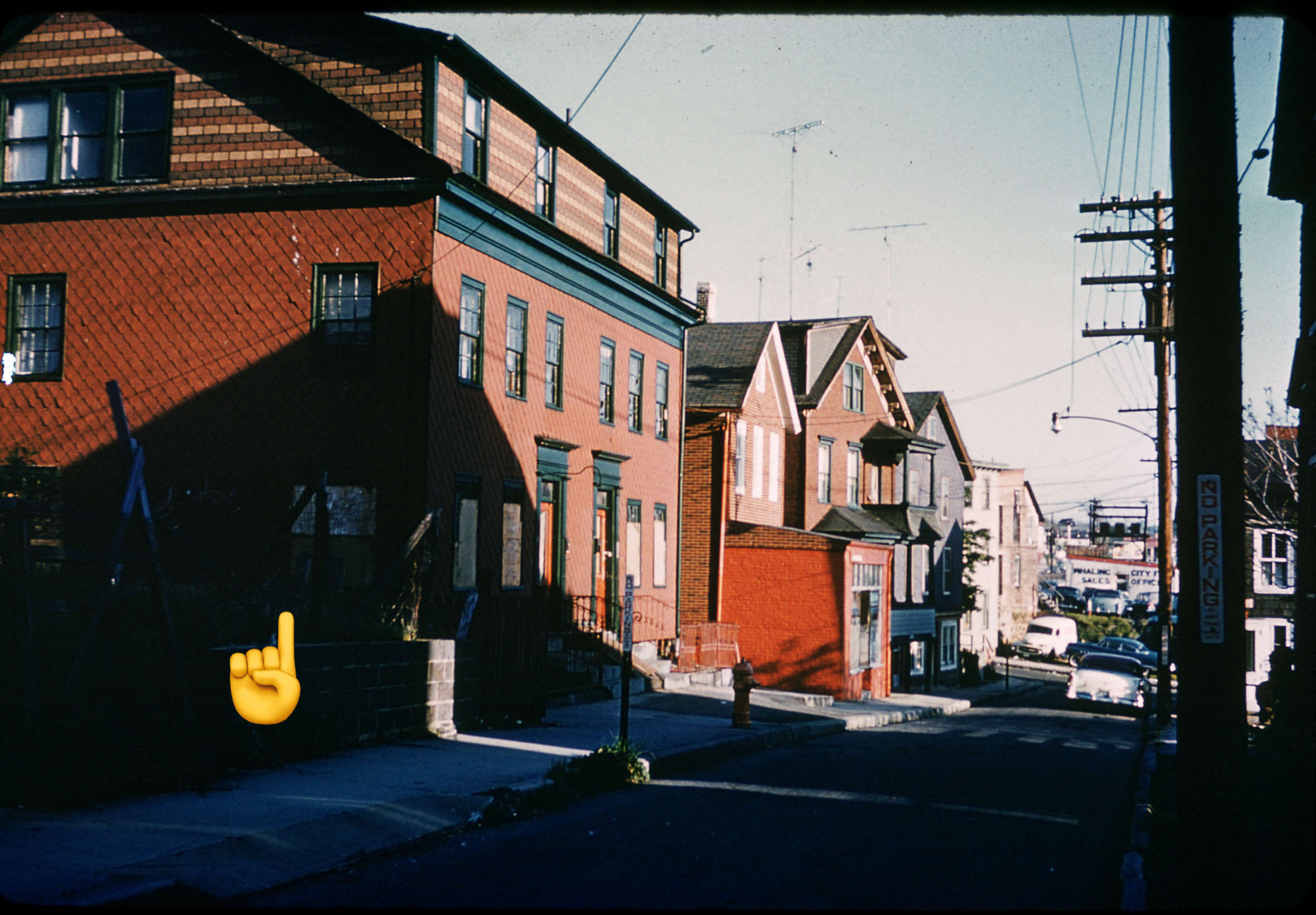
This picture of 192-94 North Bank Street was taken by George Oldershaw in May, 1961, three months after the chimney fire. Note the boarded up first floor windows. The Pemberton family lived on the north or right side (#194). The Hooks family lived on the south or left side (#192) in the same apartment as the Lovitch family.
In the meantime, city officials and other New London boosters were looking with envy at cities like New Haven, Bridgeport, and Hartford, cities that already were using federal dollars to clear cut older neighborhoods and thus provide developers, architects, and highway engineers with the space needed to bring their cities, as Mayor Harvey Mallove of New London stated, into the sixties.
In 1949, Congress had passed a housing act that together with in-sync planning for interstate highways provided local officials with the hundreds of millions of dollars needed to transform their tired, dirty and crowded cities of the past into… into what?
The buzzword became redevelopment. Over 500 buildings would need to be demolished and 2,300 people relocated once the paperwork had cleared for the 9 million in federal dollars to be matched by the 1 million local dollars required for redevelopment. In August, 1961, appraisal work on those properties to be taken had started with teams of realtors making the rounds, taking pictures with what must have been Brownie cameras and filling out checklist appraisal forms. Should owners refuse selling to redevelopment, the agency had the legal tool of eminent domain, which legalized the city‘s taking of private property (with $ compensation) for economic development.
So where did this leave Manuel Lovitch and fire-damaged 192-94 North Bank Street?
With the demolitions to start in what could be only a couple of years, the son saw no financial reason to restore his father‘s apartment house. Before the fire damage, the house was appraised for taxes at $6,000, which most likely would be the amount redevelopment would offer in exchange for title to the property.
This was of course a waiting game. And during this waiting game, the house was periodically squatted by transients looking for free shelter and privacy. Each break-in required another phone call and payment to have a door or window resecured. On one evening in September, 1963, firemen responded to a mattress fire set off by a discarded cigarette. The house was on a growing by the day watch list of vacated properties known for lodging drifters. The burning mattress was pulled from the house and hosed down, the house spared any damage. A long distance call went through to Holyoke.
And then the day came when the waiting was over.
On Wednesday, September 30, 1964, The Day reported the sale of 192-94 North Bank Street to redevelopment. Manuel and Ida Lovitch could be heard celebrating in the streets of Holyoke. The money from the sale eventually helped their move to Miami Beach. Holyoke, it seemed, got snow in the winter.
And the ghosts would finally be put to rest for $6,000.
—————————————————————