Welcome to Lost New London‘s New Haven Railroad experience!
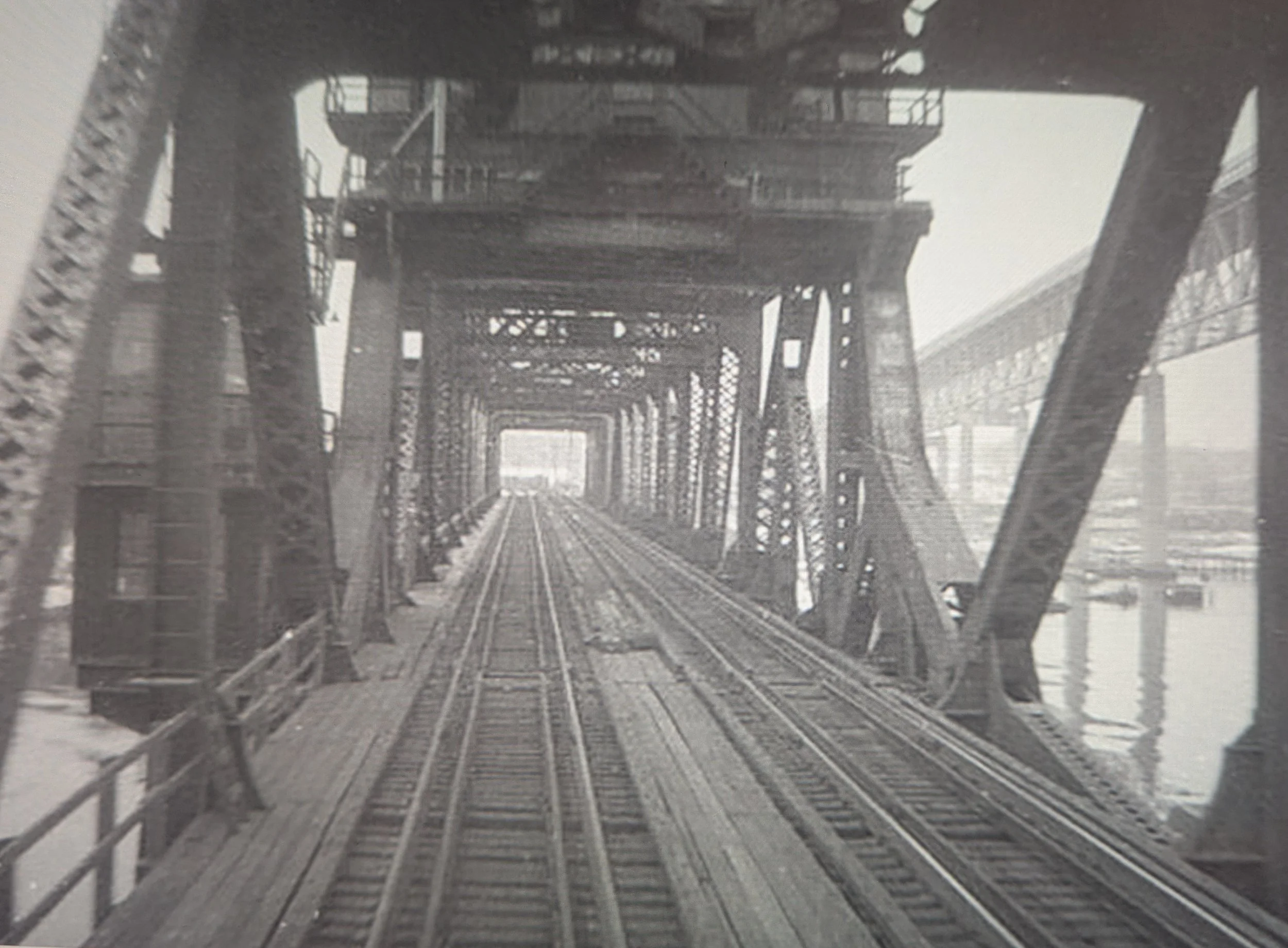
We‘re riding over the 1889 drawbridge crossing the Thames River heading from Groton into New London. The Gold Star Memorial bridge (I-95) is on the right. Credit to Ron DeFilippo for taking this photo in 1971.
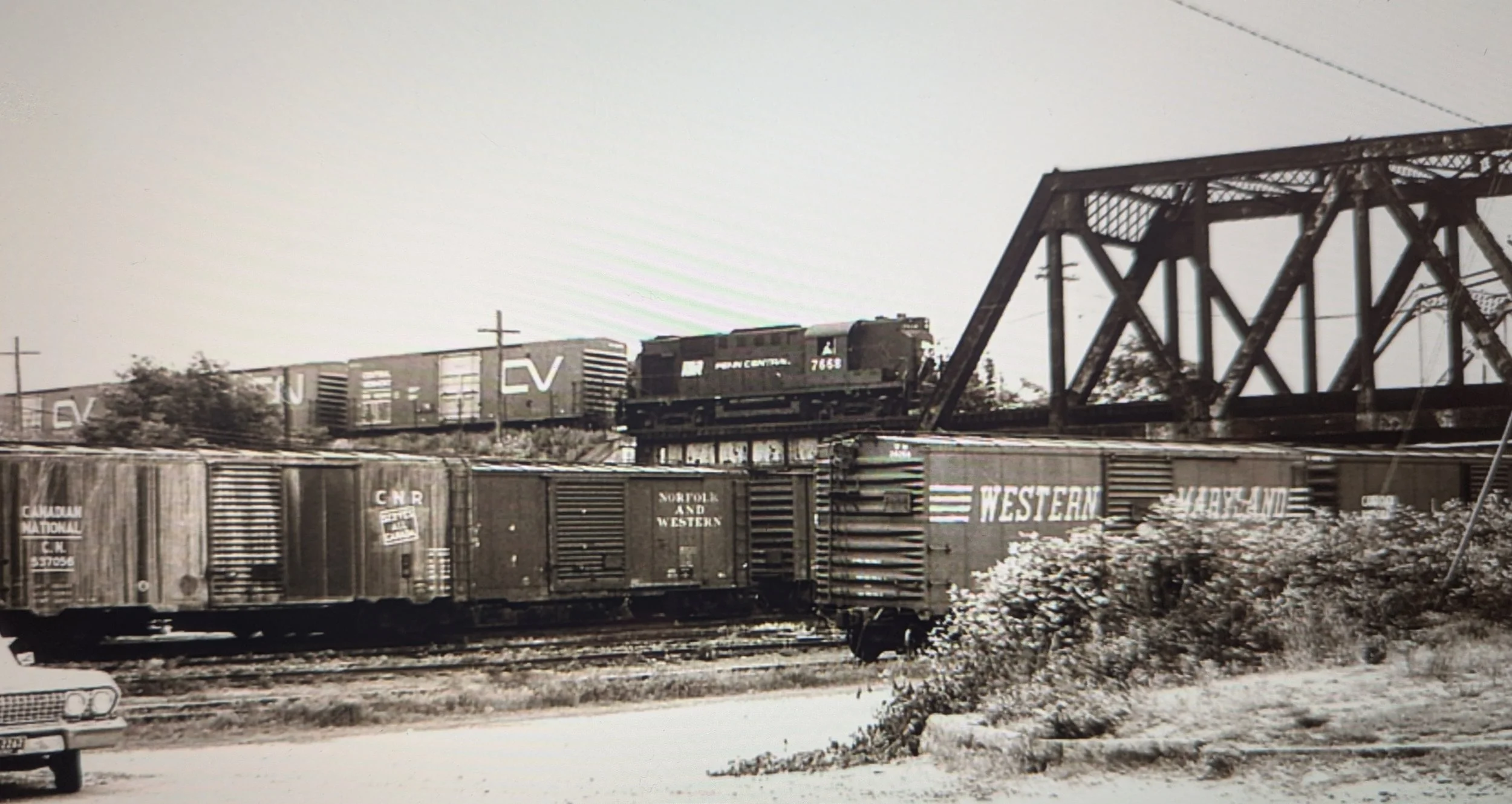
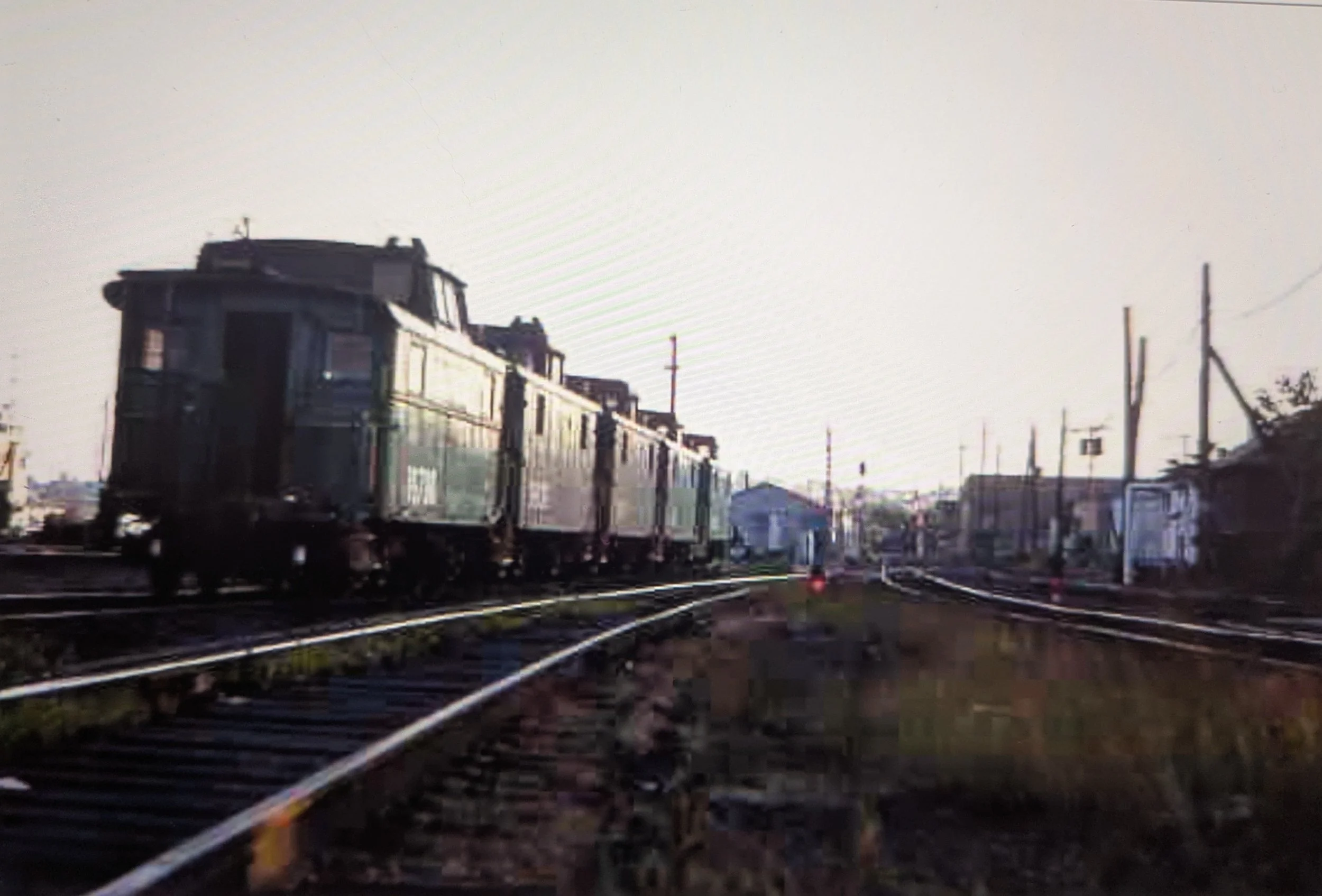
We are off the bridge and about roll over the CV‘s yard in East New London. #7668 is pulling a string of CV and parent CN boxcars to be dropped off. Bruce Nelson took this picture at the foot of Fourth Street in June, 1970. (Note the maple leaf SERVES ALL CANADA emblem on the CN boxcar most likely carrying grain from Franklin.
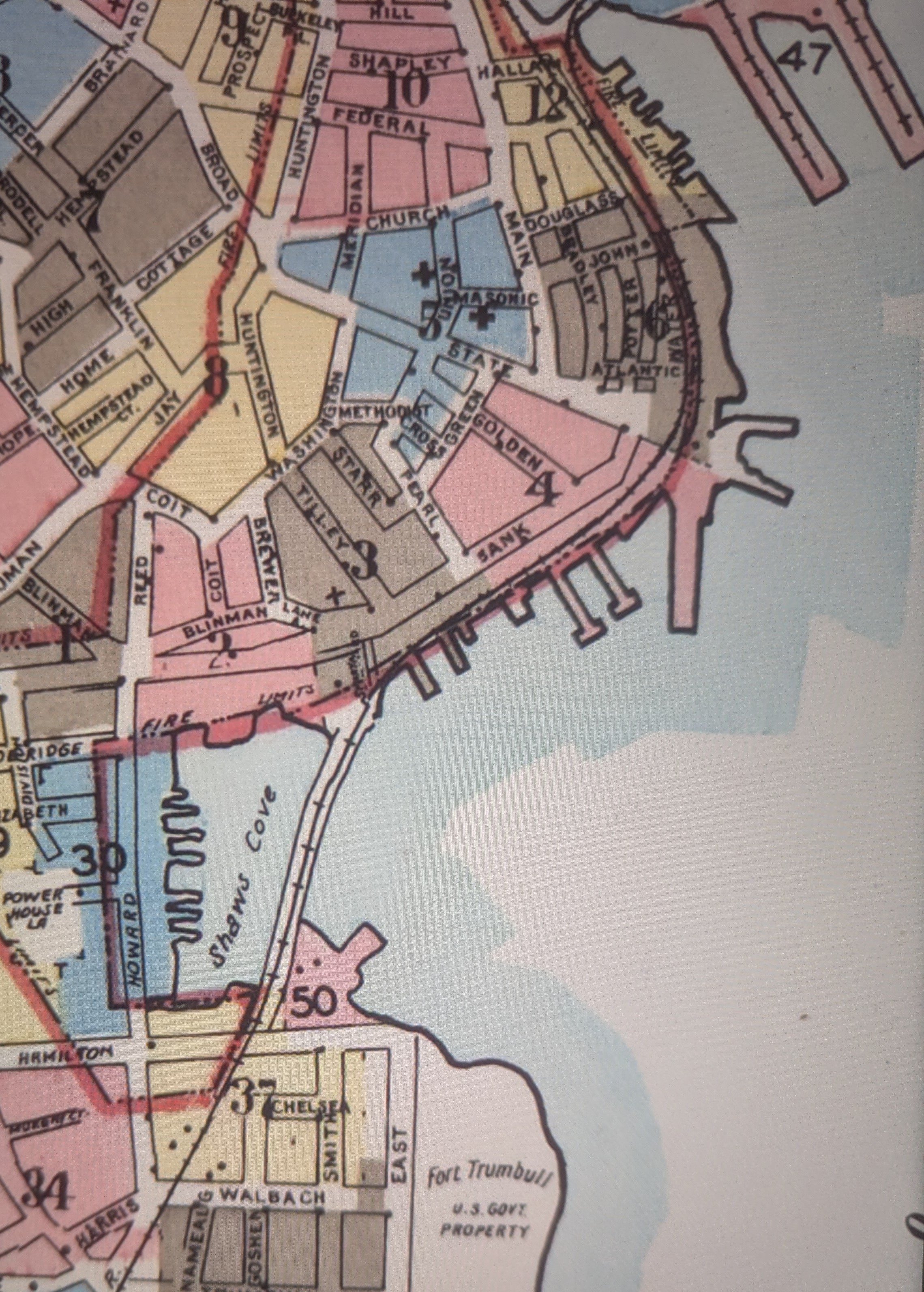
Overview of the 1954 Sanborn Fire Insurance map showing the New Haven trackage that ran along the shoreline.
Starting at the top and rolling south, we have:
the NH/CV interchange track running from Hallam down to John Street
Union Station at the foot of State Street
Sail Loft, a small yard for engines and passenger equipment like Budd cars and the short Roger Williams trains (notice protruding land wedge opposite Golden Street
the Shaws Cove swingbridge simply shown as a white strip
Fort Yard, the yellow square area with a 37, and small pink triangle with a 50
Courtesy Library of Congress
Where the current Fulton Park is at Crystal Avenue and Water Street, the New Haven once had a yard and roundhouse. The roundhouse was taken down by 1900 as Midway Yard in Poquonnock Bridge, Groton became the railroad‘s new regional hub.
By 1961, this yard just north of the Hallam Street crossing had been whittled down to three tracks and served as a local on/off load site. As an example, The Day newspaper received shipments of newsprint (paper) from Maine in Bangor & Aroostock boxcars. The yard served the local maintenance of way crew.
Credit George Oldershaw for both photos, 1961
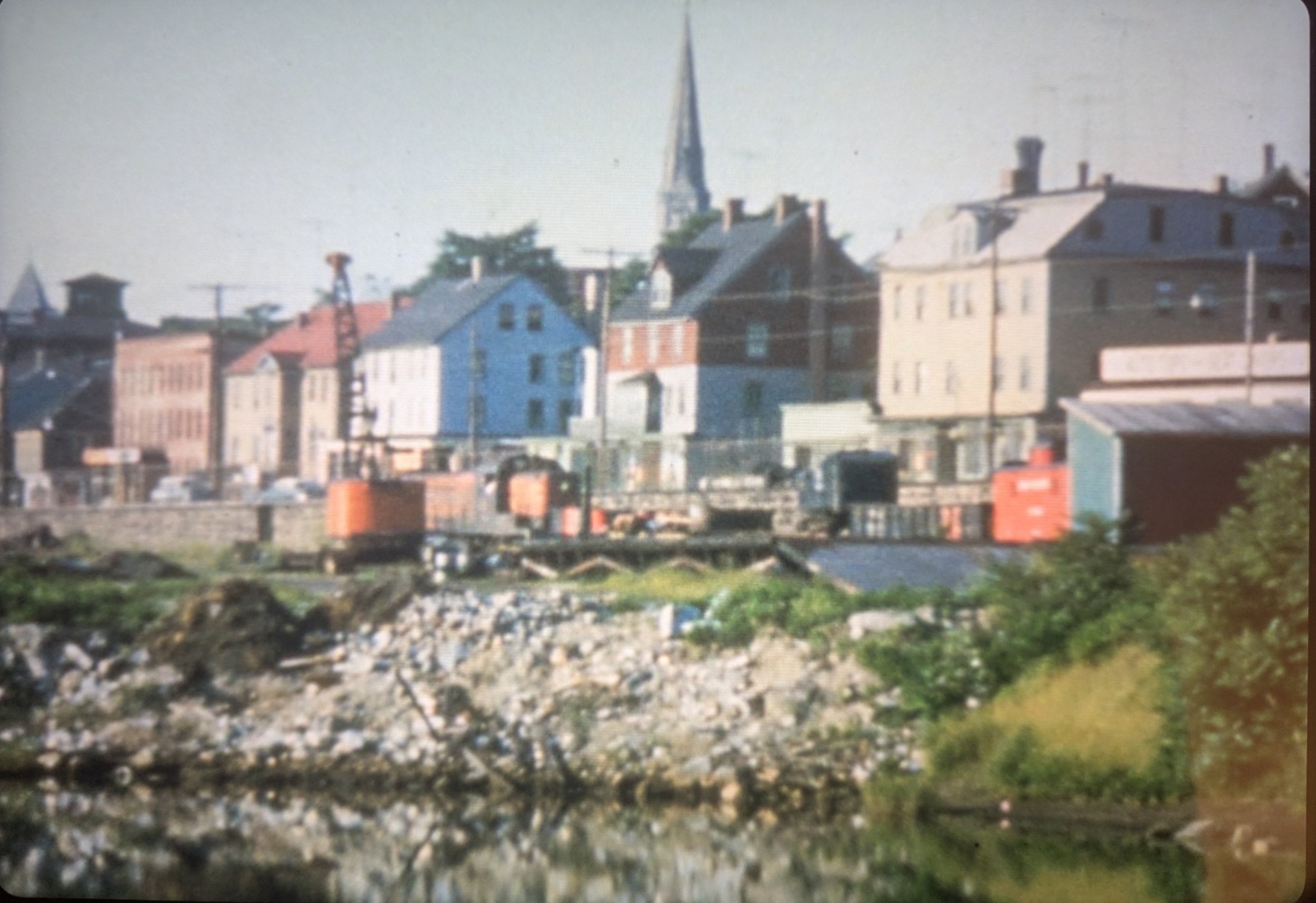
My apologies for the lack of focus, this is a close-up of the photo George took from the bridge! In the yard sit two cranes, an Alco RS1 switcher, a gondola, caboose and the loading platform. Left to right we can spot the following: the pyramid top of the Harris Building, the cupola of the B.P. Learned House, the three-story brick Captain Stevens Rogers house left of Shapley Street, Hill Street at the gap between the light grey and the red over grey house, the First Congregational Church steeple above the gap, and lastly, the bulky, boxy Phillips house circa 1800. With the exception of the Harris Building on State Street, all this is now gone,
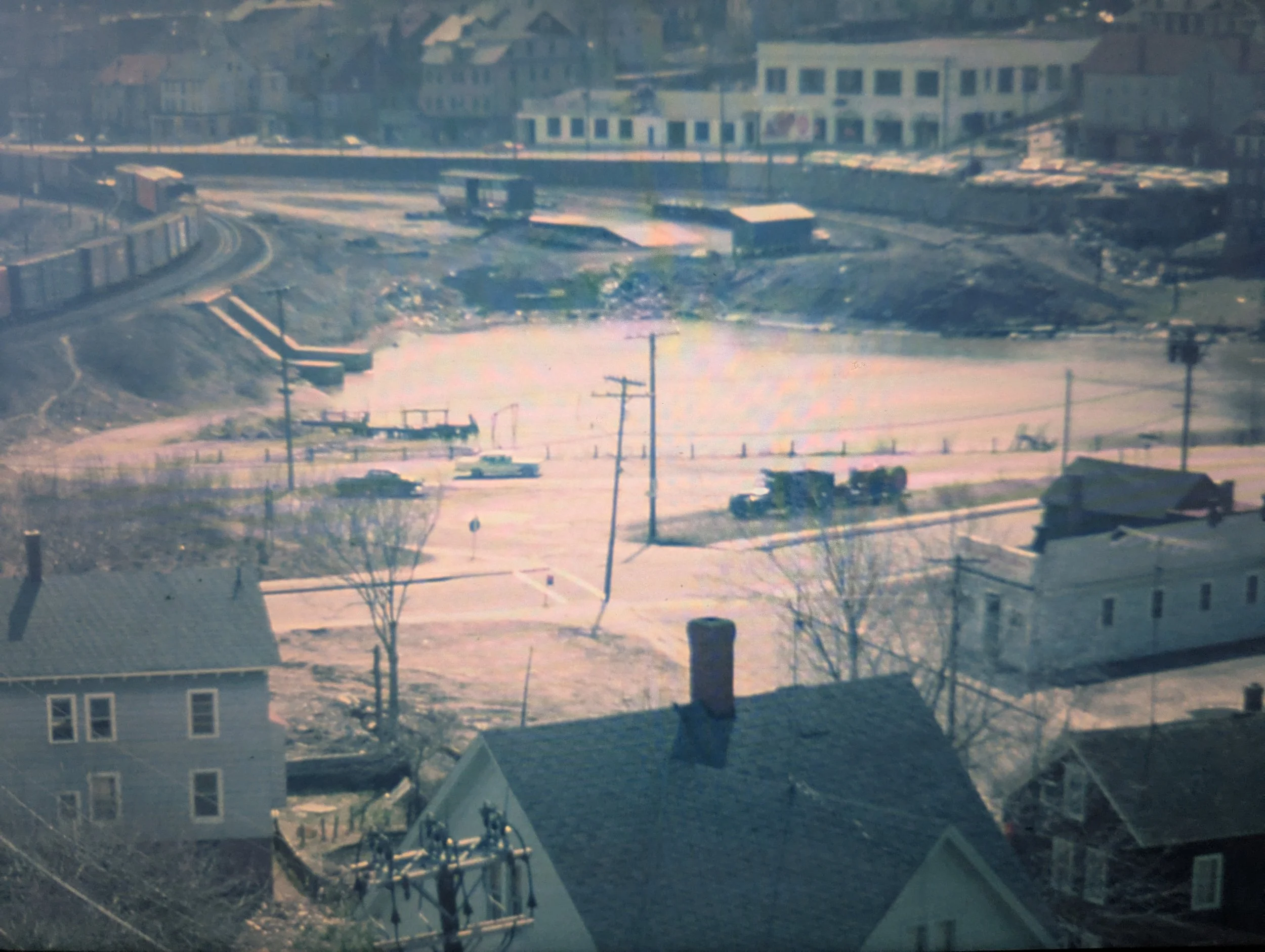
Early 1964. Demolitions have started. The intersection of Crystal Avenue and Winthrop Street. Aubry‘s Market at 75 Winthrop closed the previous November and is already gone as evidenced by the corner vacant lot. To the right, across the street stands the Polish Veterans Club (appealing their award from redevelopment) and around the corner standing alone is Len‘s Package Store at 45 Crystal.
The water is upper Winthrop Cove, Hallam yard just beyond it. Above the retaining wall on Main Street is Whaling City Ford. You can just make out the Model T perched on the roof of the one-story addition. They will be moving to Colman Street in another year or so.
The standing freight is headed most likely to Northrop yard in Providence. Any hitchhikers today? Credit George Oldershaw for this picture taken from the bridge.
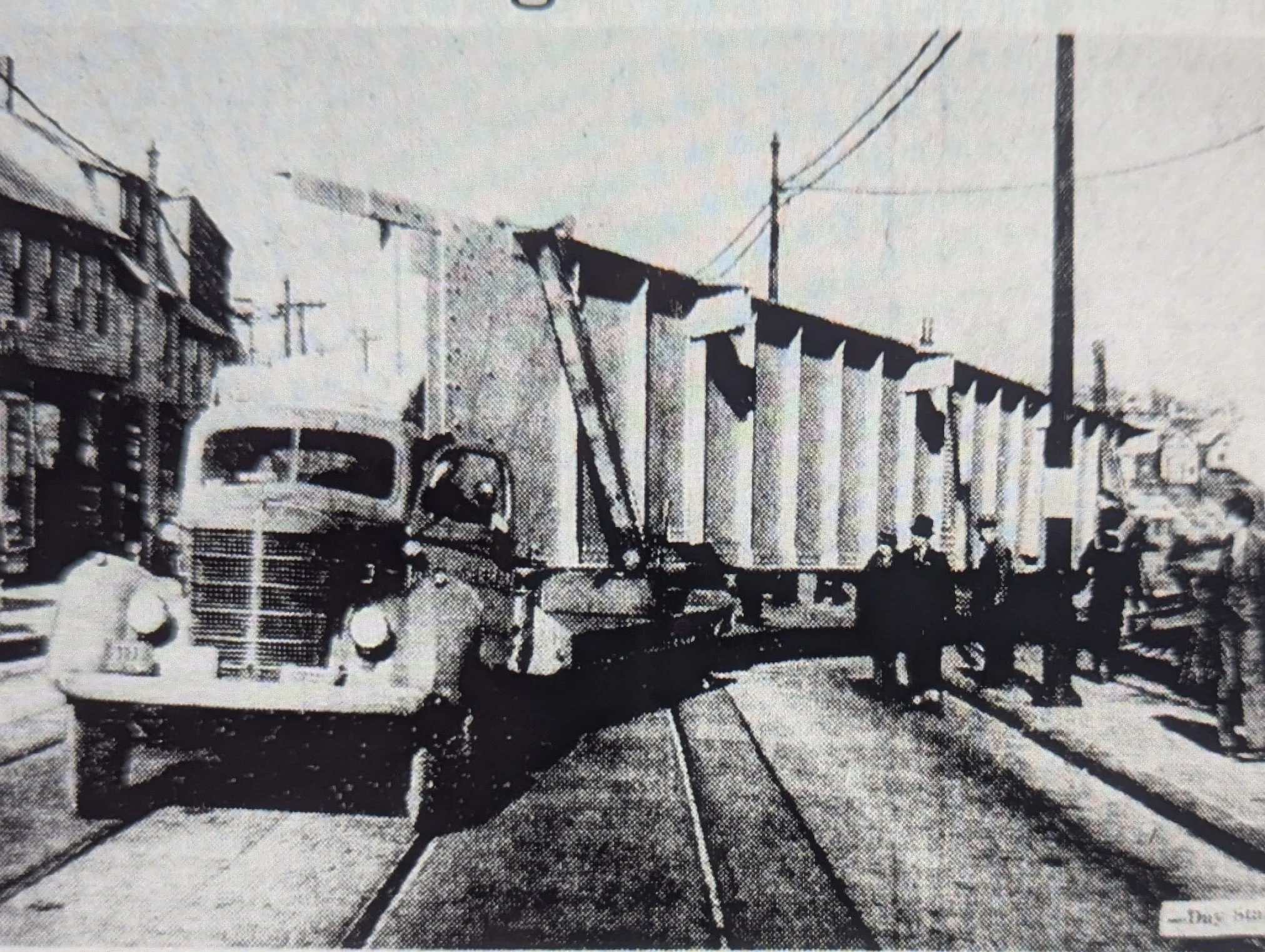
During the forties, fifties, and early sixties, The Day followed unusual yard activity and published the following photographs:
On July 28, 1943, the New London Fire Department took delivery on two pumper engines coming from a plant in Toledo.
On November 28, 1941, plate girder spans arrived by rail for the Gold Star Memorial bridge going up nearby.
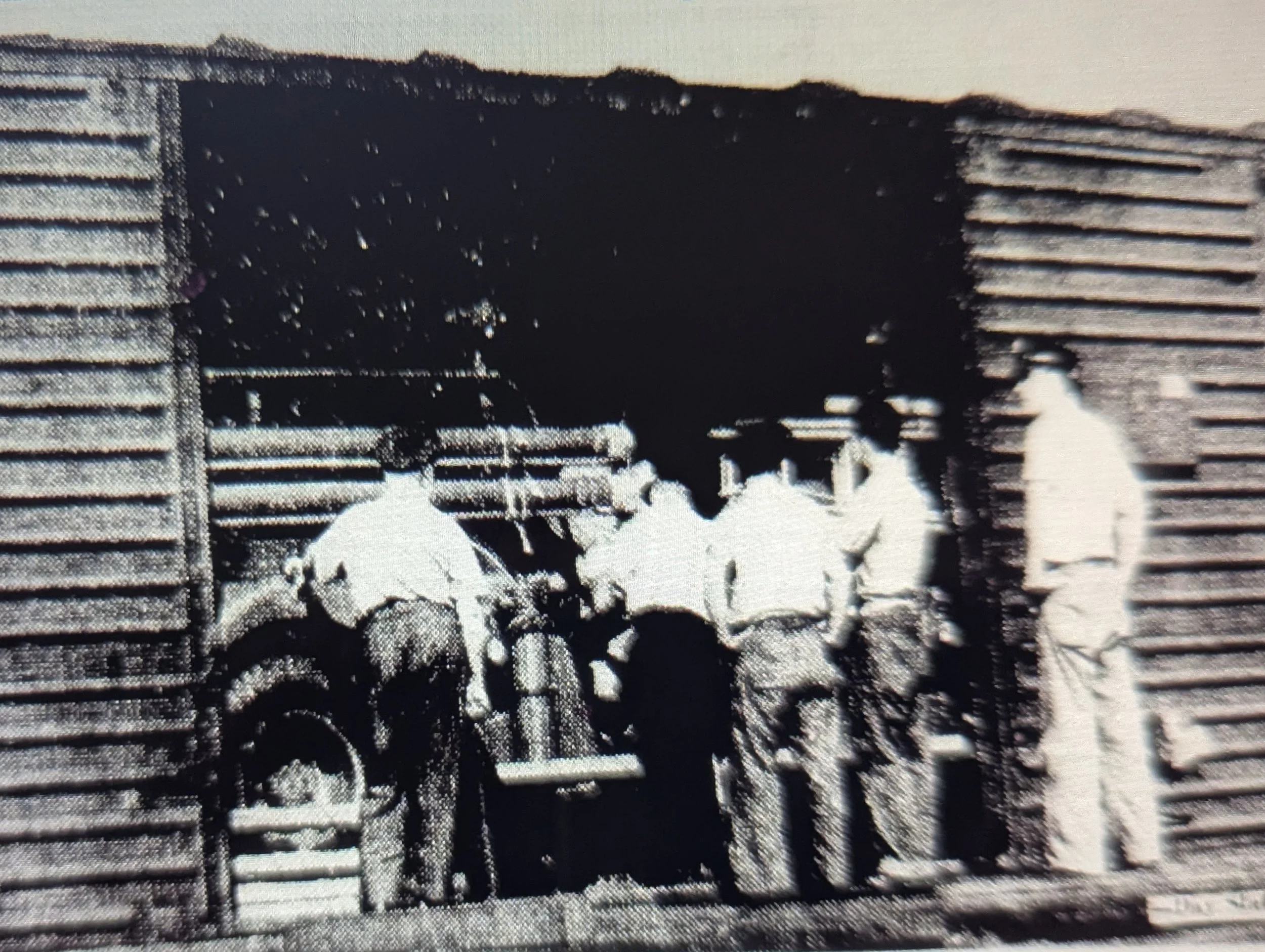
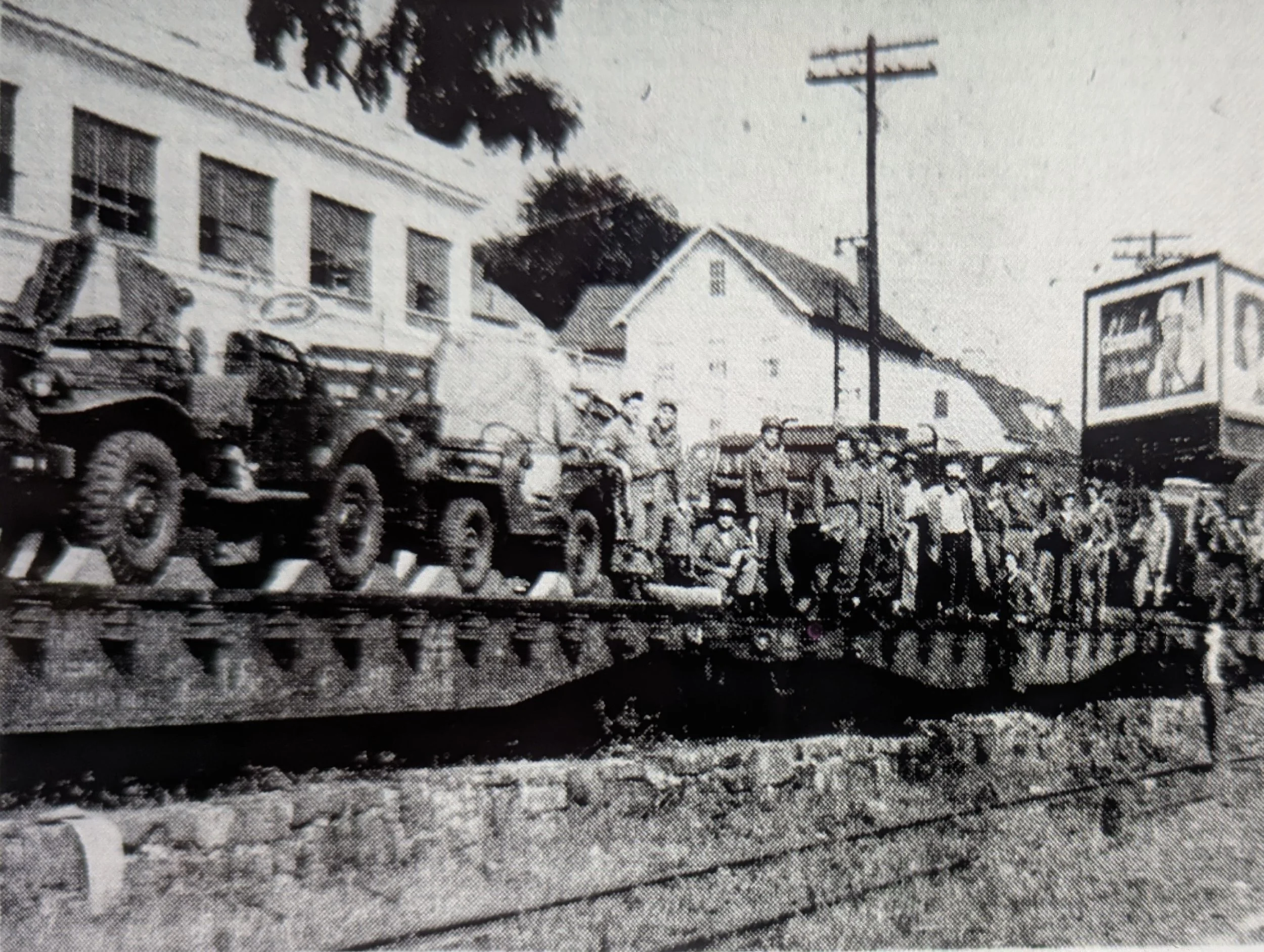
And on August 22, 1950, National Guard units were sent down to Georgia for training exercises.
Note the oval Ford emblem on the building above the Jeep… that‘s Whaling City Ford on Main Street.
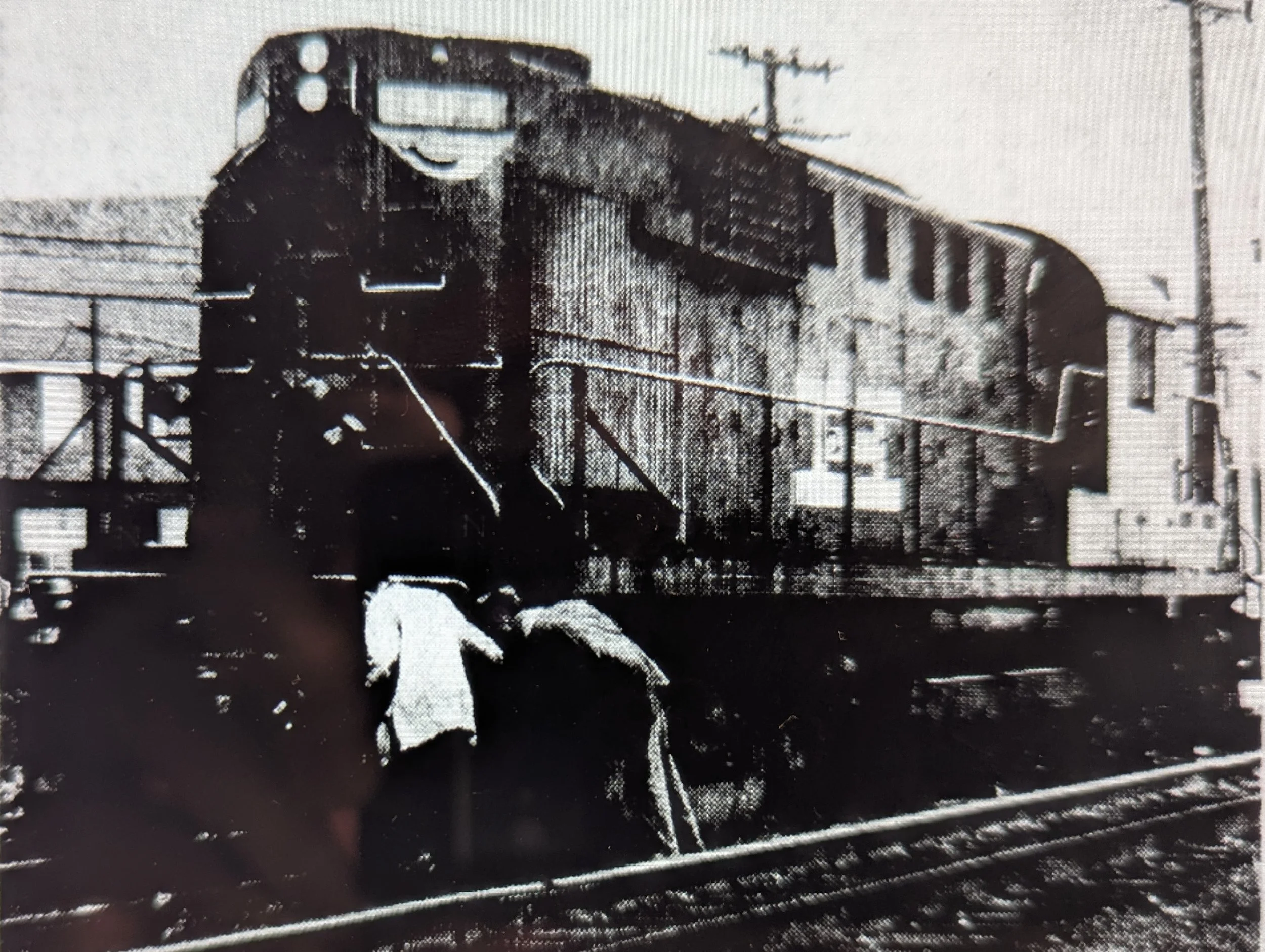
On May 19, 1964, New Haven #1414 is discovered derailed on the yard lead near the Hallam Street crossing. Employees used another engine to put the Alco RS11 right.
So, what happened?
Courtesy of The Day!
Hallam Street crossing looking south toward Union Station, 1944. On the right is the crossing tower. Down the line just to the left of the power pole is the John Street crossing tower.
Courtesy, UCONN Archives
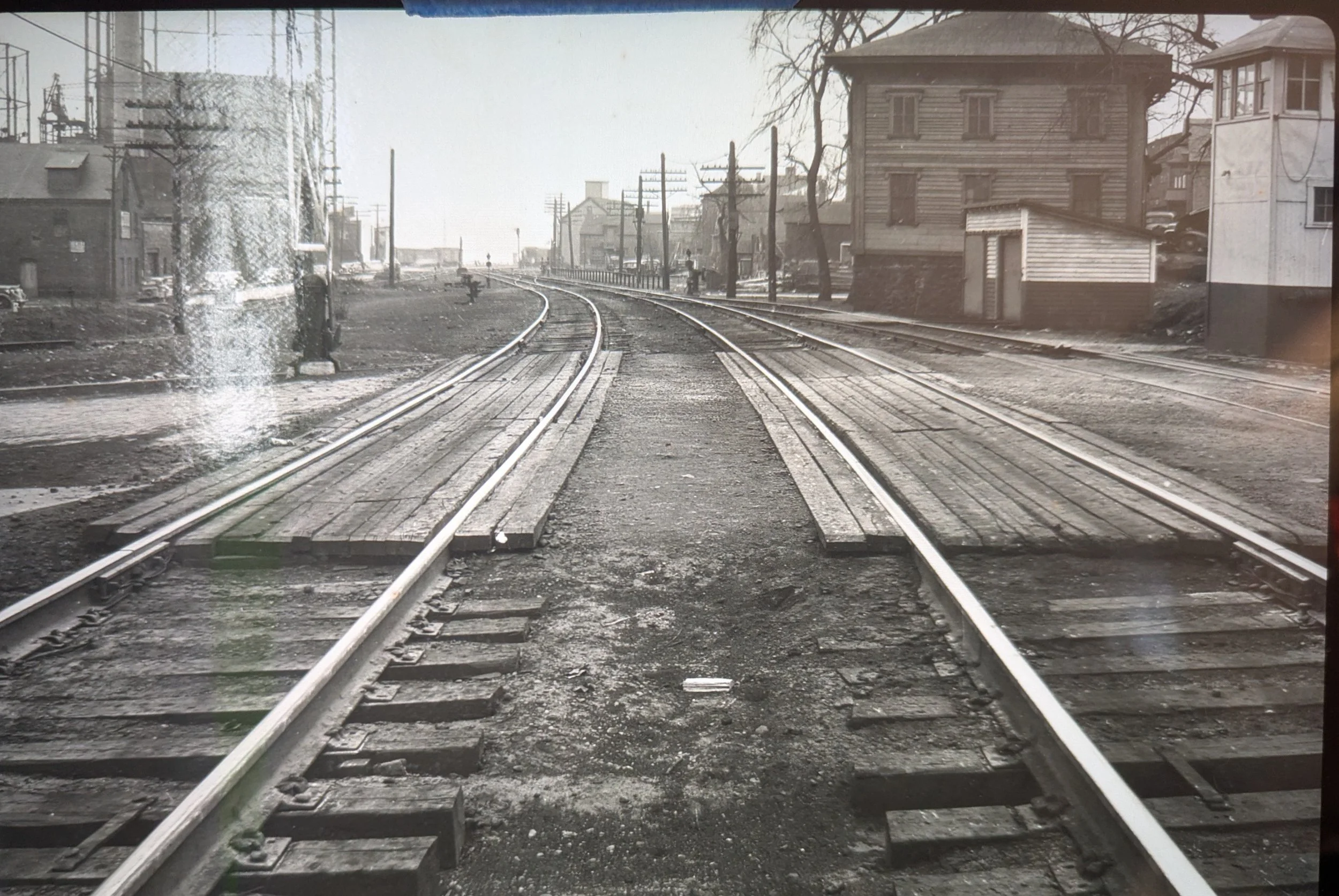
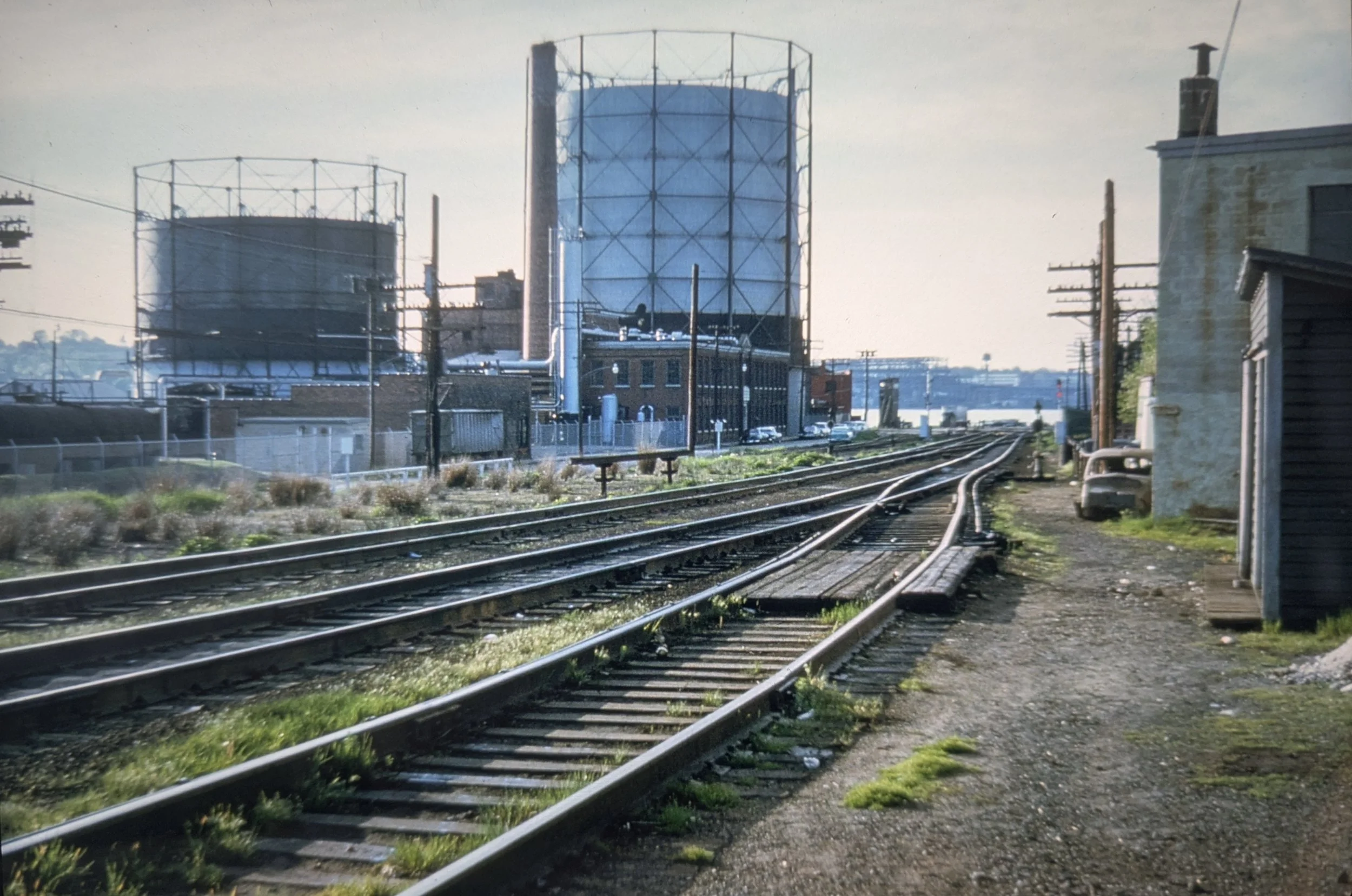
Standing next to the tower, again looking south. Section house on right with track timbers to help with putting cart on/off rails.
Profile of John Street tower visible against backdrop of river and Electric Boat.
Thanks and a hat tip to George Oldershaw, 1961
Union Station is the next stop. Built in 1887 for two railroads that later became the Central Vermont and the New Haven this ark of transportation was designed by H. H. Richardson. Thanks to the efforts of Claire Dale and many preservation-spirited volunteers that later formed New London Landmarks, the building not only outlived its detractors, but it‘s former glory as a temple of transportation has largely been brought back.
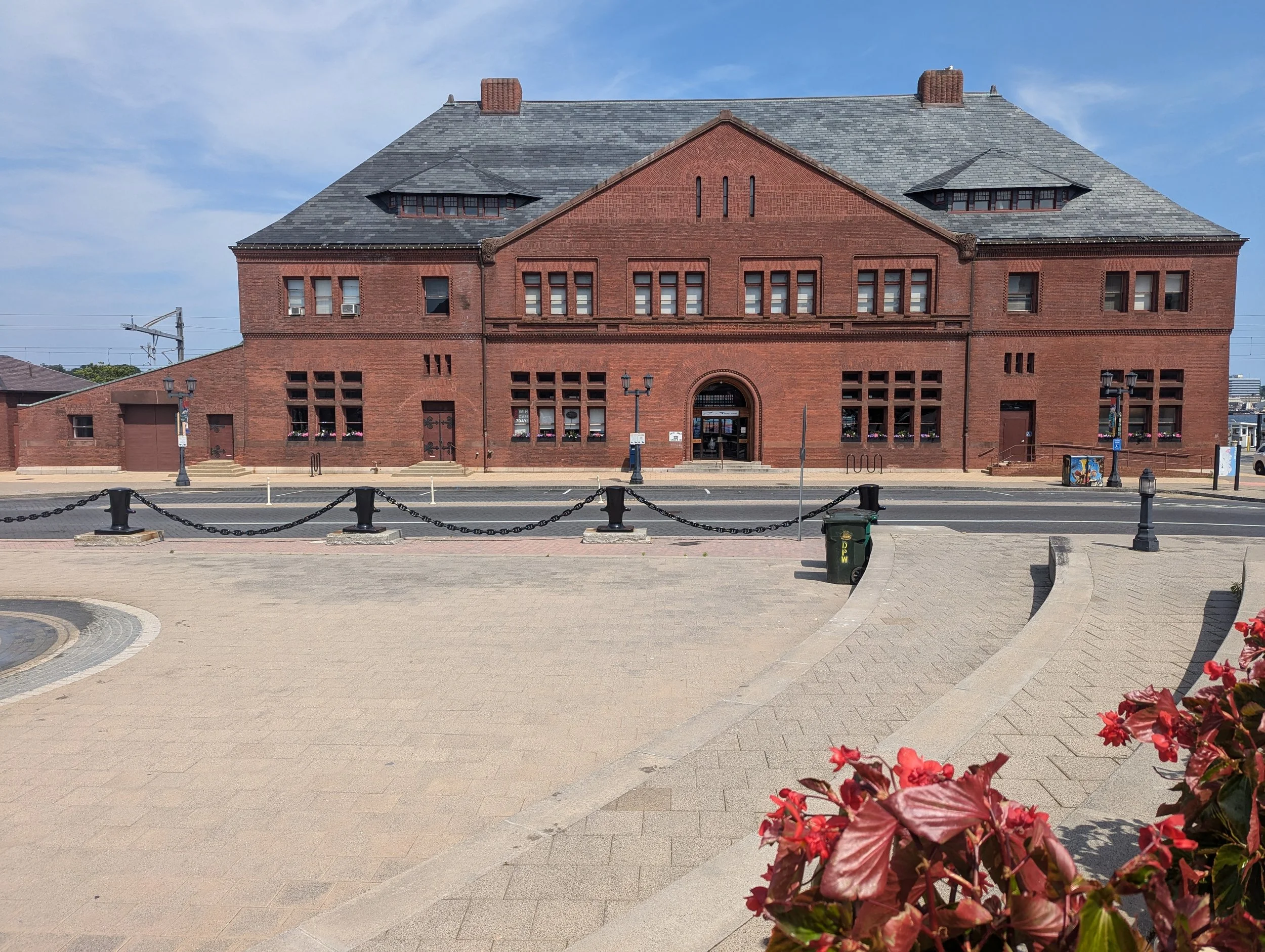
Author‘s picture of Union Station taken in 2024.
Let‘s walk around and visit this station at various points of time.
Legally, the name was the New York, New Haven and Hartford, but New Haven was less of a mouthful.
This scripted herald done in gold leaf against a dark background gave the sense of stability, solvency, duration, and class. That began to change in the fifties. In seeking a more modern and with-it look, President Patrick McGinnis brought in changes, a new image.
Courtesy Ron DeFilippo, 5/70
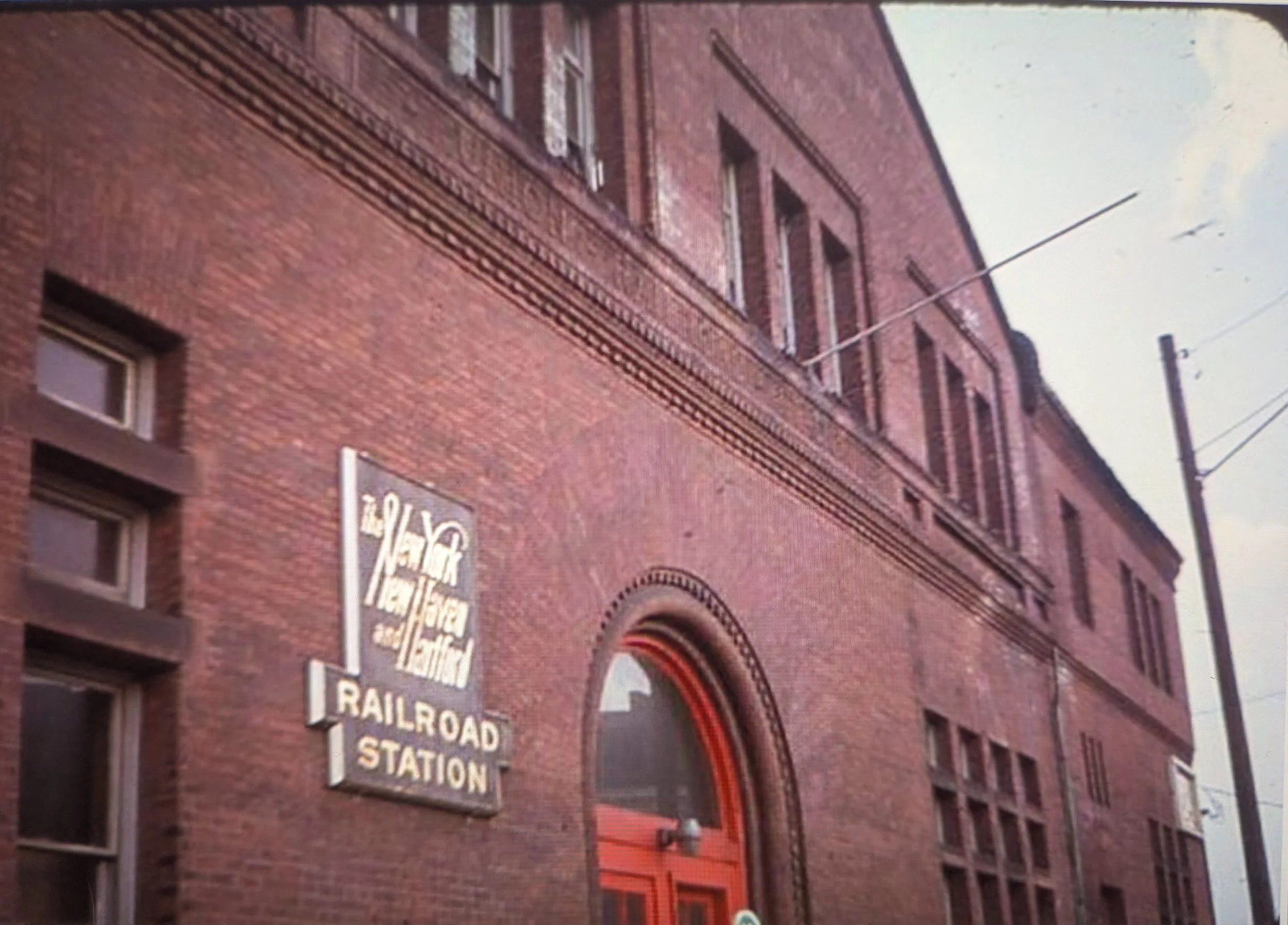
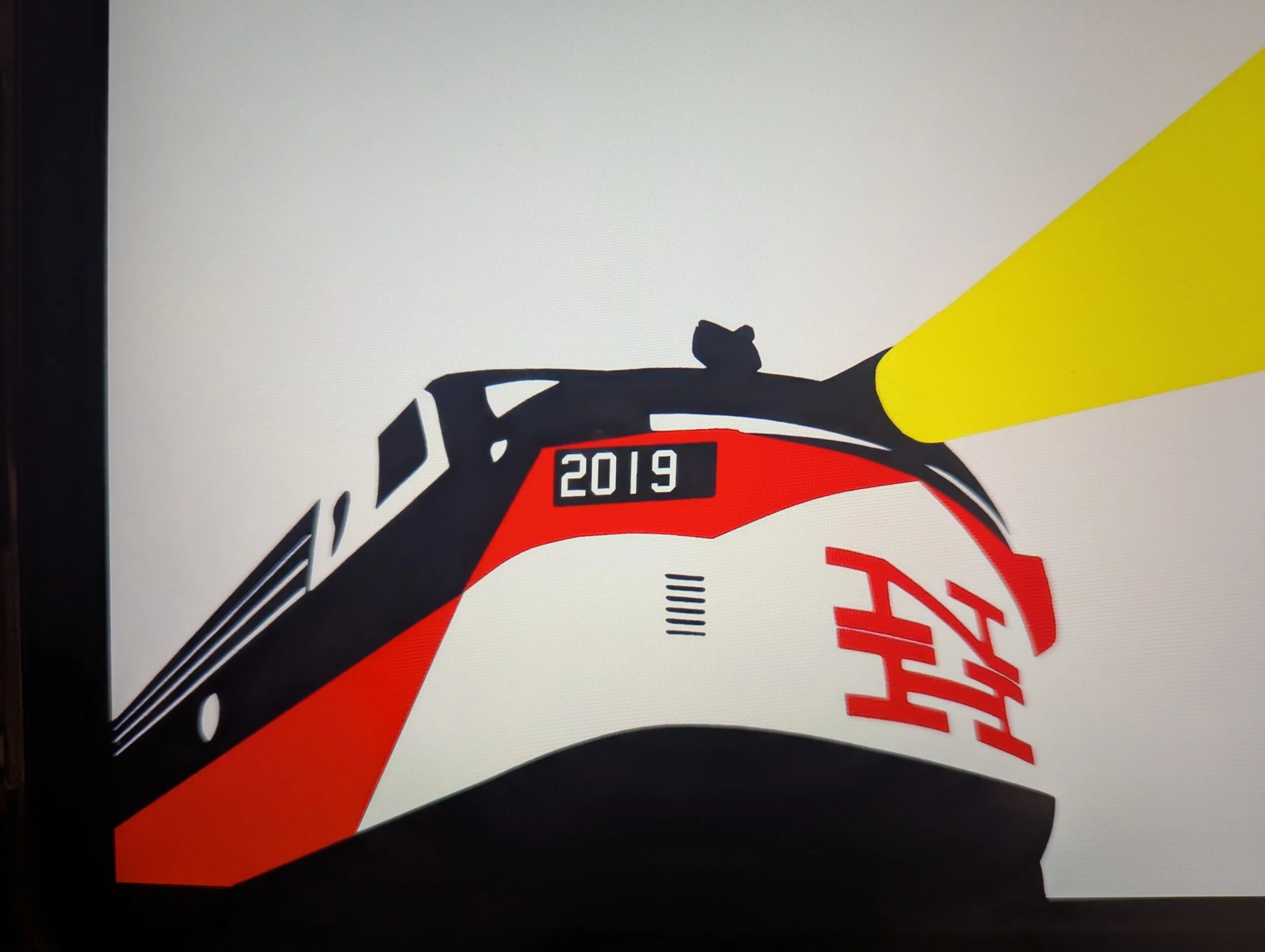
Image courtesy of the New Haven Railroad Historical and Technical Association
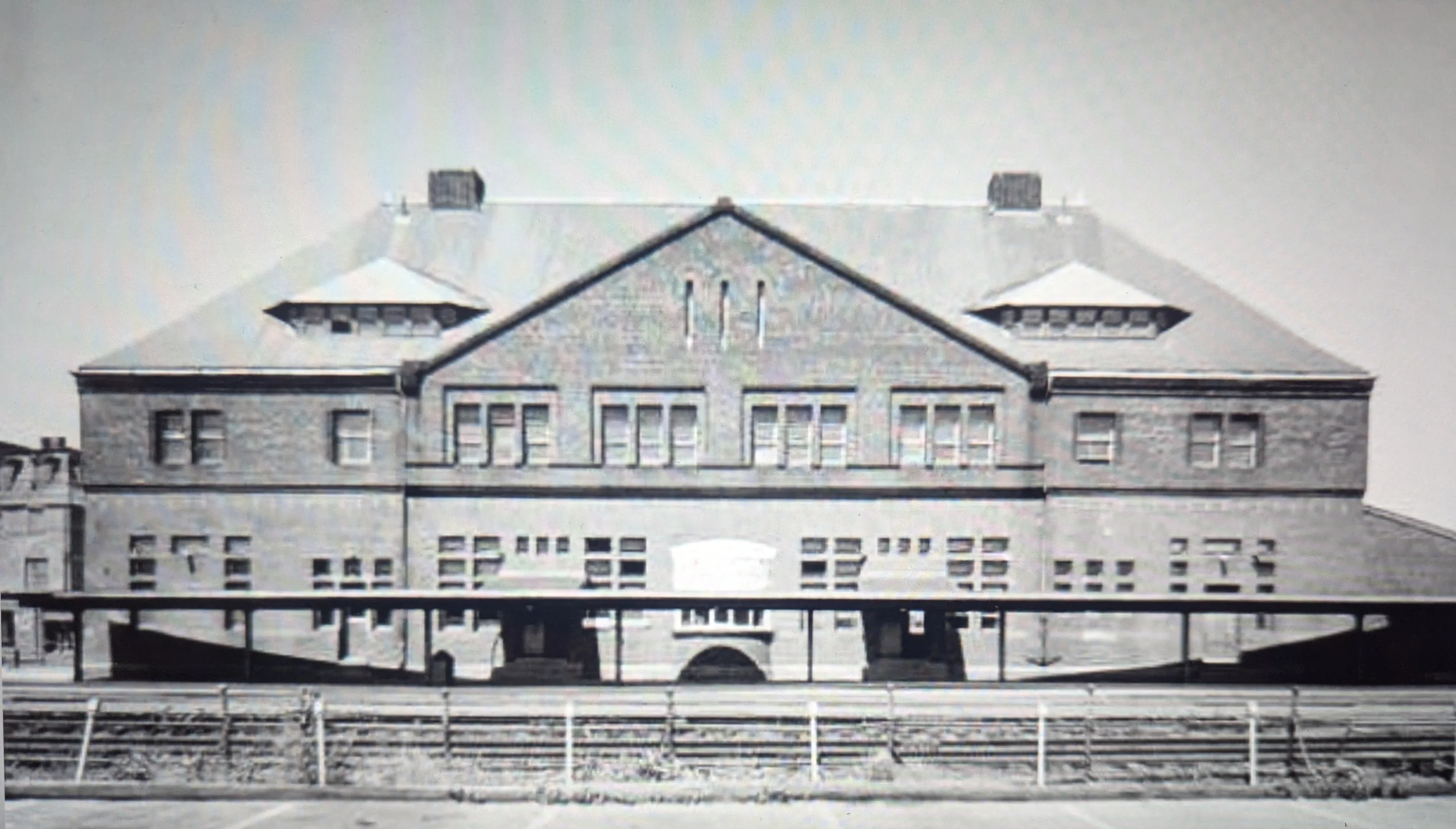
The backside/trackside of Union Station. Notice the billboards and their advertisements are gone. The Ark looks close to it‘s original appearance. Rudy‘s Lounge at 2 State Street is off to the left, mostly out of picture. This hot spot offered 8 years (1972-80) food, cocktails, live music, comedy and go-go girls… but I digress.
Credit CONL, date, photographer unknown
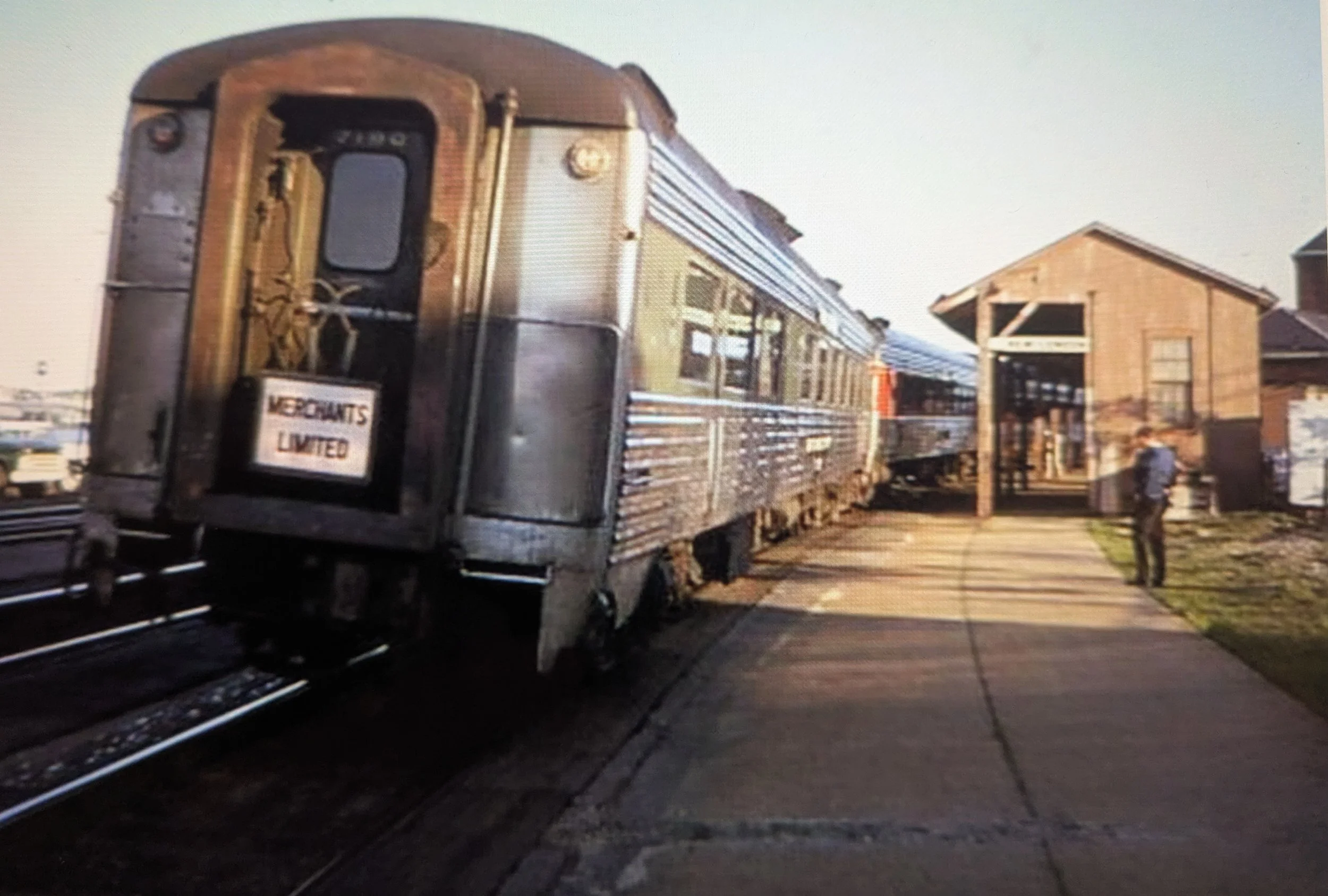
and this is the tail end of the Grand Central bound Merchants Limited. Notice the illuminated name sign for this train which hosted a diner and parlor cars.
Ron DeFilippo, 5/70
Our photographer takes a break and frames a Maersk cargo ship leaving State Pier in 1970. Groton Monument stands to the right.
Thanks to Ron DeFilippo.
We are at the north end of the platform. A crew member is looking aft, waiting for the conductor‘s all clear or highball hand signal.
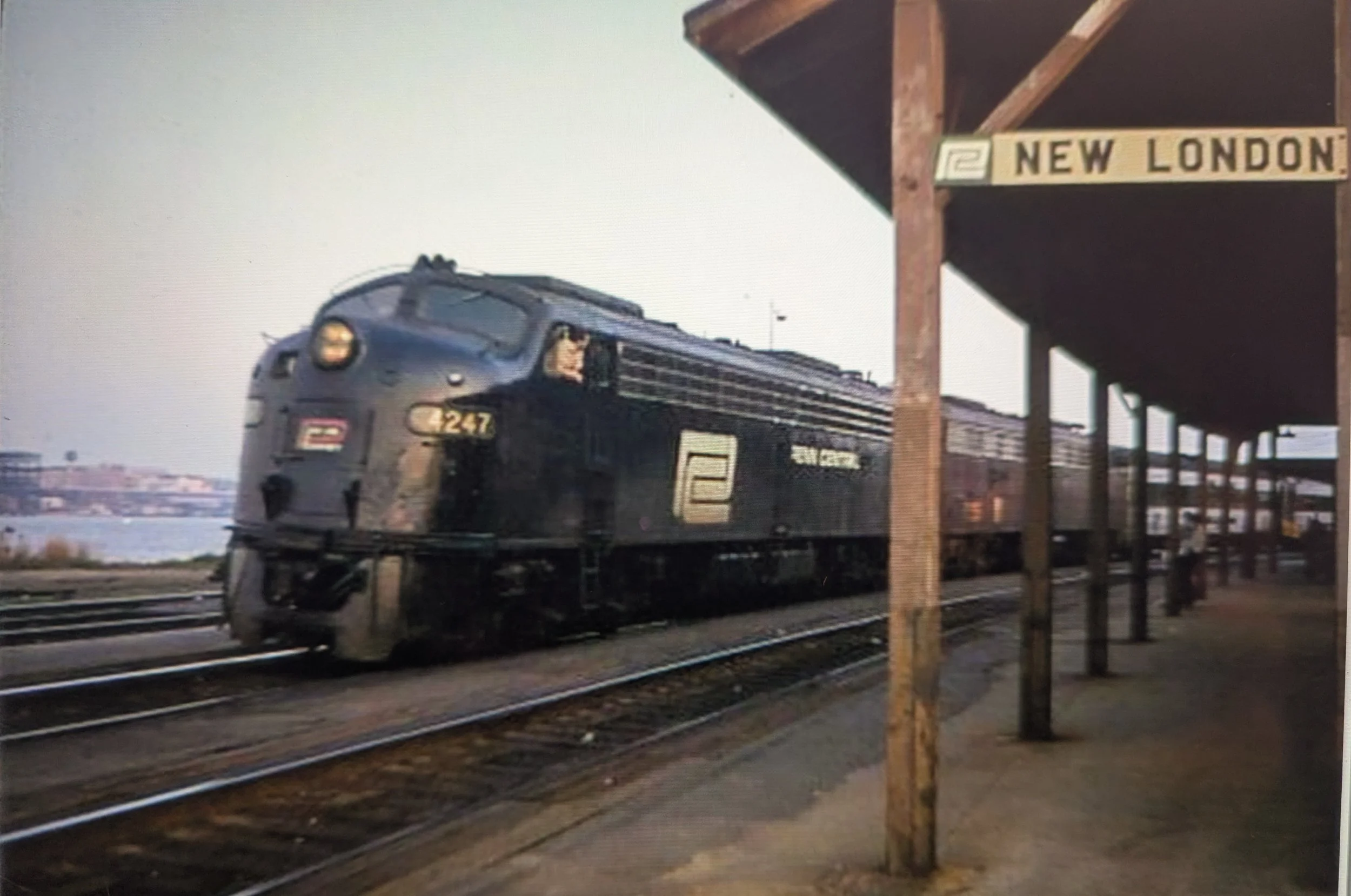
This is the Boston-bound Merchants Limited at around 5:30pm being pulled by a pair of ex-Pennsylvania E8s from the Pennsylvania- New York Central 1968 merger. Electric Boat is in the background across the river.
Credit to Ron DeFilippo, 5/70
Not all trains carried a name. This is simply train #170 waiting for the conductor‘s signal to proceed on to Old Saybrook, the signal aspect a green over red.
The small yard now occupied by a McGinnis boxcar and a tank car with diesel fuel is called Sail Loft as a nod to the whaling era docks that once stood here before the massive infill needed for the railroad right of way circa 1850.
Note the superstructure of the Coast Guard navigation buoy tender at what was once the Custom House pier. Anyone know the name of this tender?
Credit to Ron DeFilippo, 1970
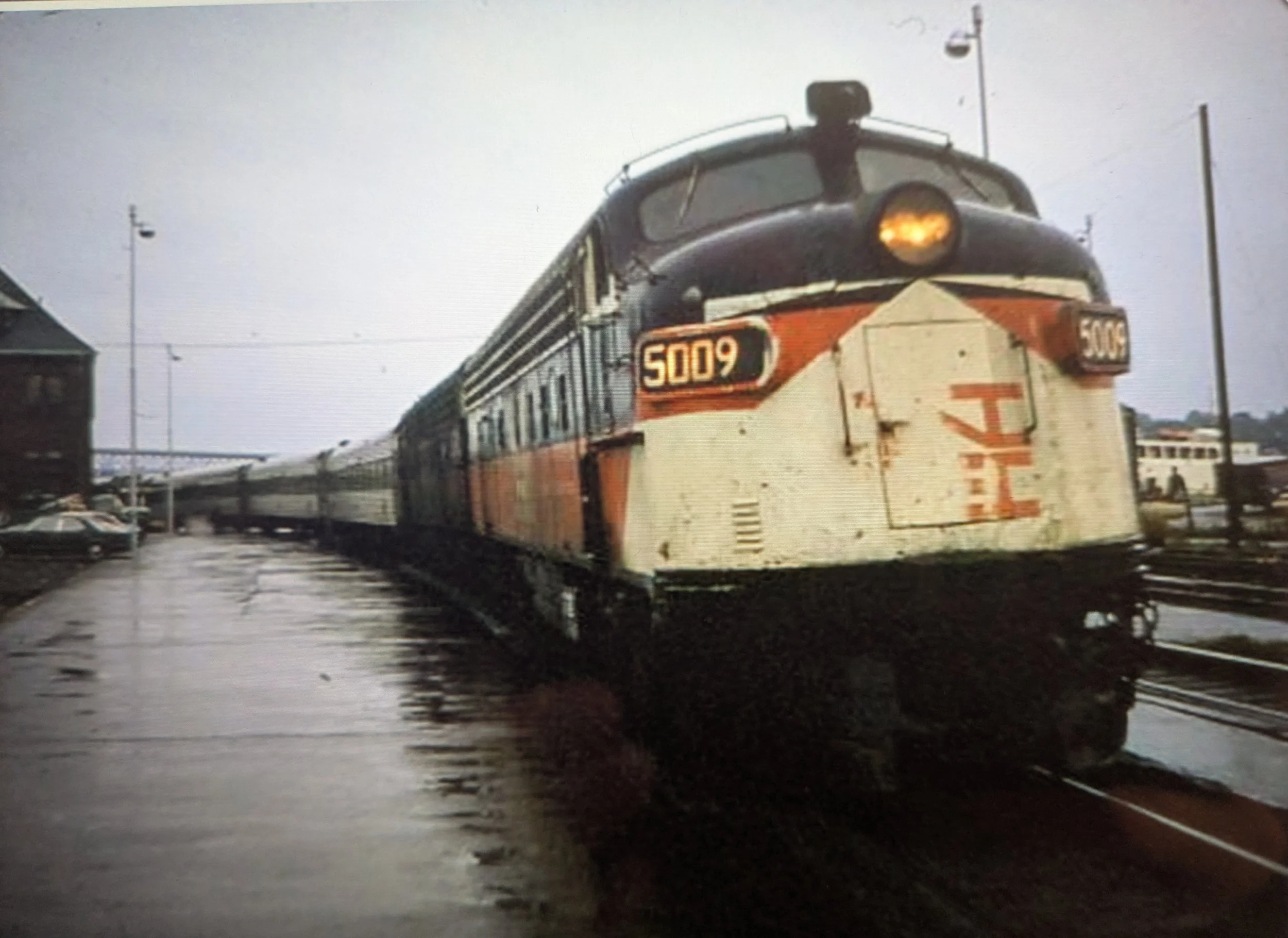
South end of the station platform on a rainy day with another Merchants Ltd. headed for Grand Central. Many FL-9s retained their New Haven livery even after being assigned commuter service on the Hudson River Line. You can visit and board one today at the Eastern Connecticut Railroad Museum in romantic Willimantic…
Ron DeFilippo caught #5009 sometime in ˋ70
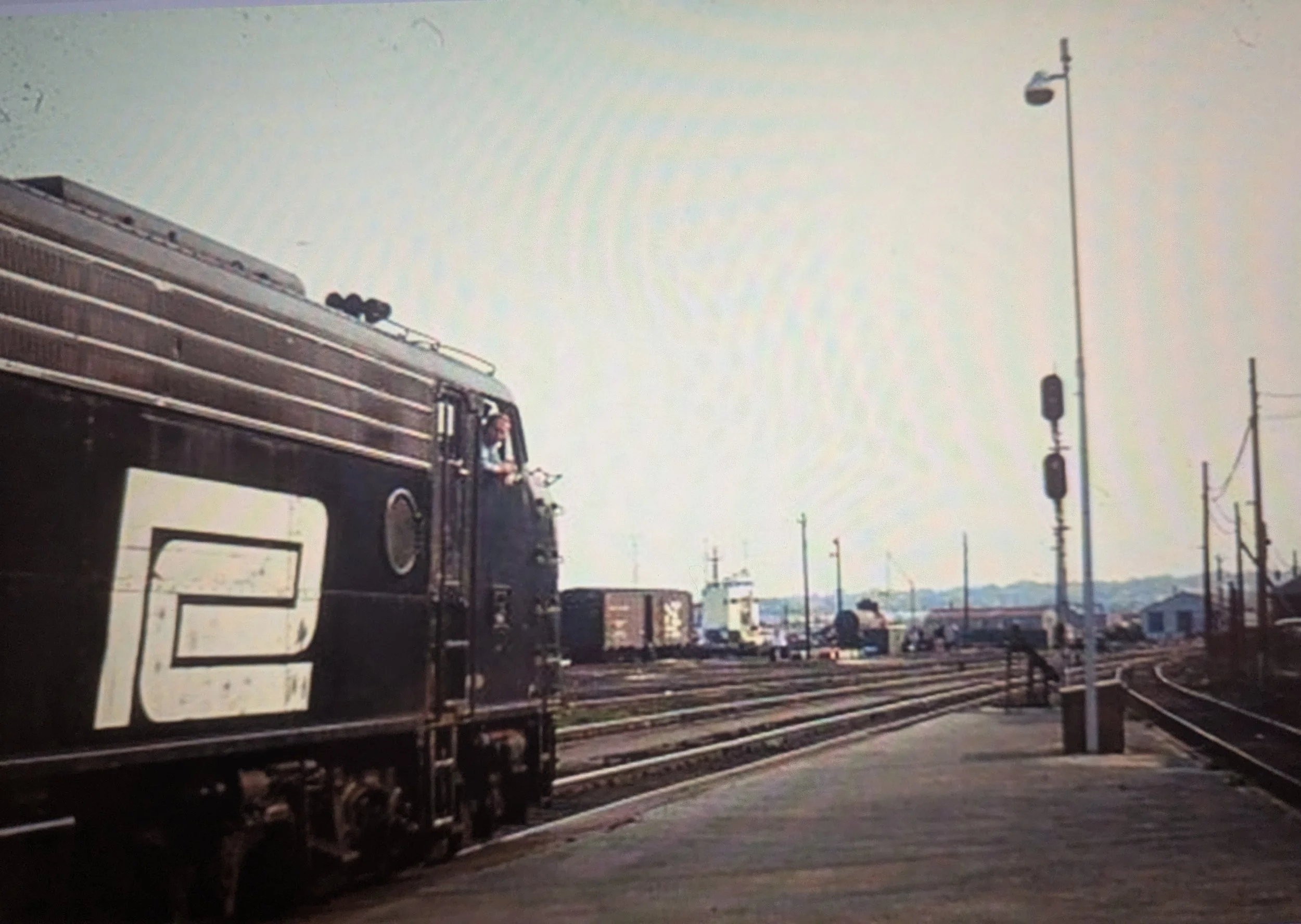
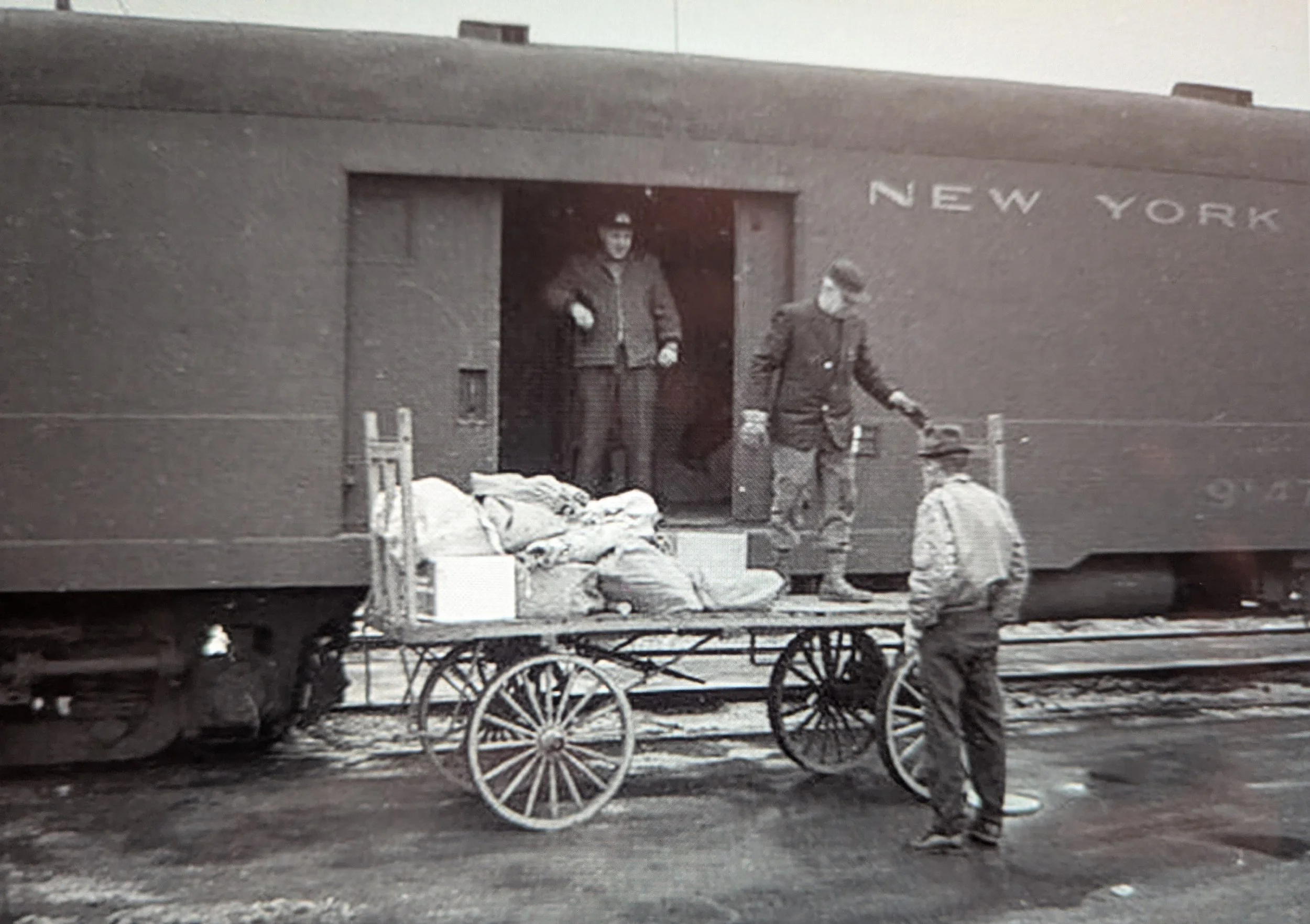
These trains carried more than just passengers. They carried mail, skis, bikes, and packages in what were called head end cars. Many were from the New York Central (9147) and the Pennsylvania railroads.
Ron DeFilippo, 1971
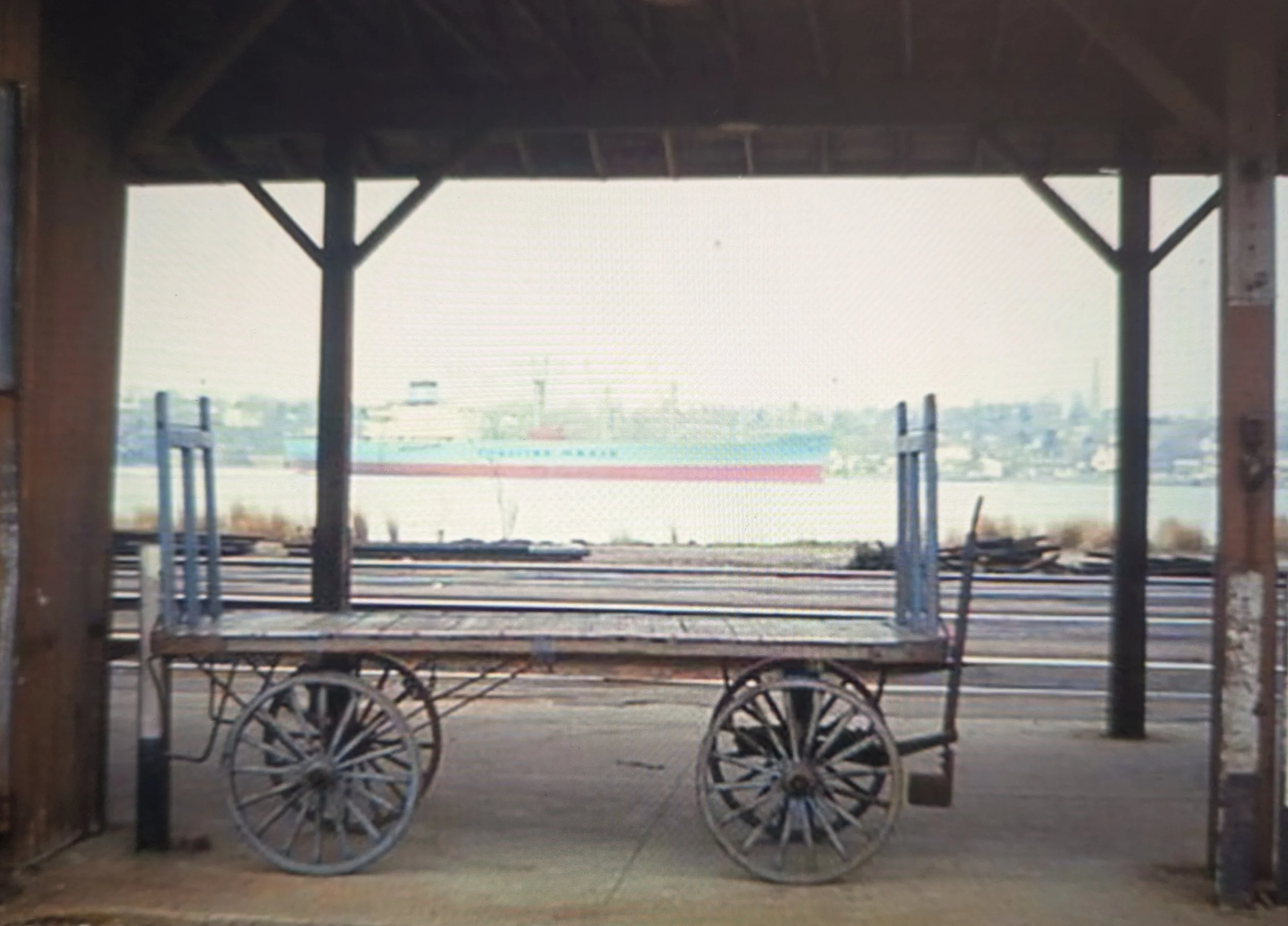
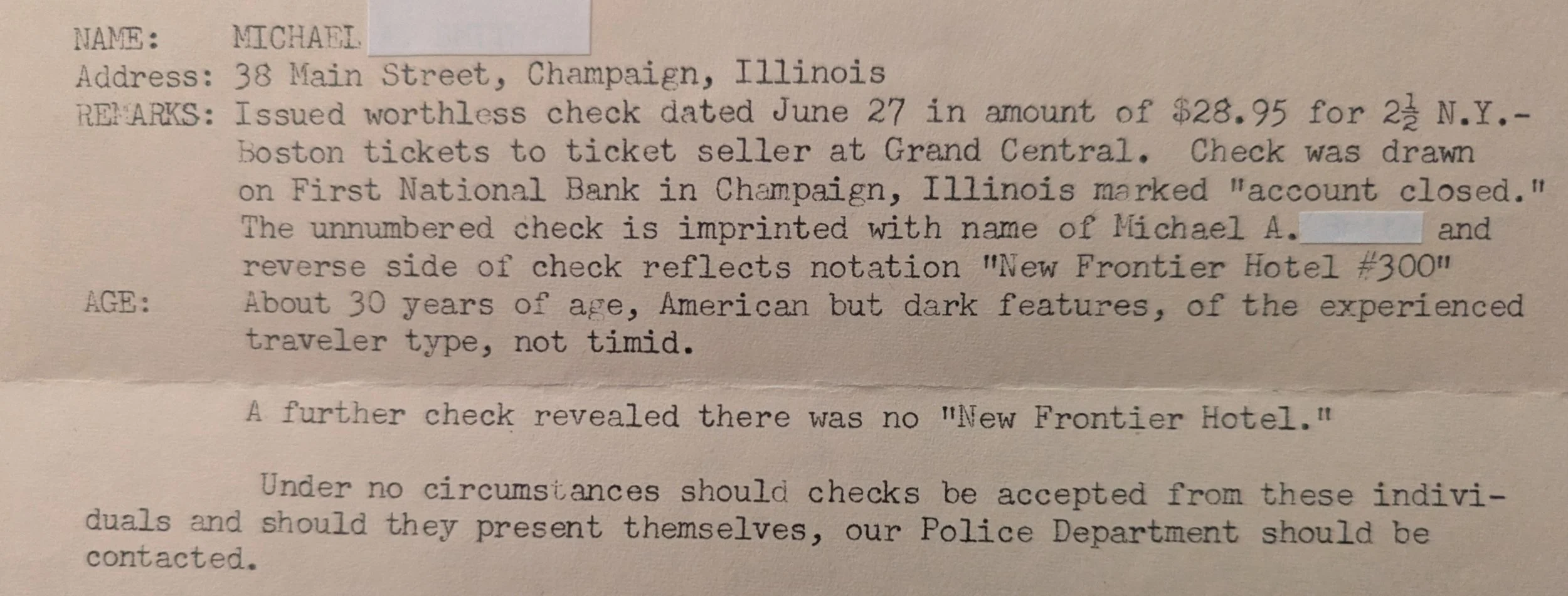
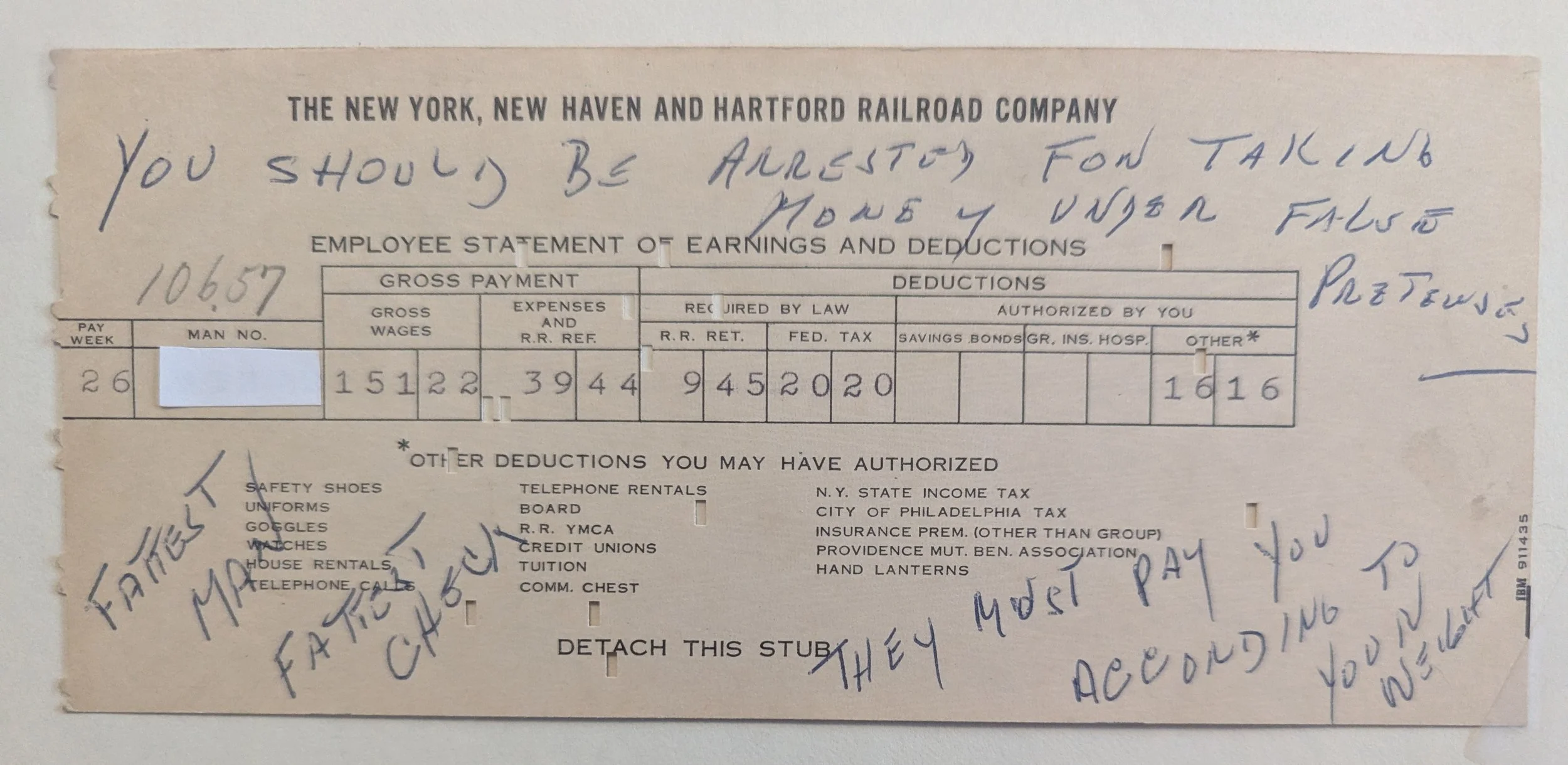
Paperwork ran the railroad. Sometimes you found it trackside, sometimes at a train show in a cardboard box under the table. Here are two examples found in an inter-office mail envelope marked L. Peltier , Ticket Agent, New London, Conn.
The first is an excerpt from a warning on people passing bad checks, August 1966.
The second is a payroll punch card stub, most likely 1966. Note the payroll deductions. Not sure why a New Haven employee would be residing in Philadelphia.
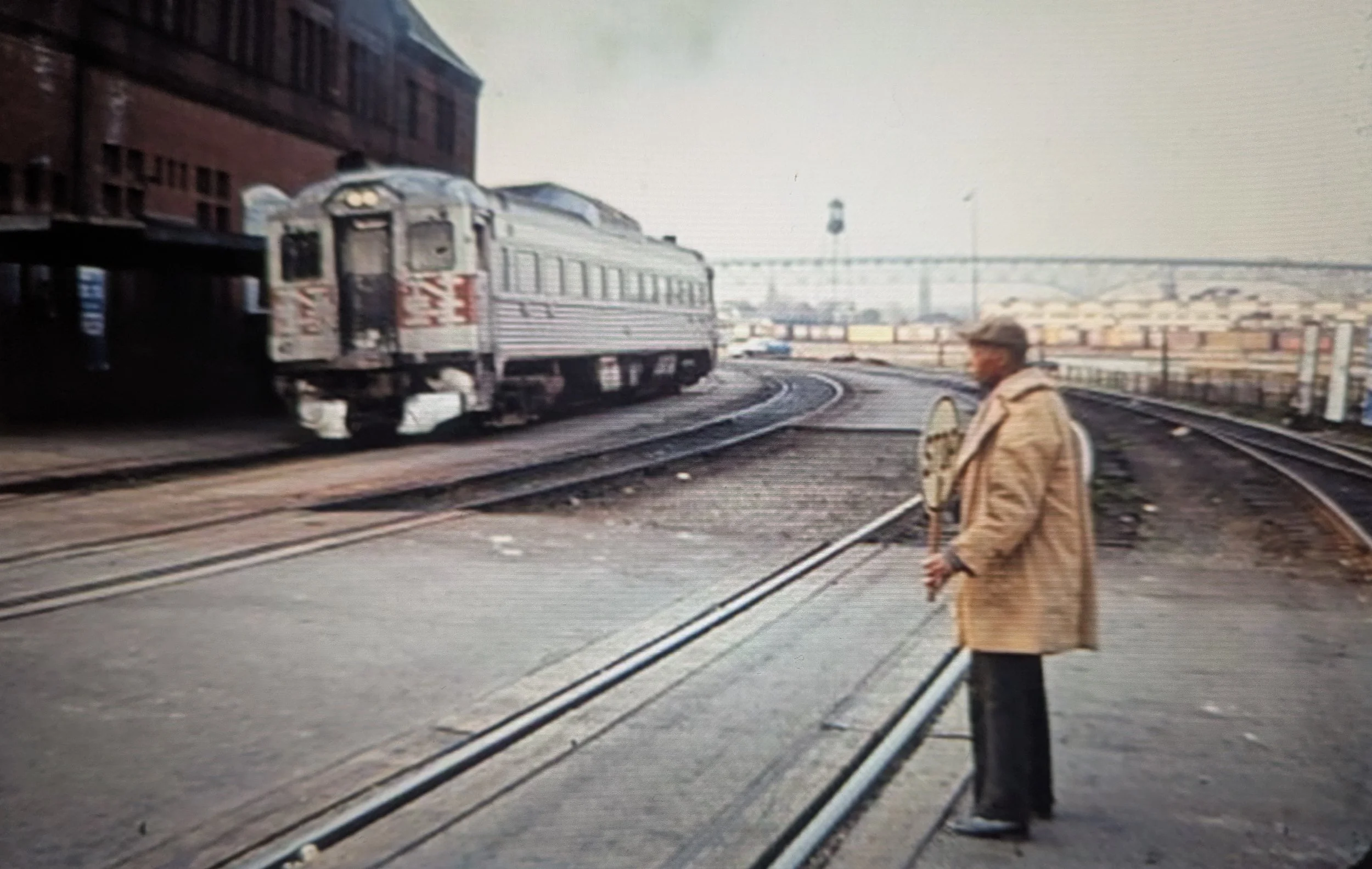
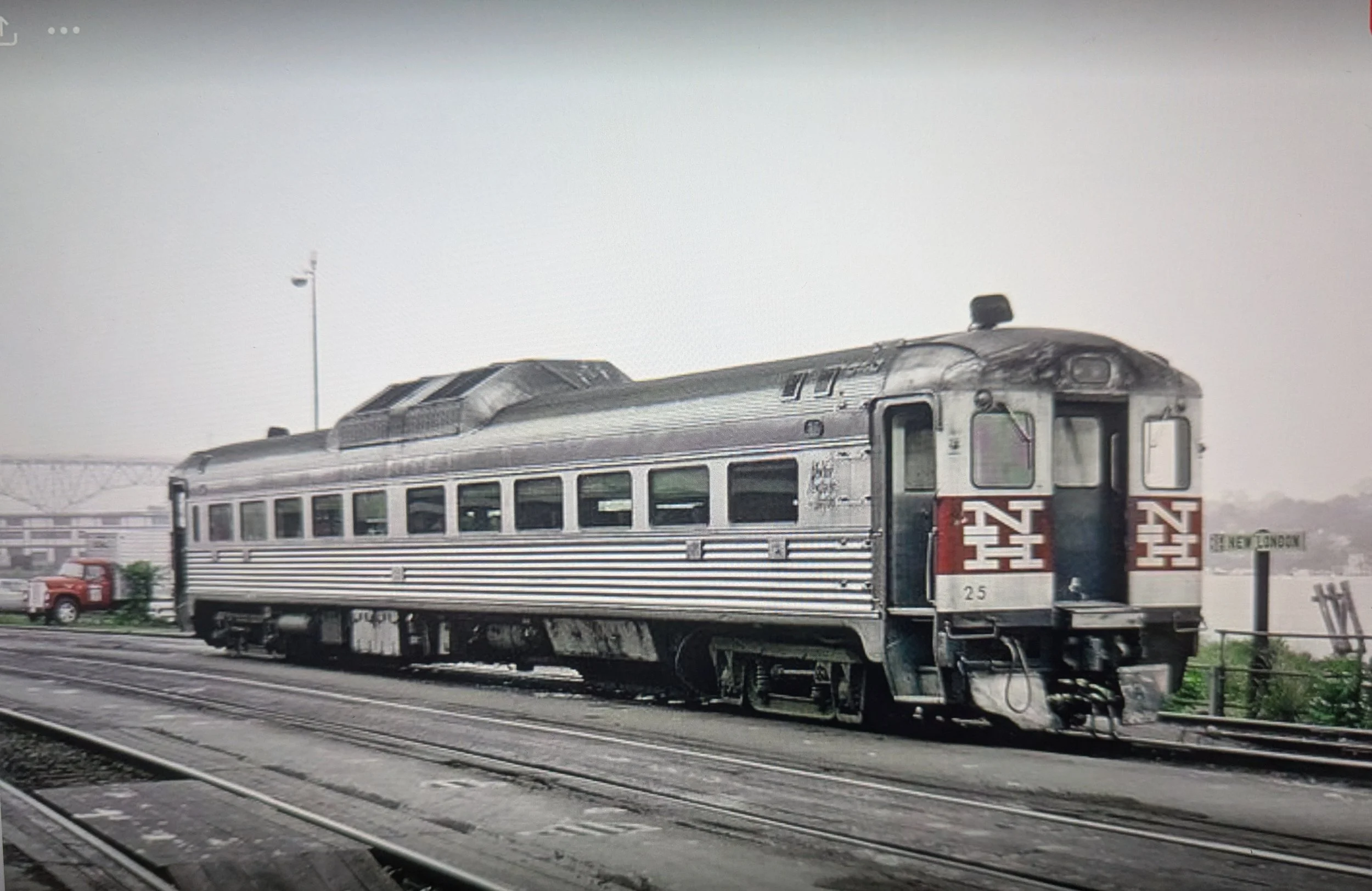
Until Amtrak in May of ˋ71, the New Haven, and later Penn Central provided daily local service from New London to Worcester, Providence (the Roger Williams ), and New Haven (the Clamdigger ).
Train #579 is just arriving from Worcester. Rail Diesel Car (RDC) -1 #47 is the equipment. Ted Clement provides crossing protection. Automatic gates were coming soon and so the crossings at Hallam and State streets would no longer require human intervention.
thanks again to Ron DeFilippo, 4/70
RDC-1, #25, is taking a break between runs to Worcester as train #573 on the outside track. Notice the script and block IDs.
The red cab truck is a contracted mail hauler between the post office and the railroad, McKinley was the name with a red, white, and blue logo on the doors.
Credit to Roger Puta, 1968
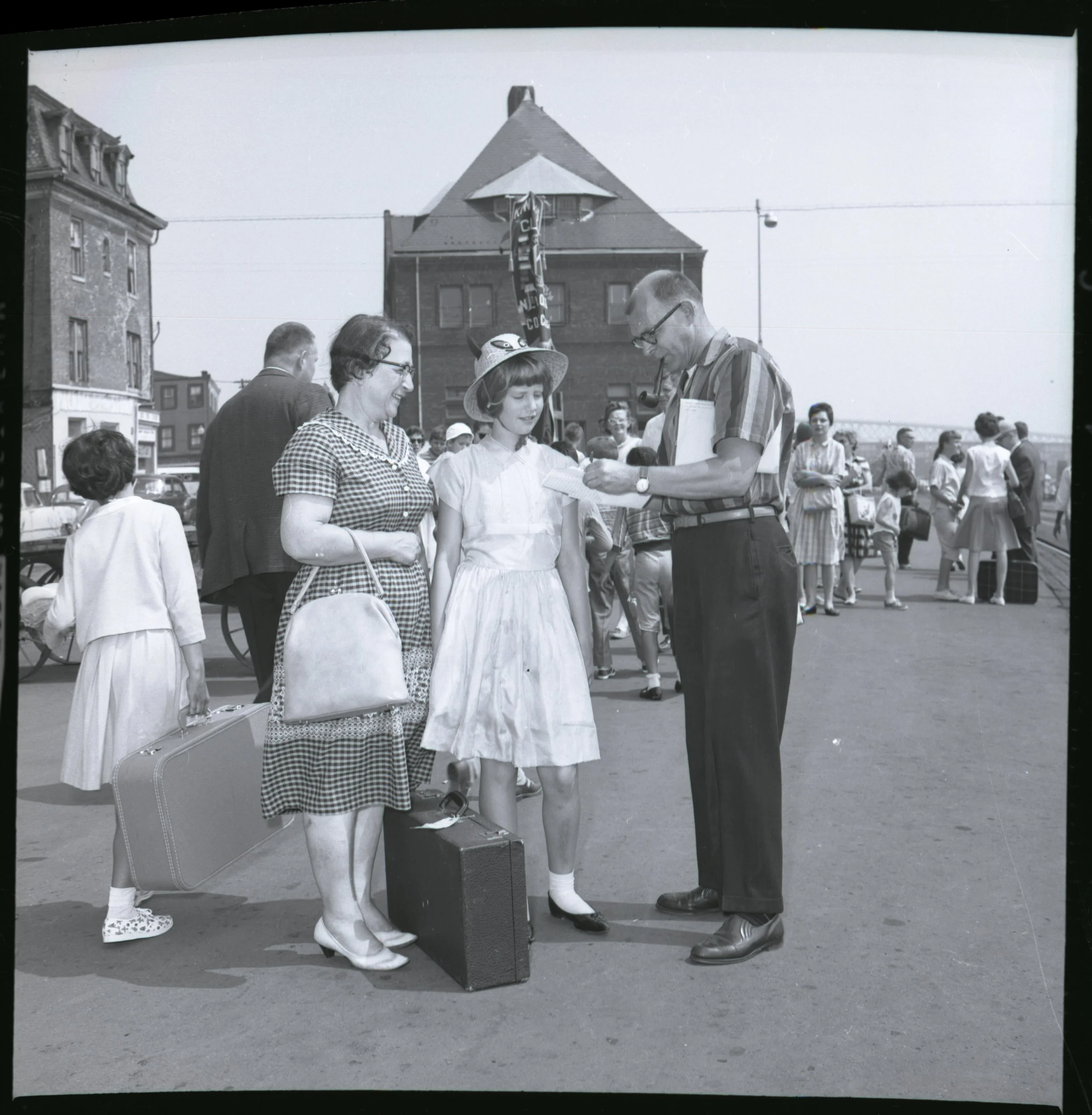
Don‘t forget to write…
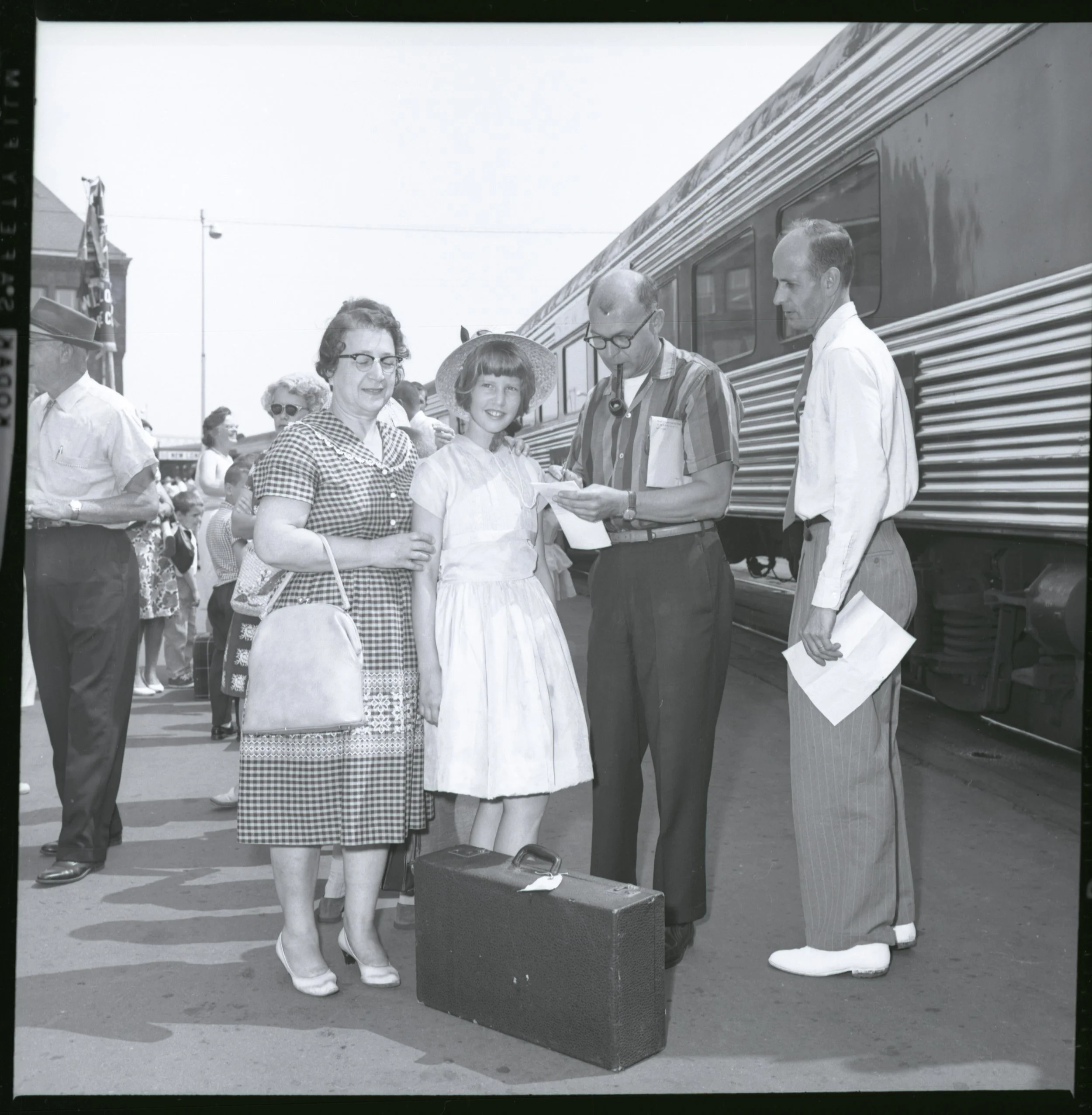
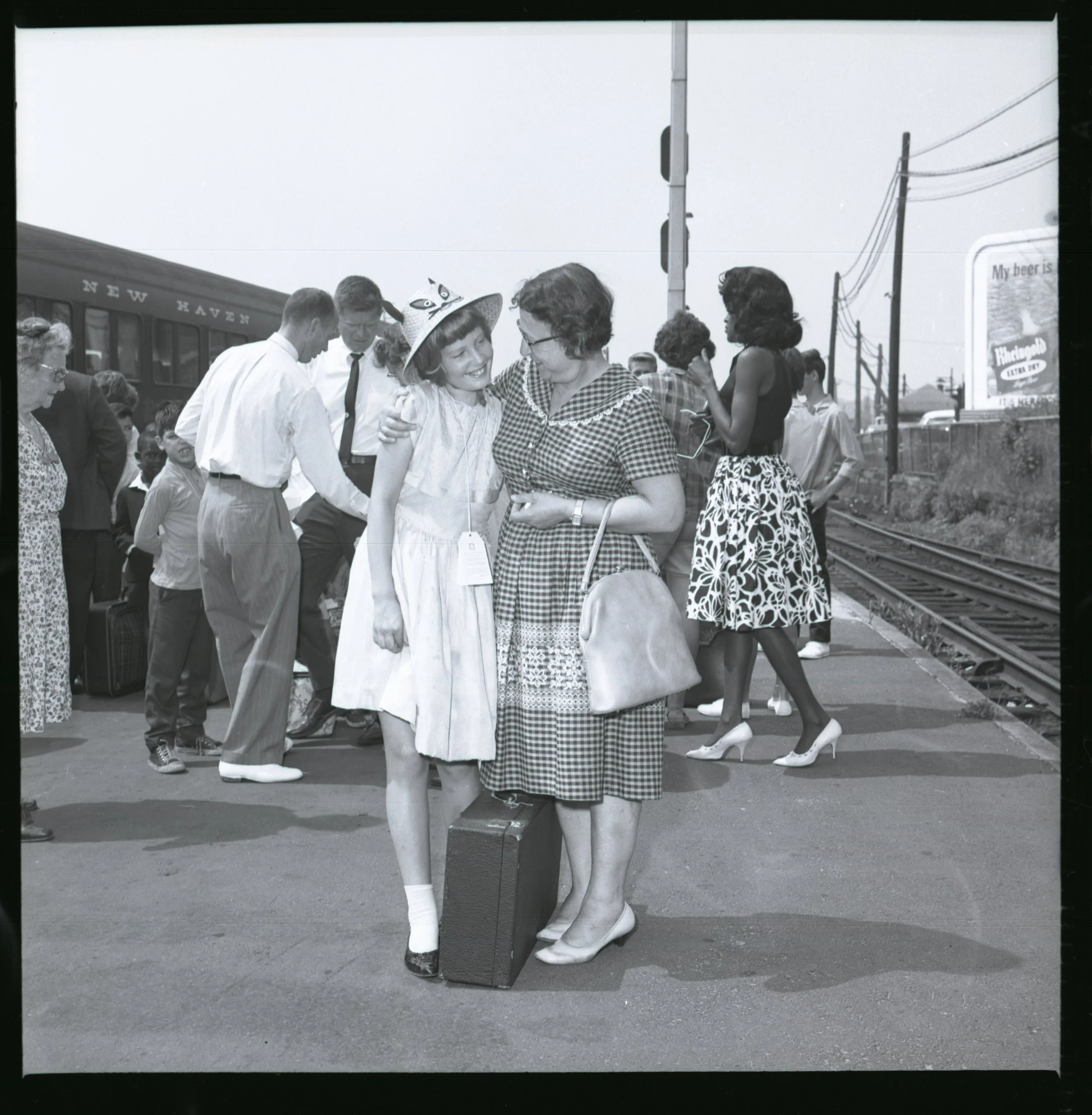
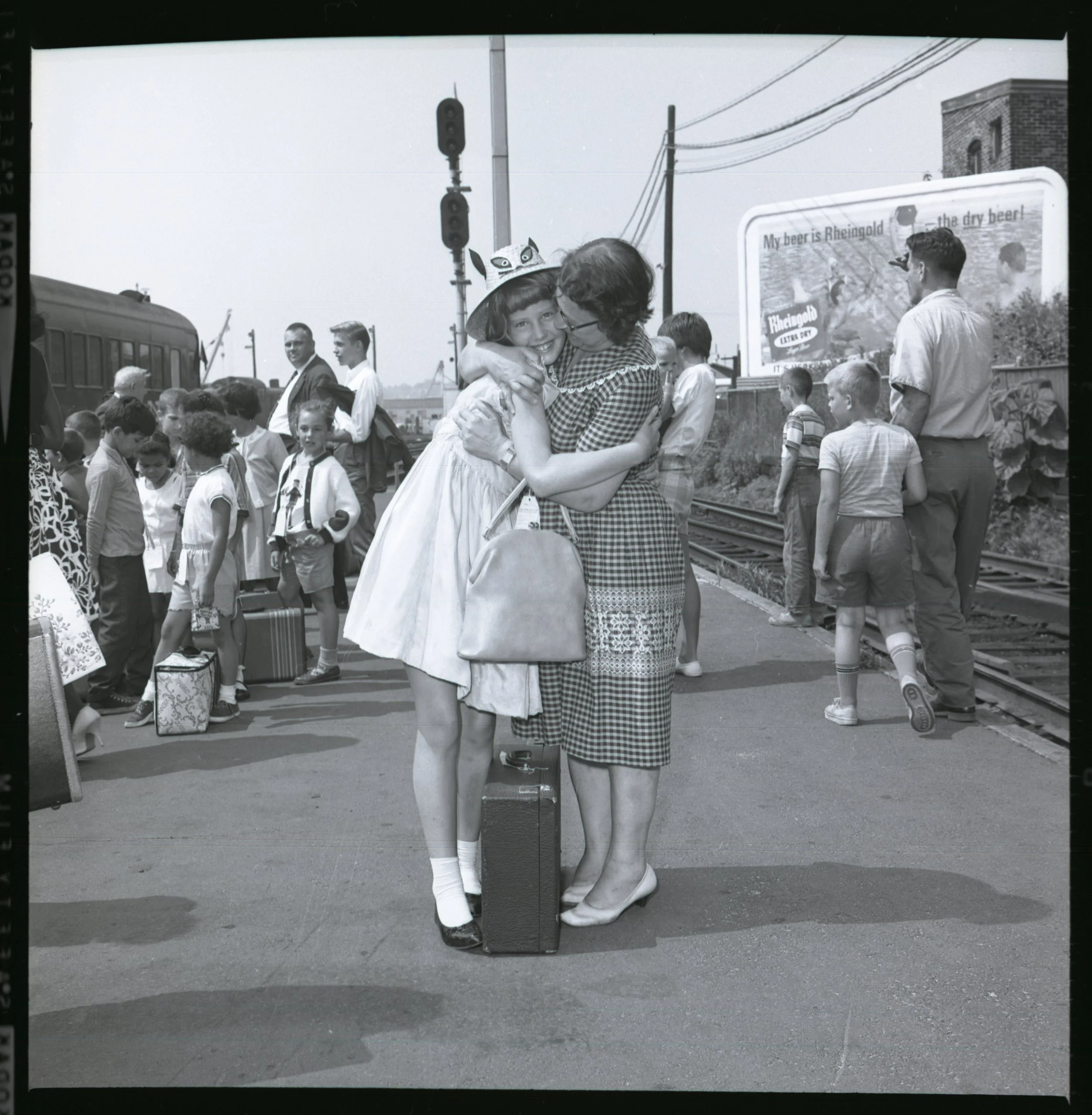
From 1955 on, throughout the sixties, the local Kiwanis Clubs of southeastern Connecticut had sponsored the arrival of children from New York City for a two-week summer stay under the umbrella of the Fresh Air Fund.
These pictures from The Day seem to cover the departure of one of the children. The year remains unknown. Note the Kiwanis banner in the background… can anyone help in providing more information?
Again, my guess is that these pictures actually show the departure of the children from Union Station.
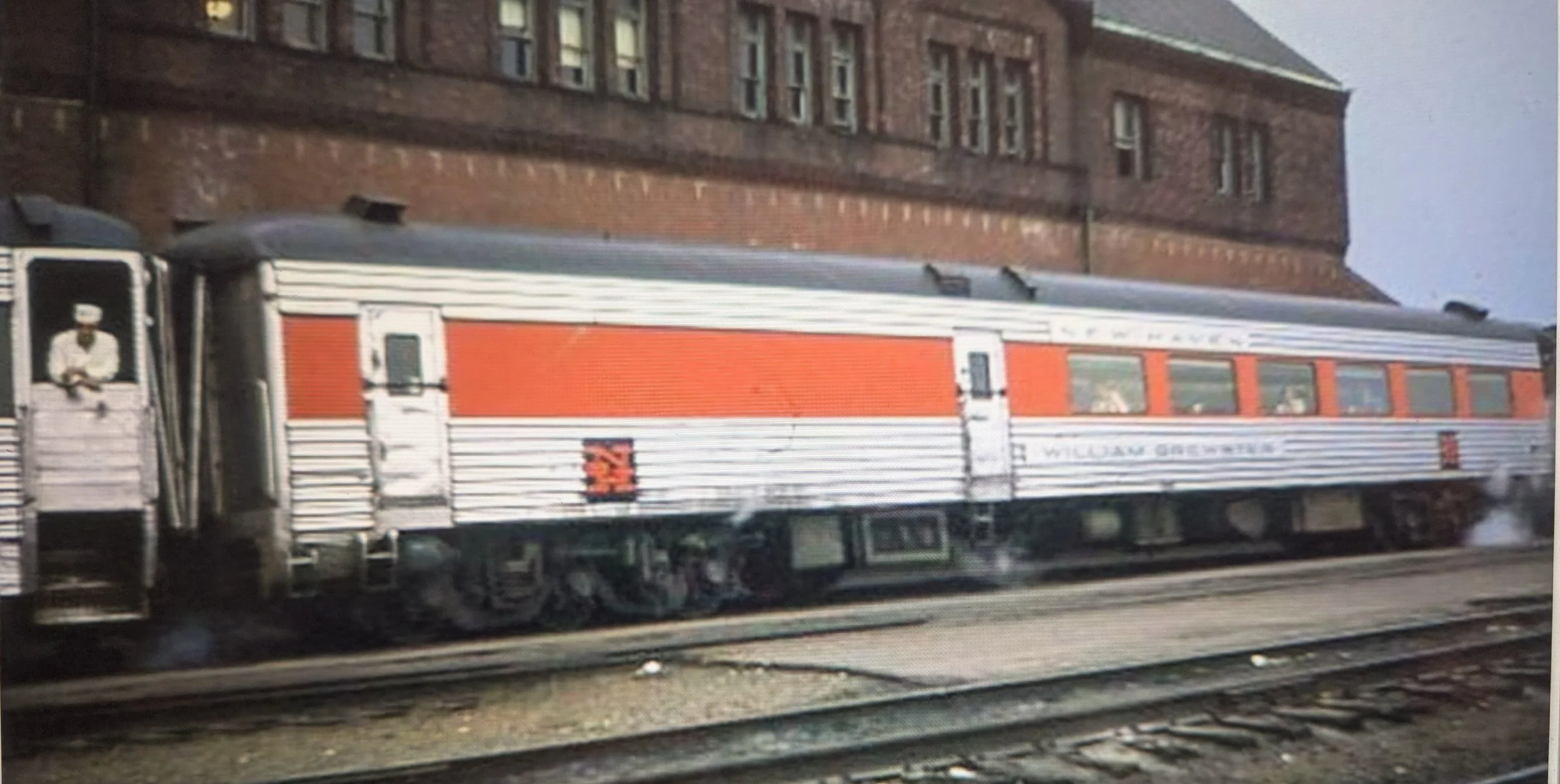
The William Brewster is a diner named for an elder that came over on the Mayflower. The kitchen is between the two doors, the chef is on a smoke break. Thanks and a tip of the hat to Ron DeFilippo, 1970.
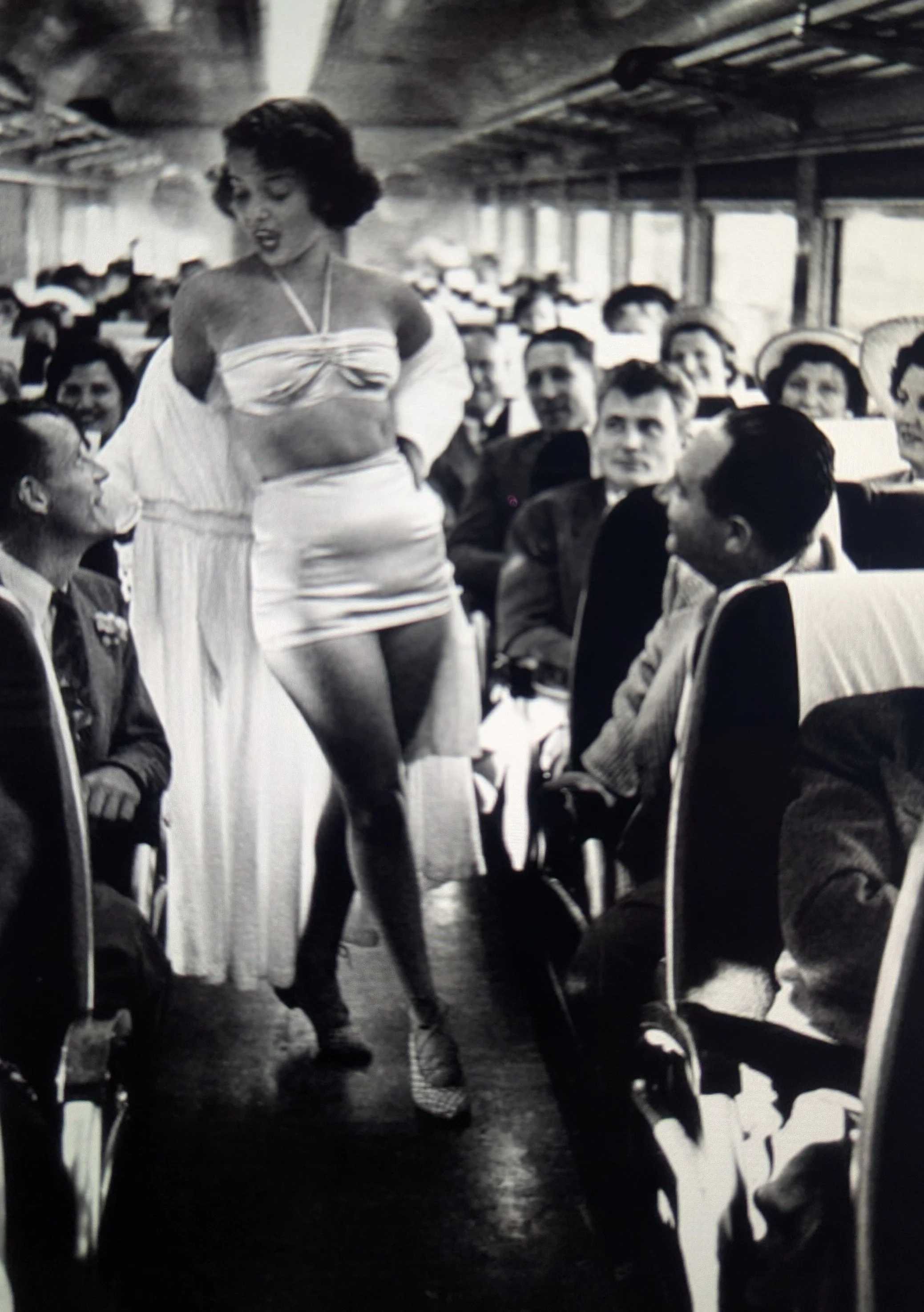
Va-va-va-voom…
From the How I met your mother file. A crowded New Haven train in 1949, the year my parents married.
Penn Central also sponsored fashion shows on a few of their trains, strictly G rated.
Credit to Dan Weiner and Steven Allen
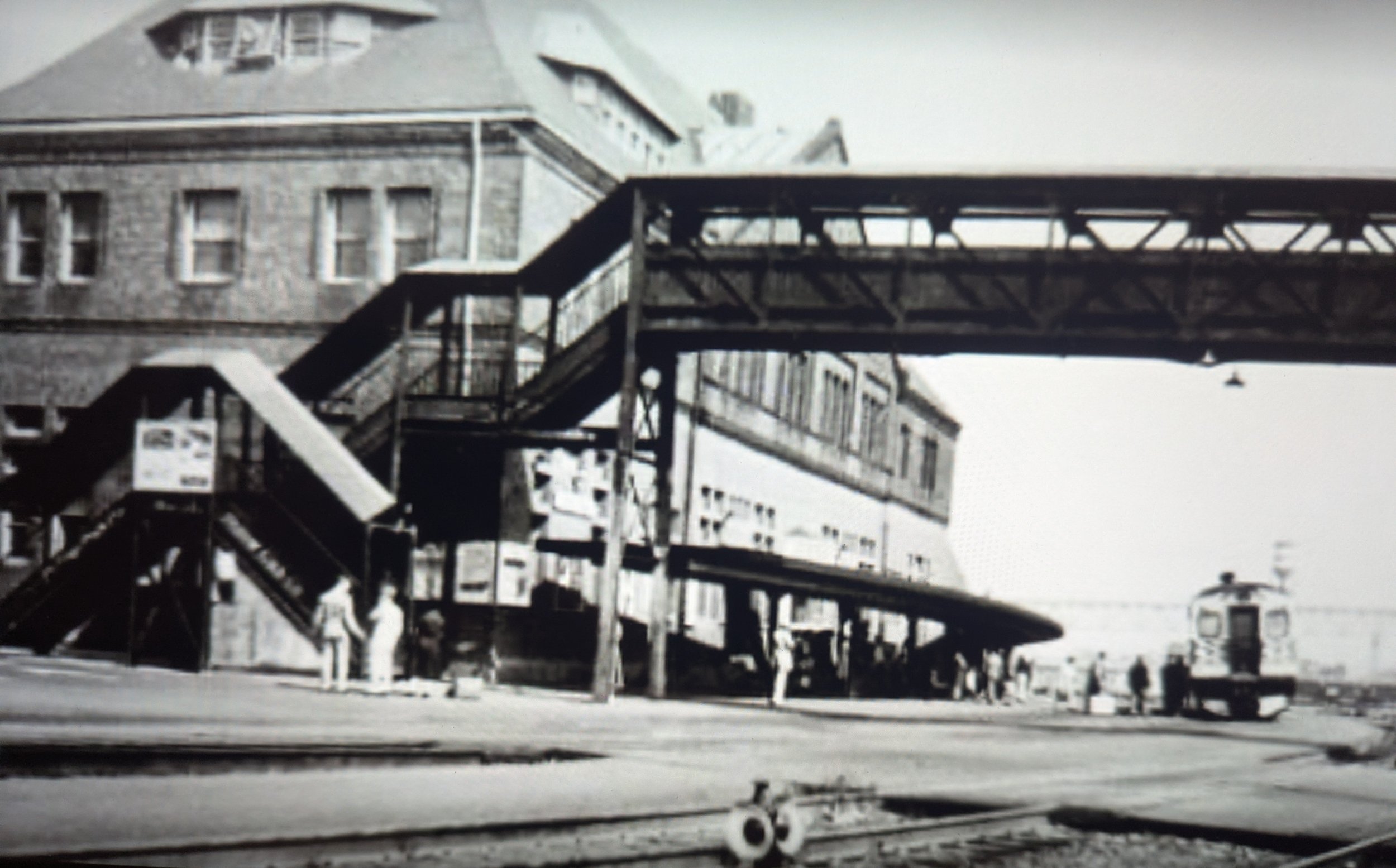
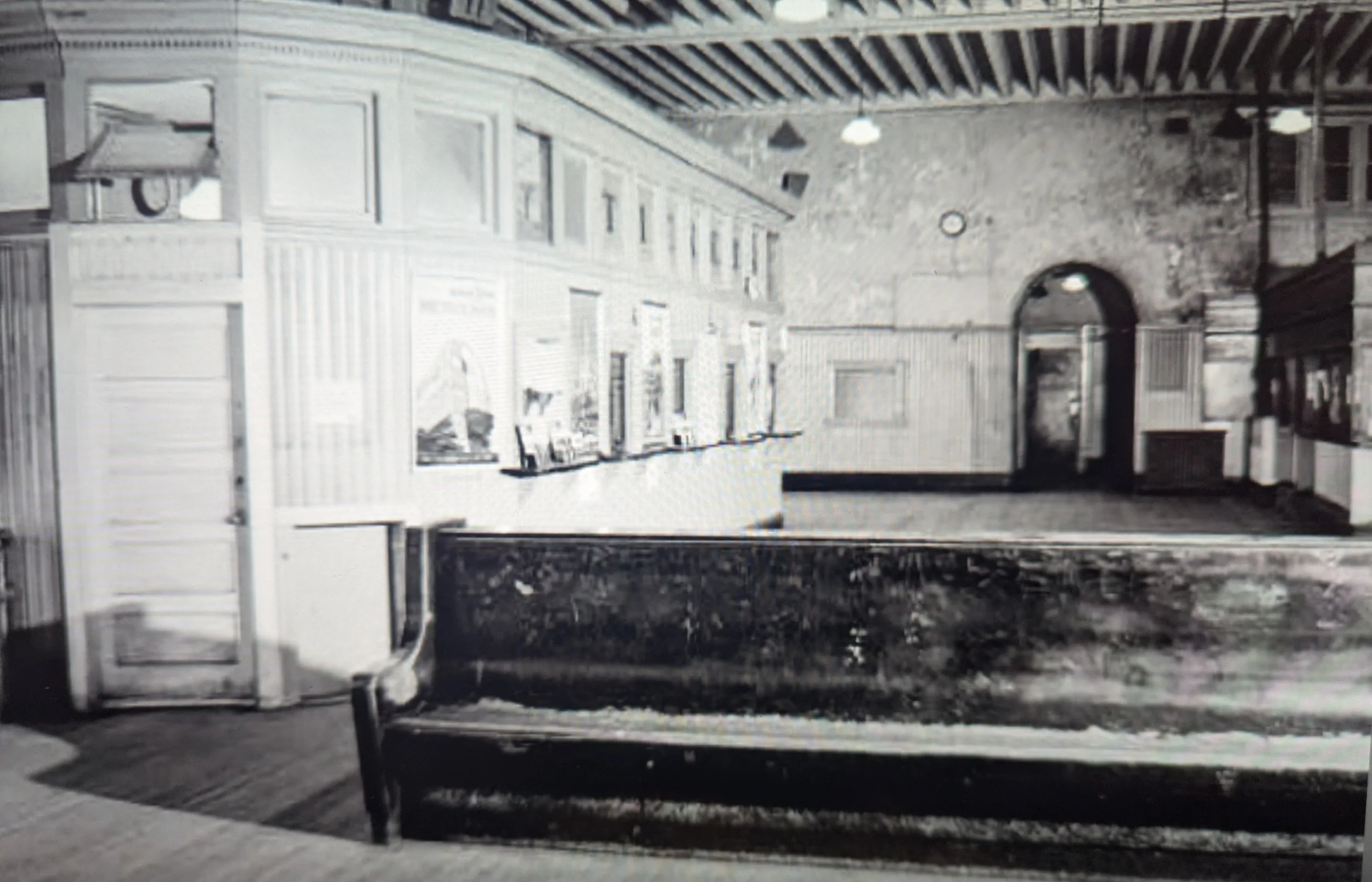
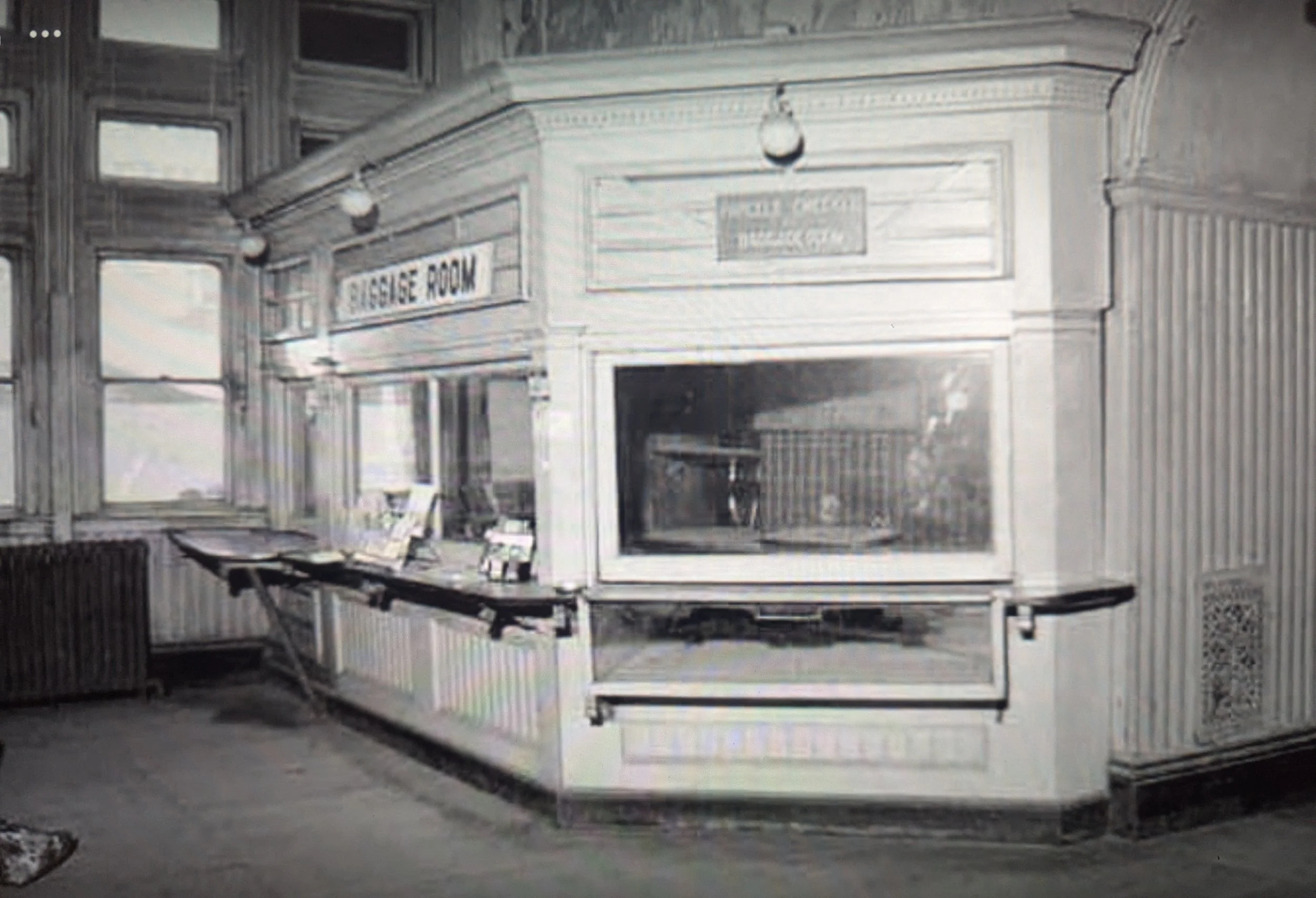
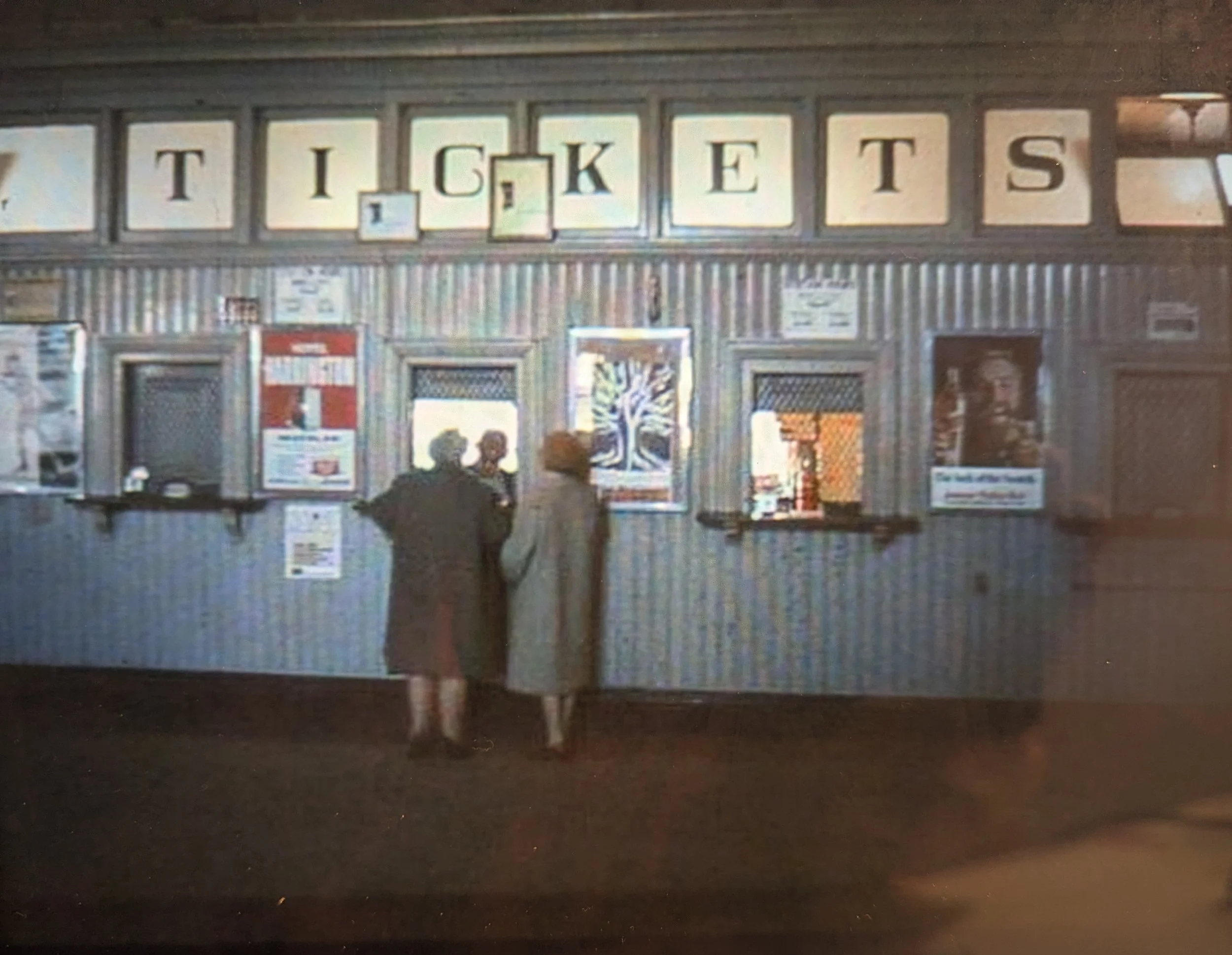
When my father got off the train after a long trip from San Francisco in 1947, his first impressions were mixed. The foot bridge predates 1960, photographer unknown, the interior shots are from Ron DeFilippo, 1971.
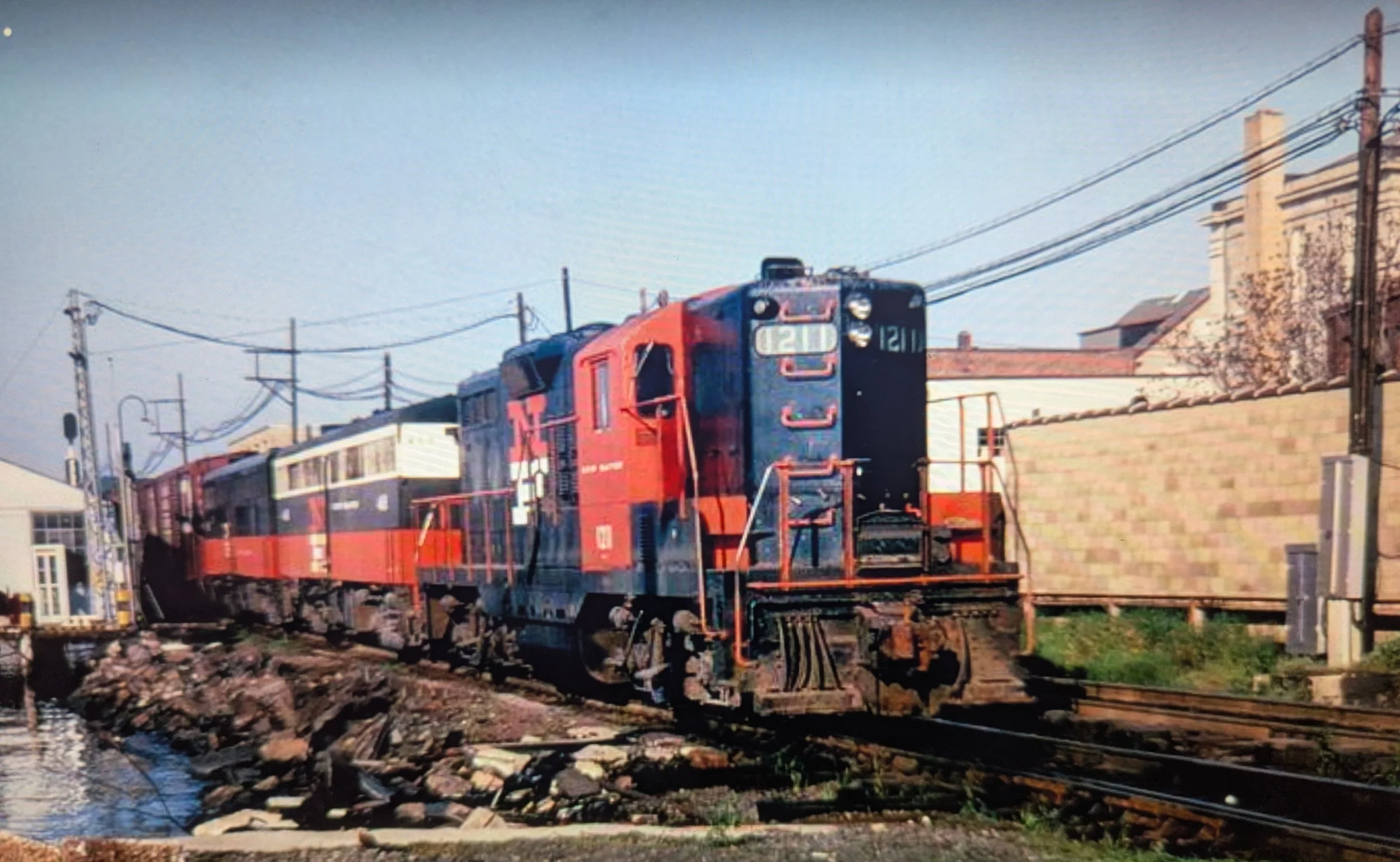
Couple of things going on here, hence the spread… on the left, by the phone booth, is the entry to the Coast Guard pier, used for buoy maintenance and once the dock for the Custom House (the tan brick chimney on the right). #1211 is a GP-9, the same engine built in ´55-57 and used by the Central Vermont to replace steam. It‘s a clear sunny day and George Oldershaw took this photo on May 29, 1965.
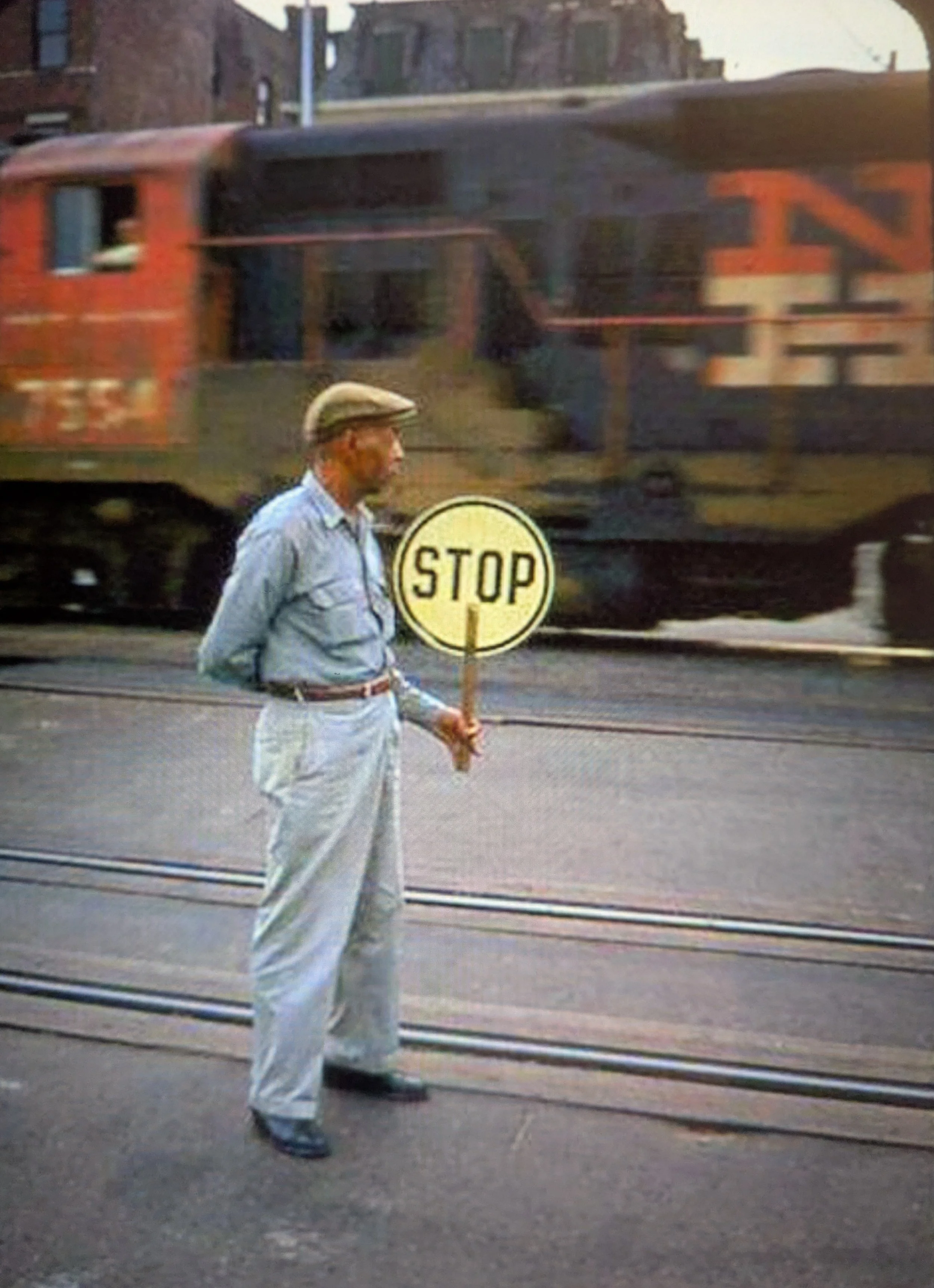
This could quite possibly be the same engine, only with it‘s new Penn Central number of #7554. It‘s 1970 and Ted Clement is providing crossing protection. Credit goes to Ron DeFilippo, who, fortunately for us, was stationed with the Navy nearby.
The old Winthrop Hotel stands behind the engine.
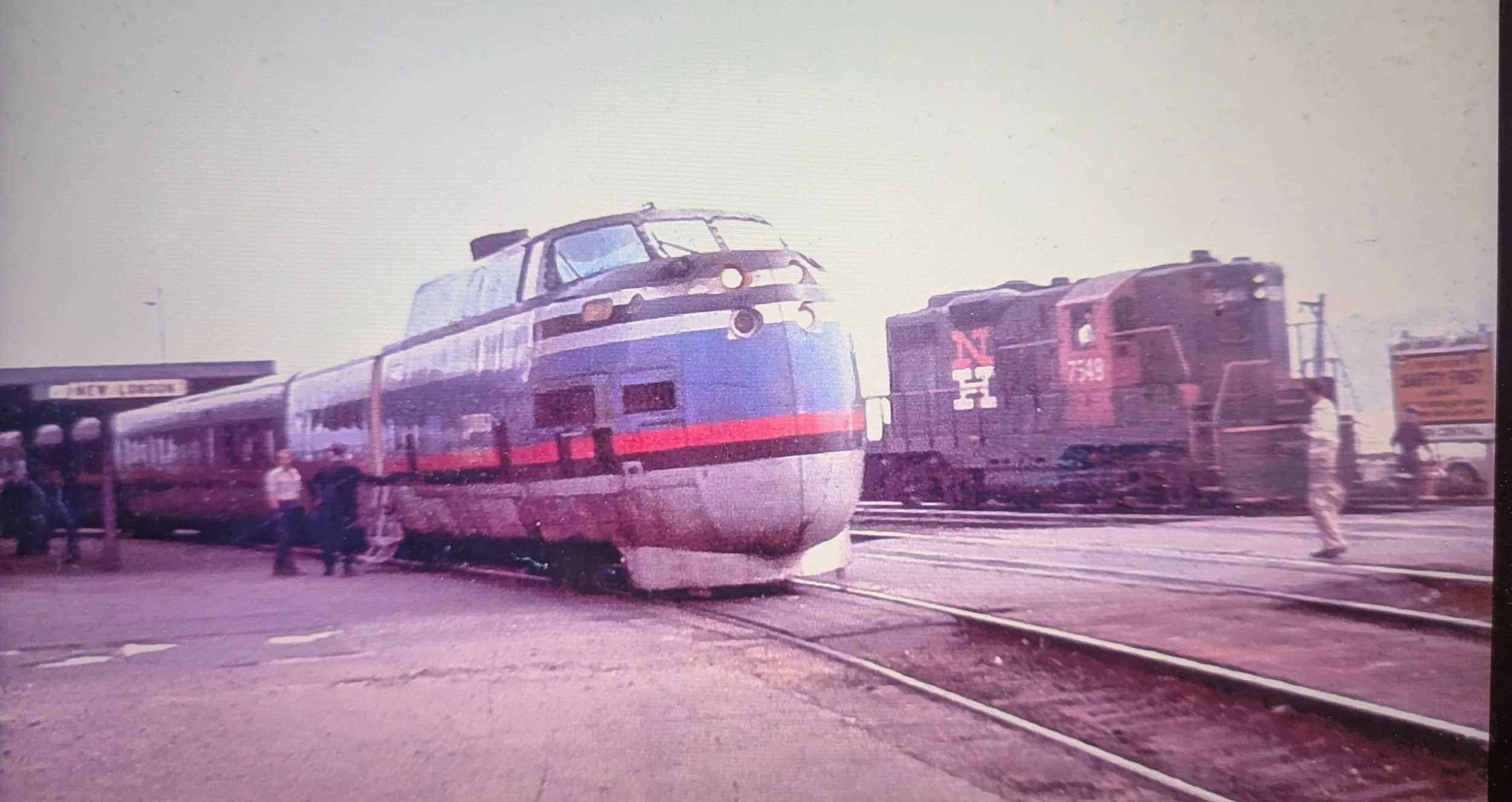
What better way to transition then with these two beauties gracing the same frame. #7548, a brother to #7554, waits patiently for track clearance while the Turbo Train makes a station stop. Most likely we are in ˋ69 or ˋ70, perhaps early ˋ71. Note the Safety First sign on the right that Penn Central has erected. Each day, it was someone‘s job to update the number of days since the last accident that resulted in an injury. This was done with simple number boards hung on a hook… no electronics. Notice the electronic crossing barriers are still in the near future and that Ted Clement is still keeping an eye on things.
Credit goes to future towerman and New London native Douglas Kydd.
Turbo was a gas turbine-powered trainset designed and built by the United Aircraft Company and through an arrangement between the U.S. Dept. of Transportation and the New Haven, and, later in ˋ69, the Penn Central, went into trials and in April of ˋ69, went into regular service
Credit Steve Deveau on the Back Bay (Boston) rollsign, and Brian Brennan on the Turbo poster rescued from Union Station , both from ˋ69.
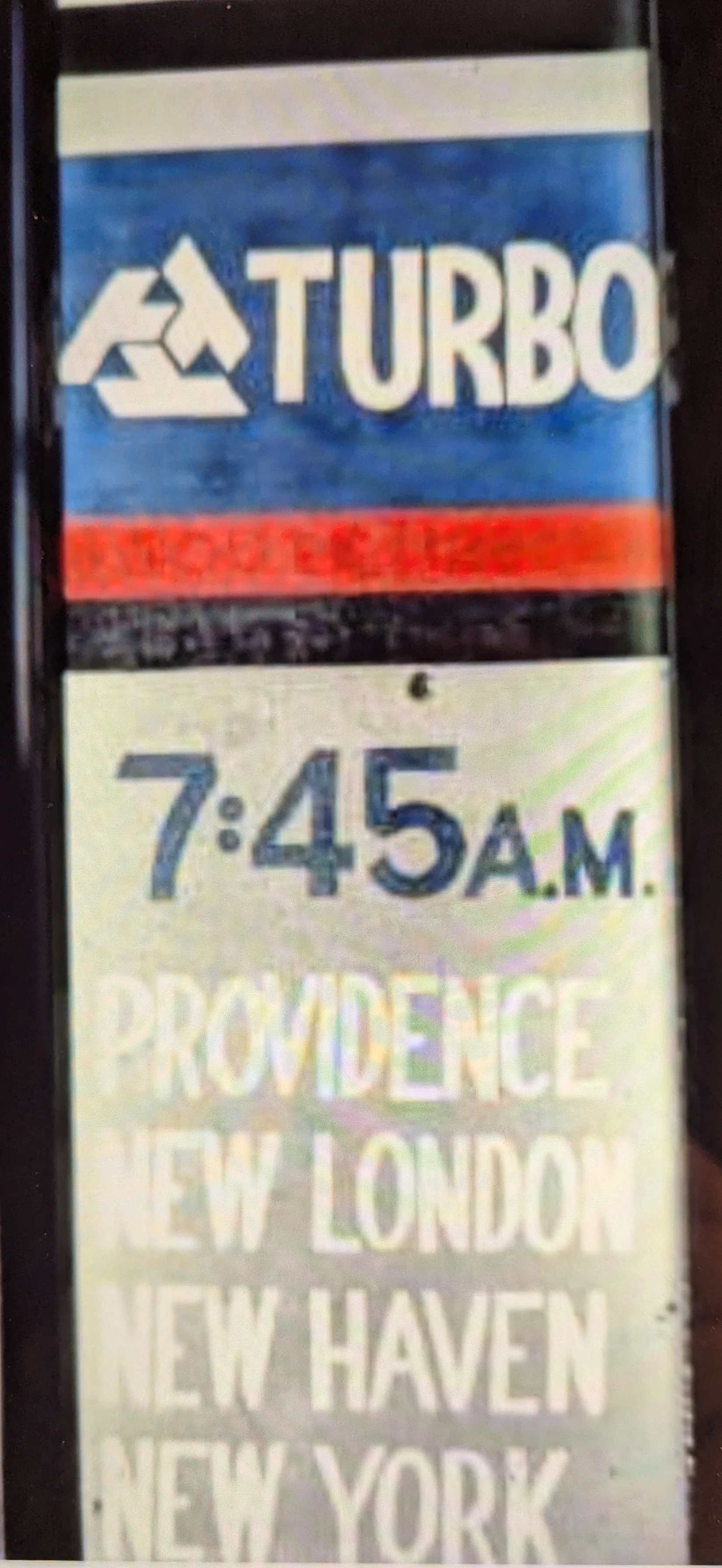
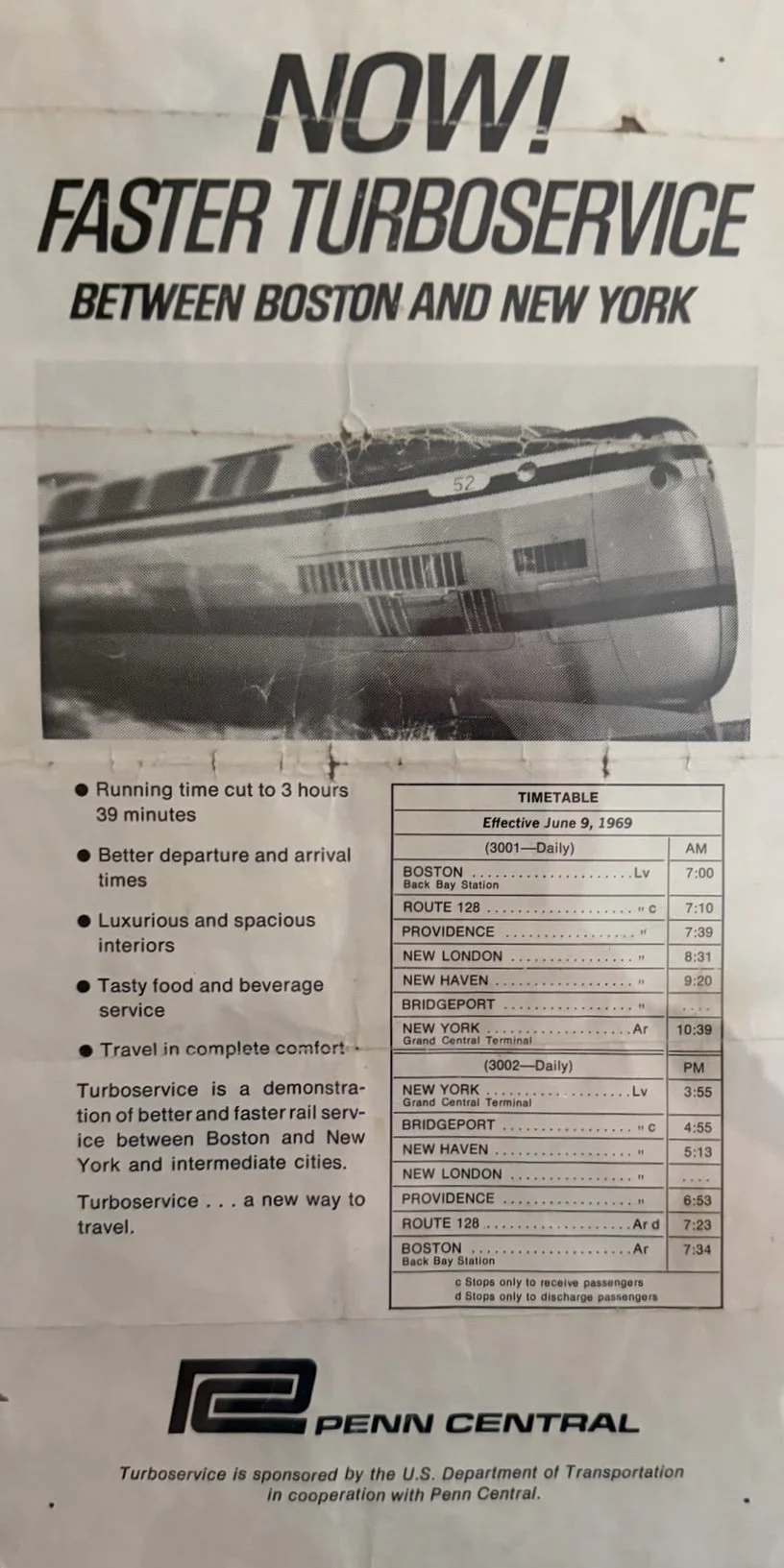
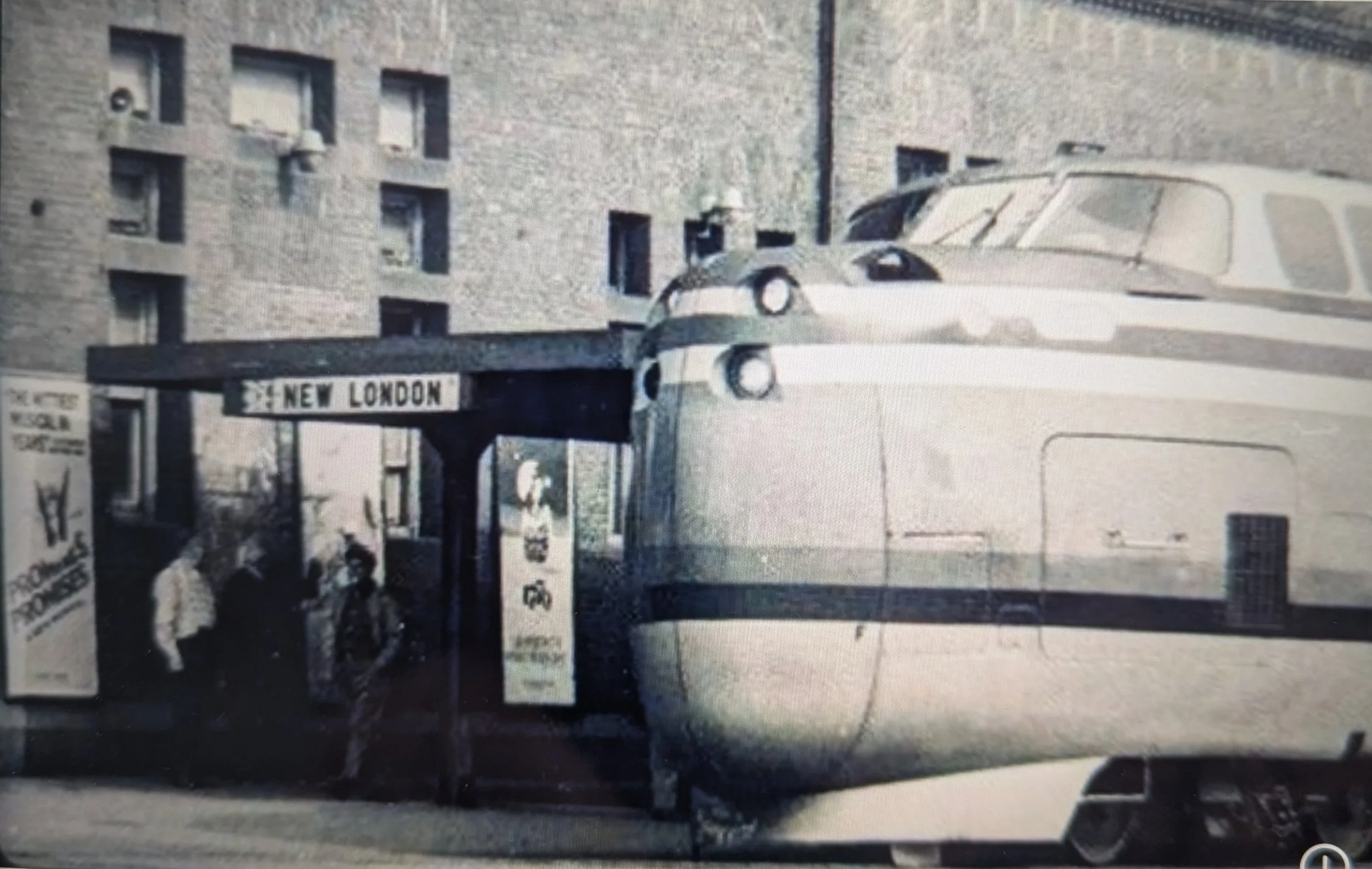
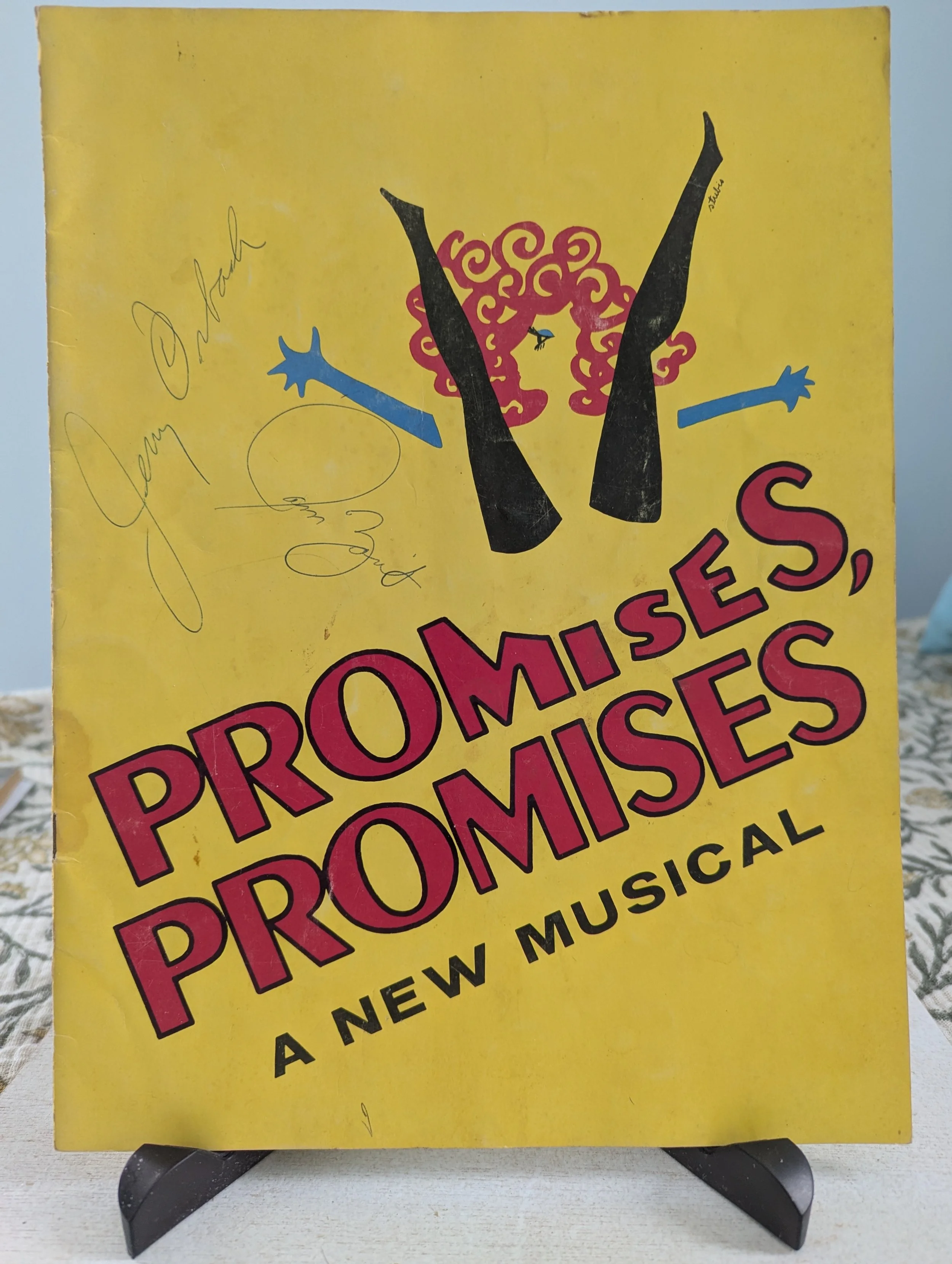
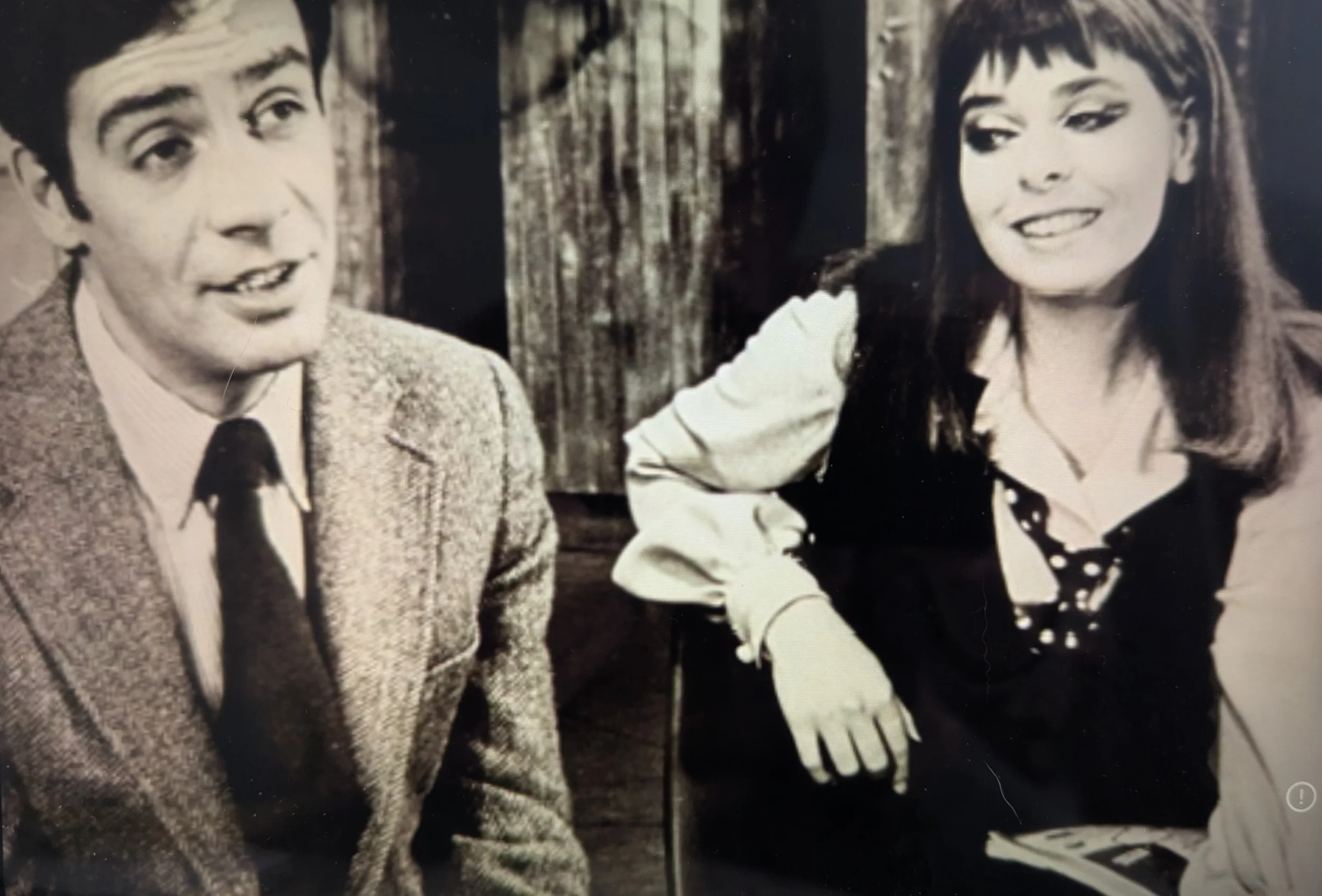
Over the summer of ˋ69… or ˋ70, my mother took my sister Mickey and me into New York via the Turbo Train and back to New London later that afternoon on the Merchants Limited. We had tickets waiting for us at the box office for the musical Promises, Promises produced by David Merrick. Through my mother‘s volunteer work at the O‘Neill Theater Foundation in Waterford, she had gotten to know Helen Nickerson, David Merrick‘s secretary… we visited Helen at Merrick‘s office after the show. Thank you, Helen!
and thank you to Edwill H. Brown for the Turbo shot at Union Station (1969) and to David Merrick for the program and publicity photo of Jerry Orbach and Jill O‘Hara.
on board the Turbo Train…
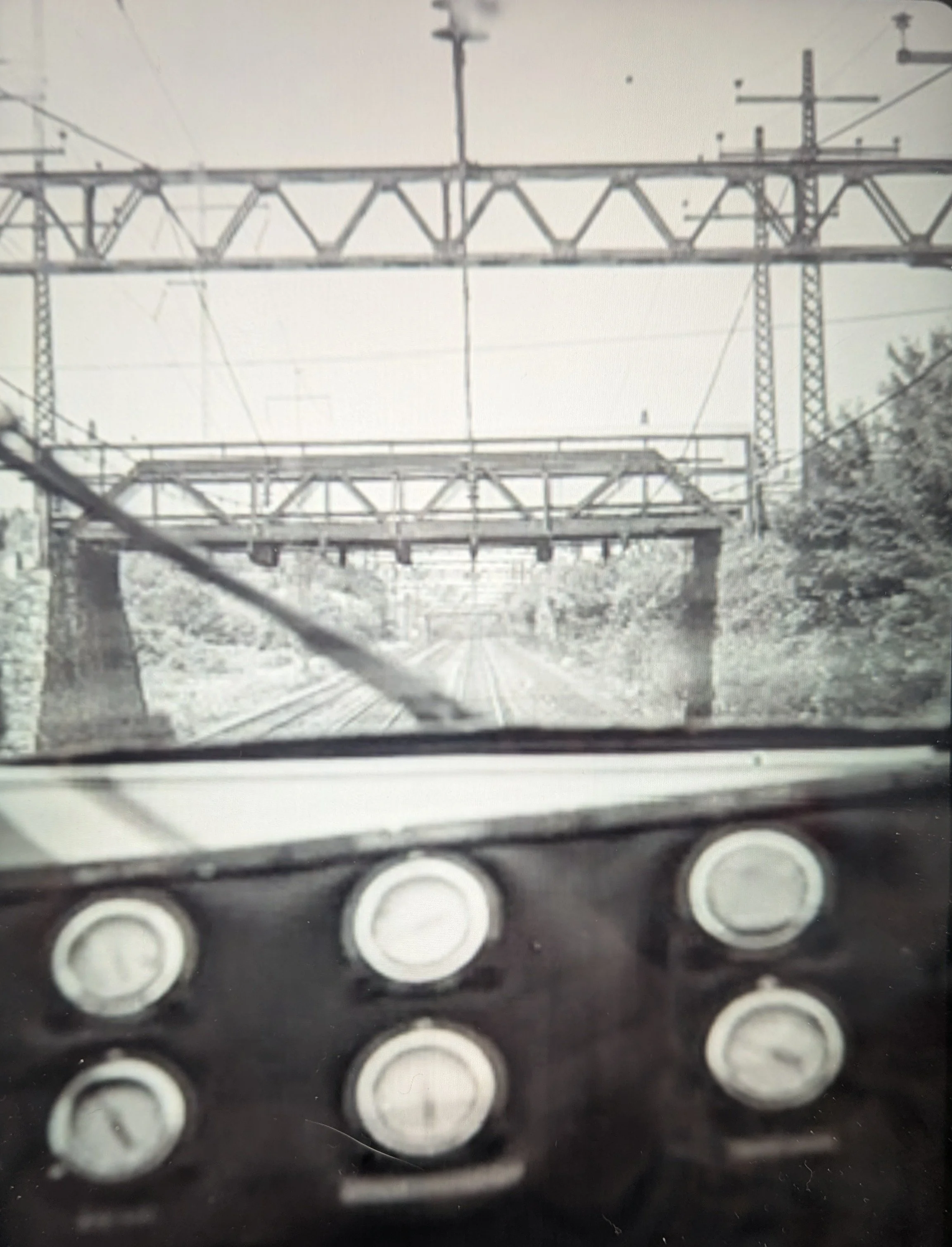
Courtesy Edwill H. Brown, 1969
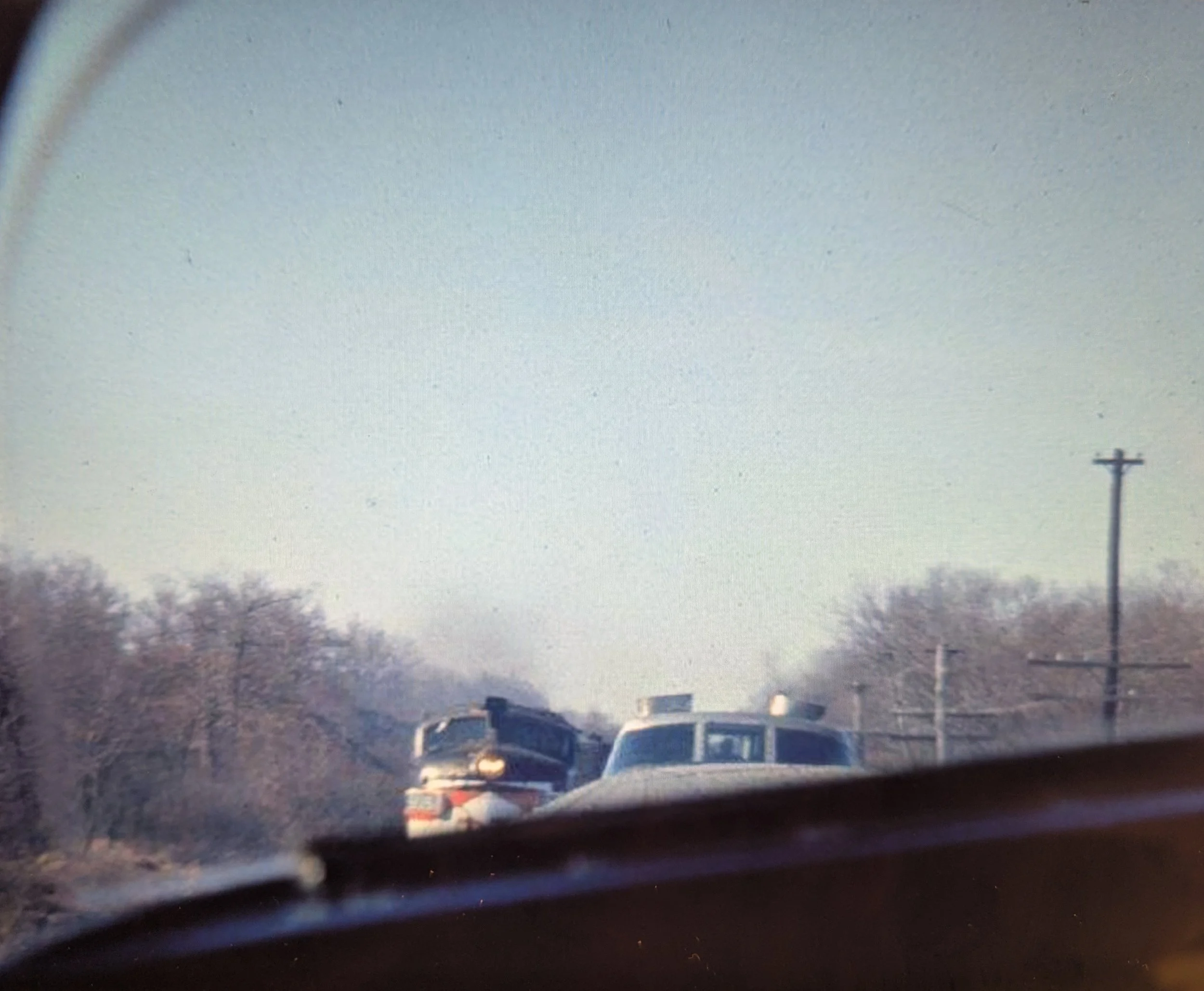
front view from rear dome… courtesy of Steve Deveau, 1969
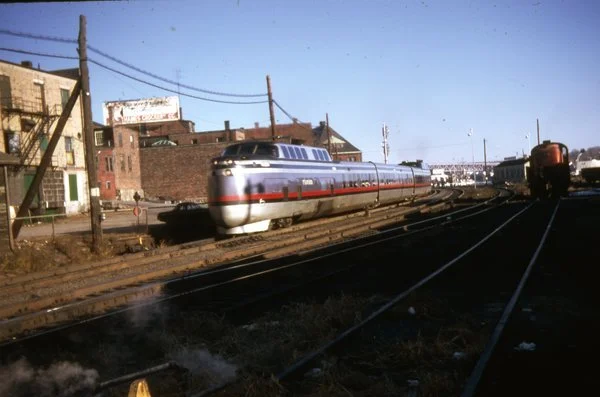
Having just departed Union Station enroute Grand Central, Turbo #51 passes an RS-3 still in New Haven livery resting at Sail Loft…. a tip of the hat to George Oldershaw, 1969.
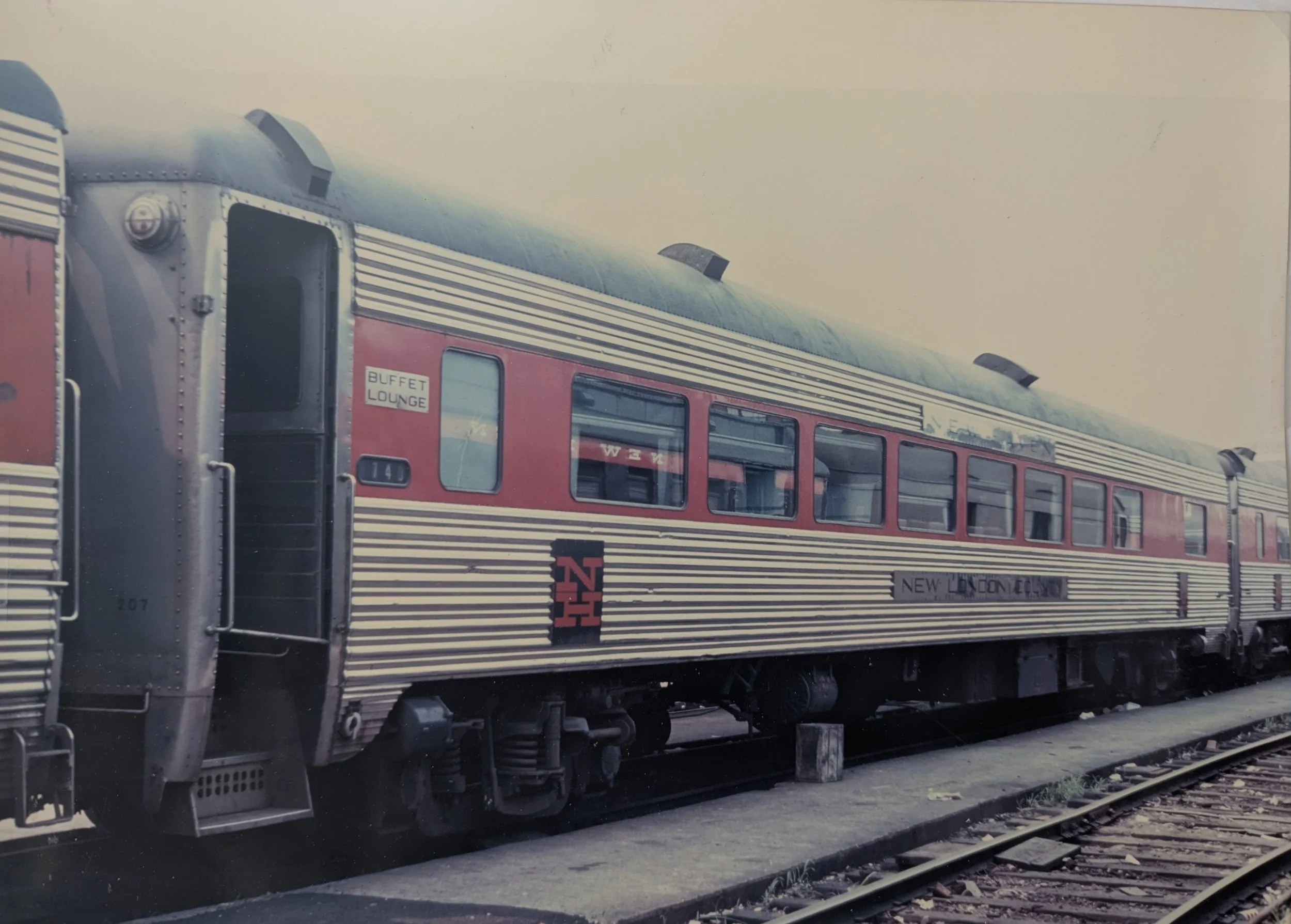
A practice this has been waning over the decades is that of naming not only trains, but the individual cars that make up that train. The New Haven, as we have seen with the diner William Brewster, was good at this. Below is a more closer to home example, the New London County. Besides County cars, the New Haven also had a Beach series. I have seen a photo of the Ocean Beach car and will post it once it comes back into my hands. Credit this photo to Bob‘s Photos of Ansonia, the photographer and date are unknown, the location is Boston.
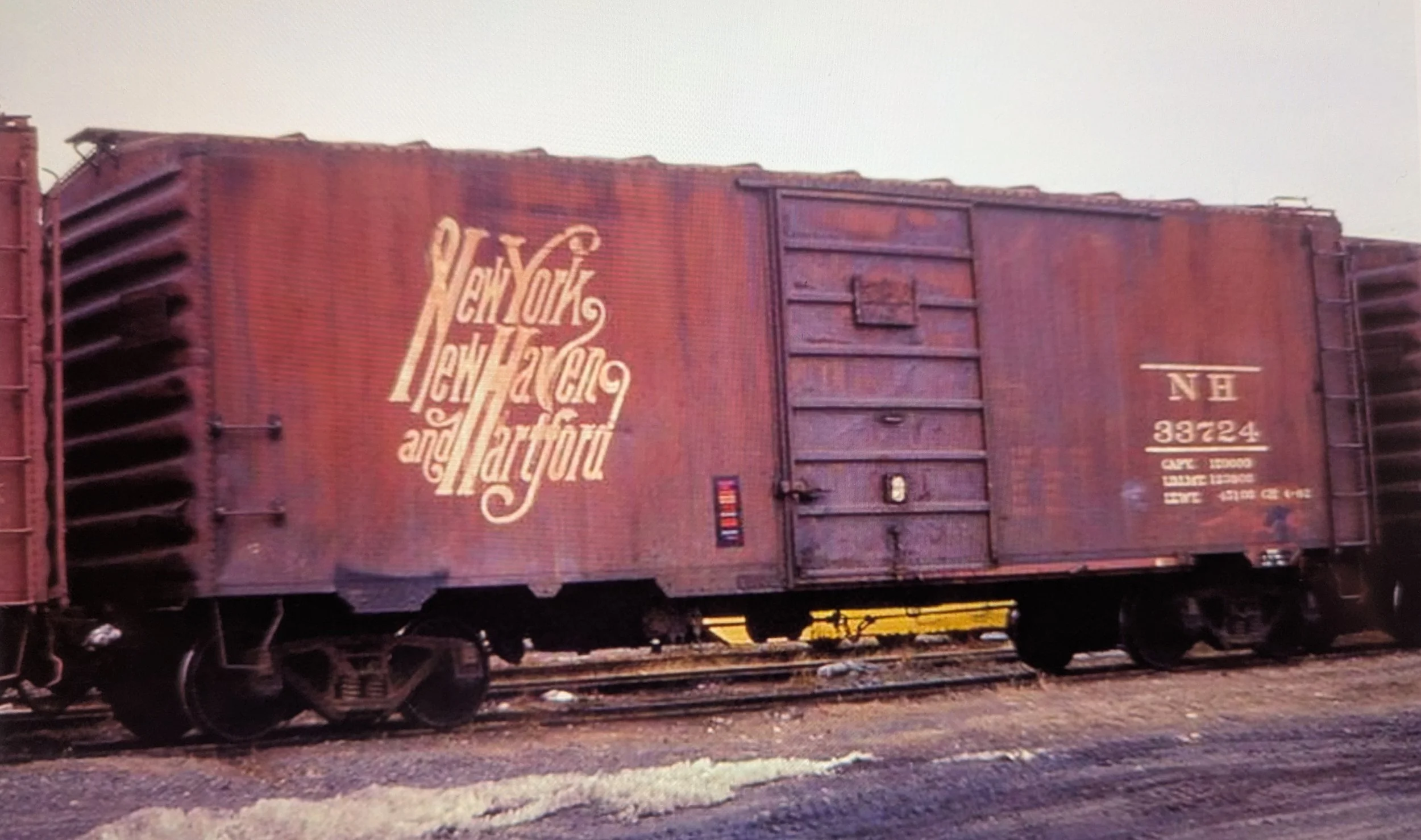
During the summer of ˋ69, the Penn Central started shifting shoreline freight traffic away from the Boston-New York corridor to the interior Boston & Albany line running east-west through Massachusetts. The long 100-car freights started to disappear.
On July, 19, 1969, Tom Nelligan caught these two U-boats picking up CV cars for North Haven‘s Cedar Hill Yard on the interchange track. #2680 is about to cross John Street at Water… is the engineer making a funny face for the camera?
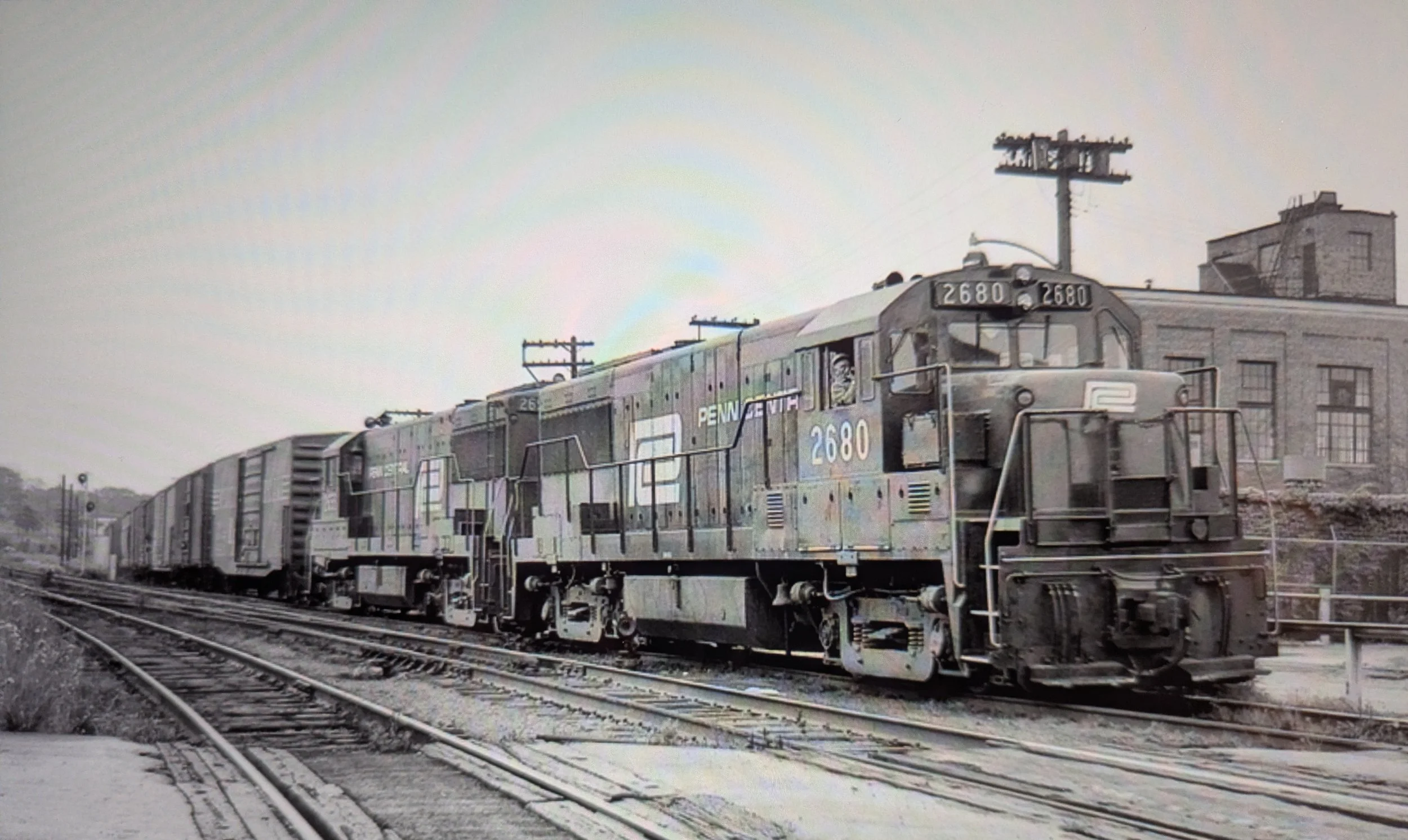
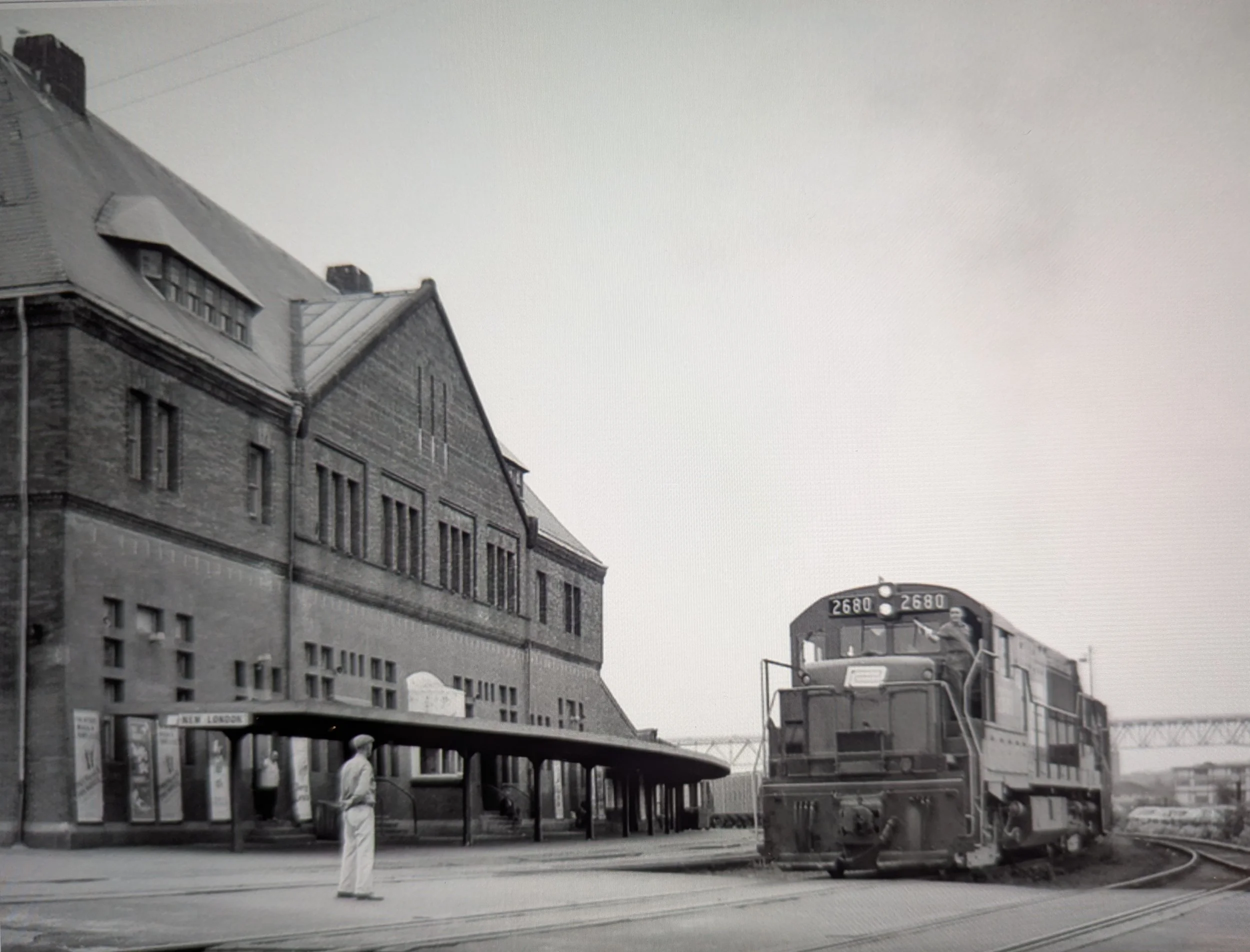
Ted Clement watches as #2680 slowly builds momentum in pulling the cars from the interchange. He will watch as the train rolls by, checking for smoke, loose or dragging equipment that could pose a problem once the train reaches full speed at 45 m.p.h.
Thanks again to Tom Nelligan.
Sail Loft… a few parting shots
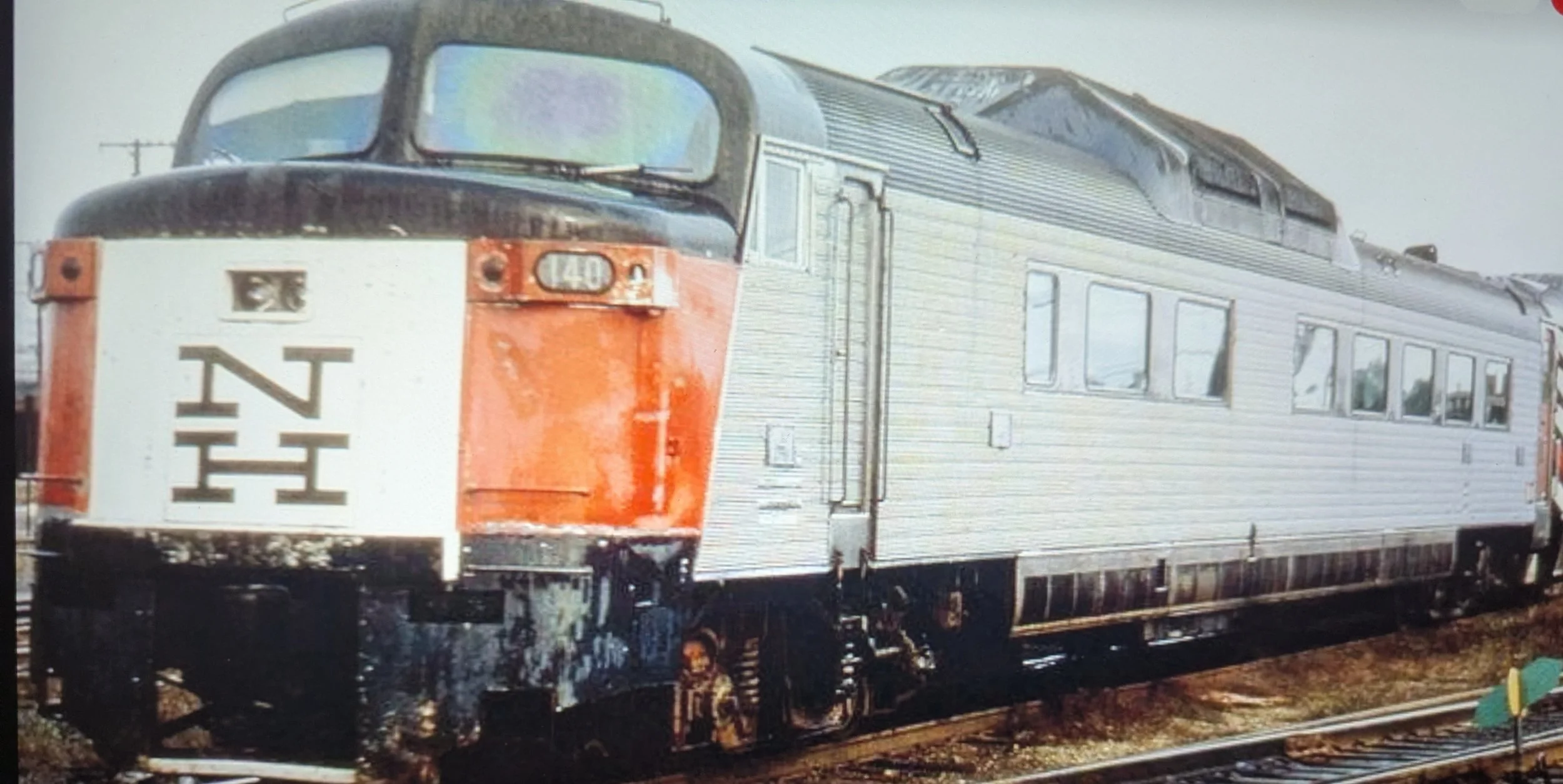
Roger Williams #140, between runs to Providence
Tom Nelligan, 1969
Ron DeFilippo, 2/14/70
Joseph Raymond, July ˋ72
both photos
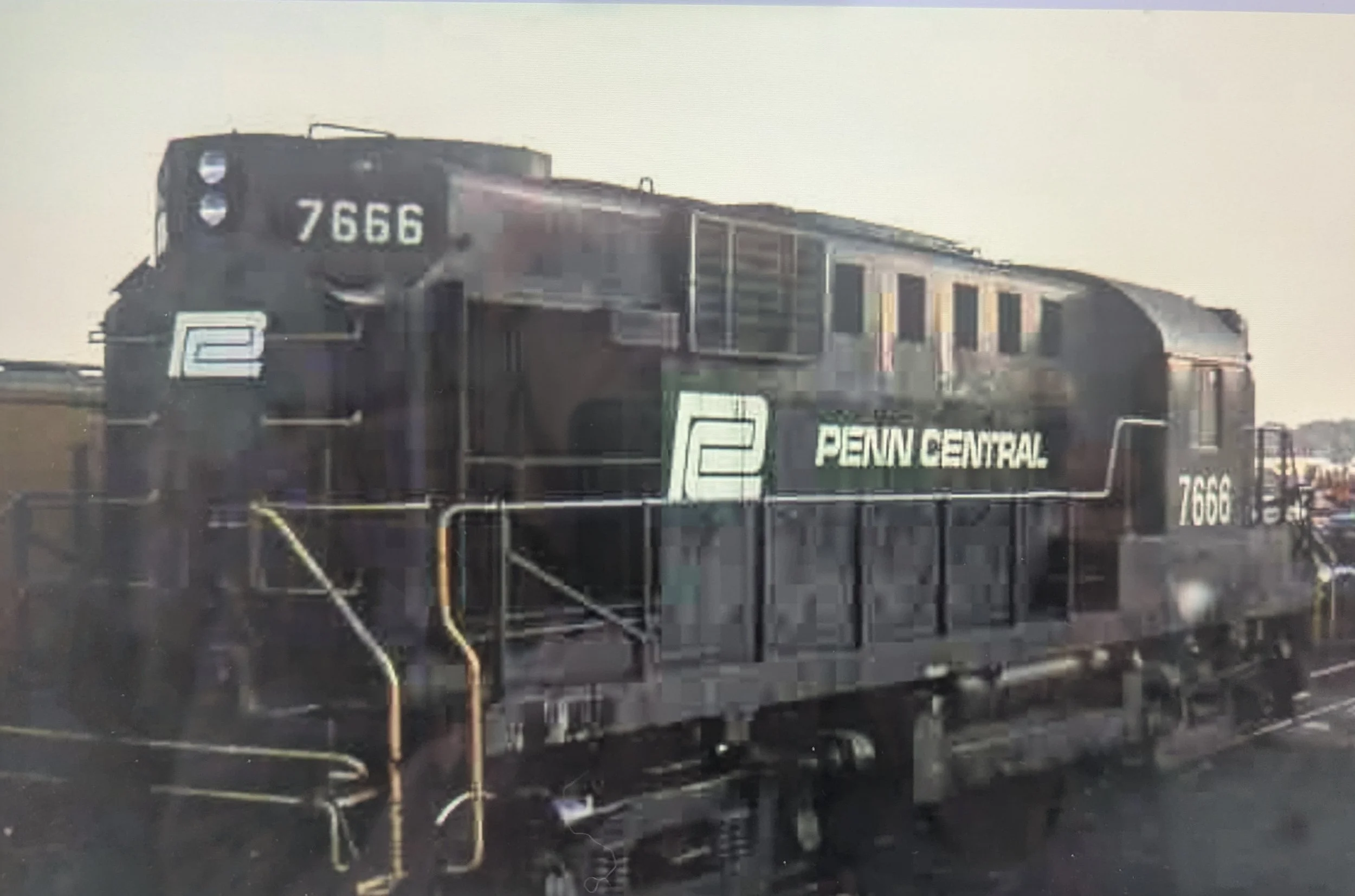
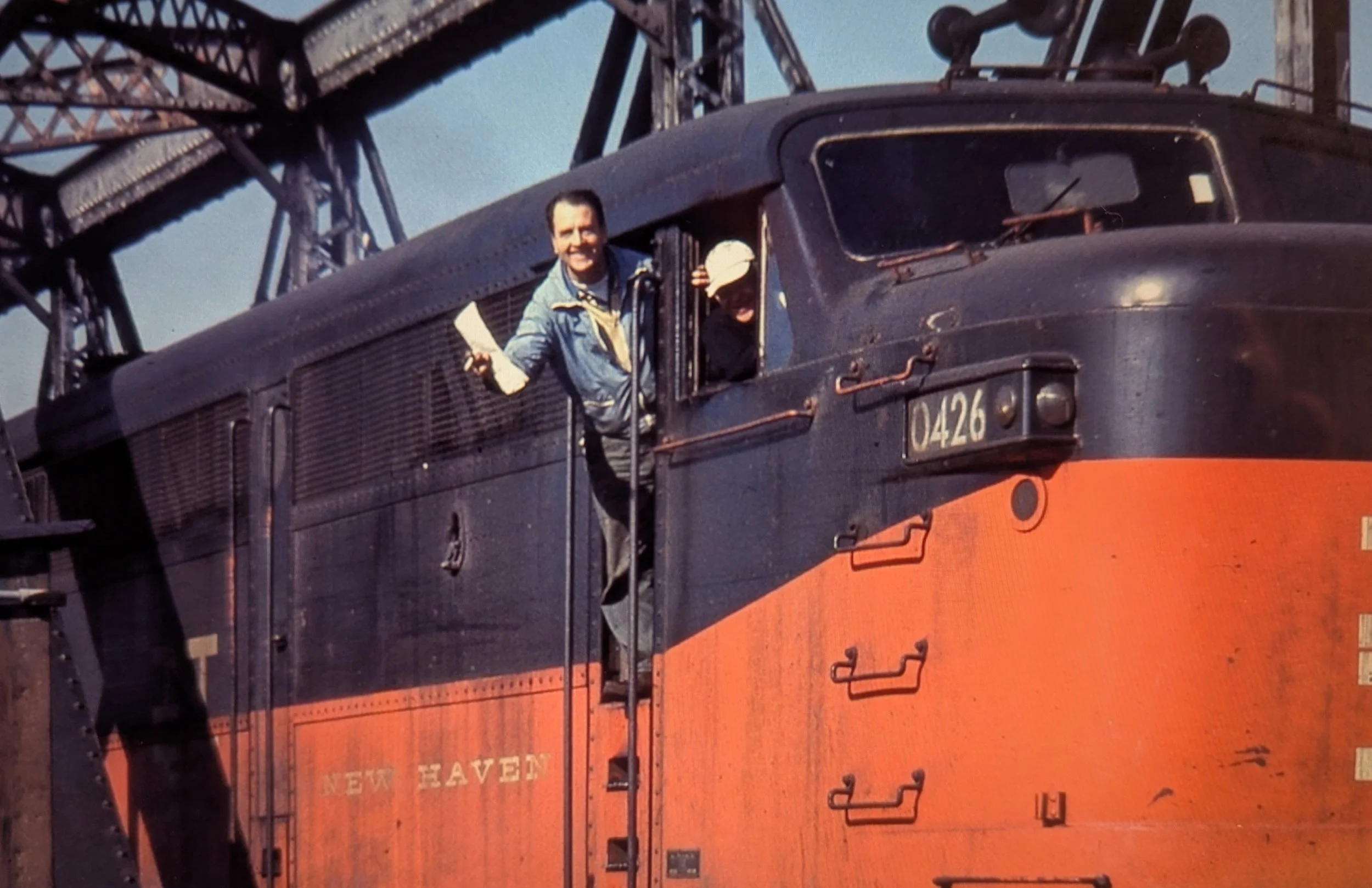
With a camera or without, you waved at the engineer, hoping for a response… sometimes a wave, sometimes two short blasts from the horn, sometimes nothing. In October of ˋ67, Ken Patton got this response as a westbound New Haven train crossed the Shaw‘s Cove swing bridge just above Fort Yard.
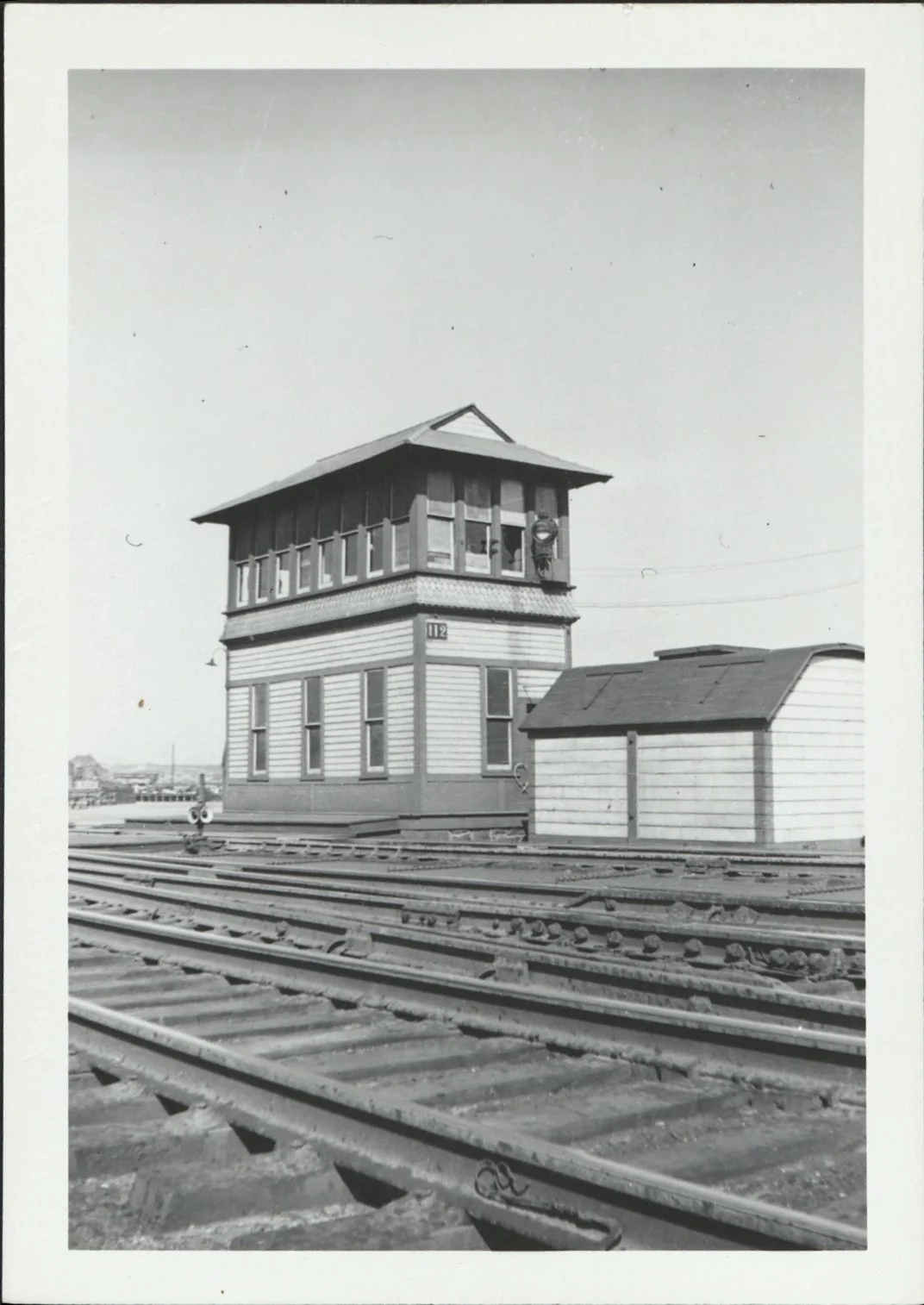
SS 112 with Union Station on far left across the water, circa 1937
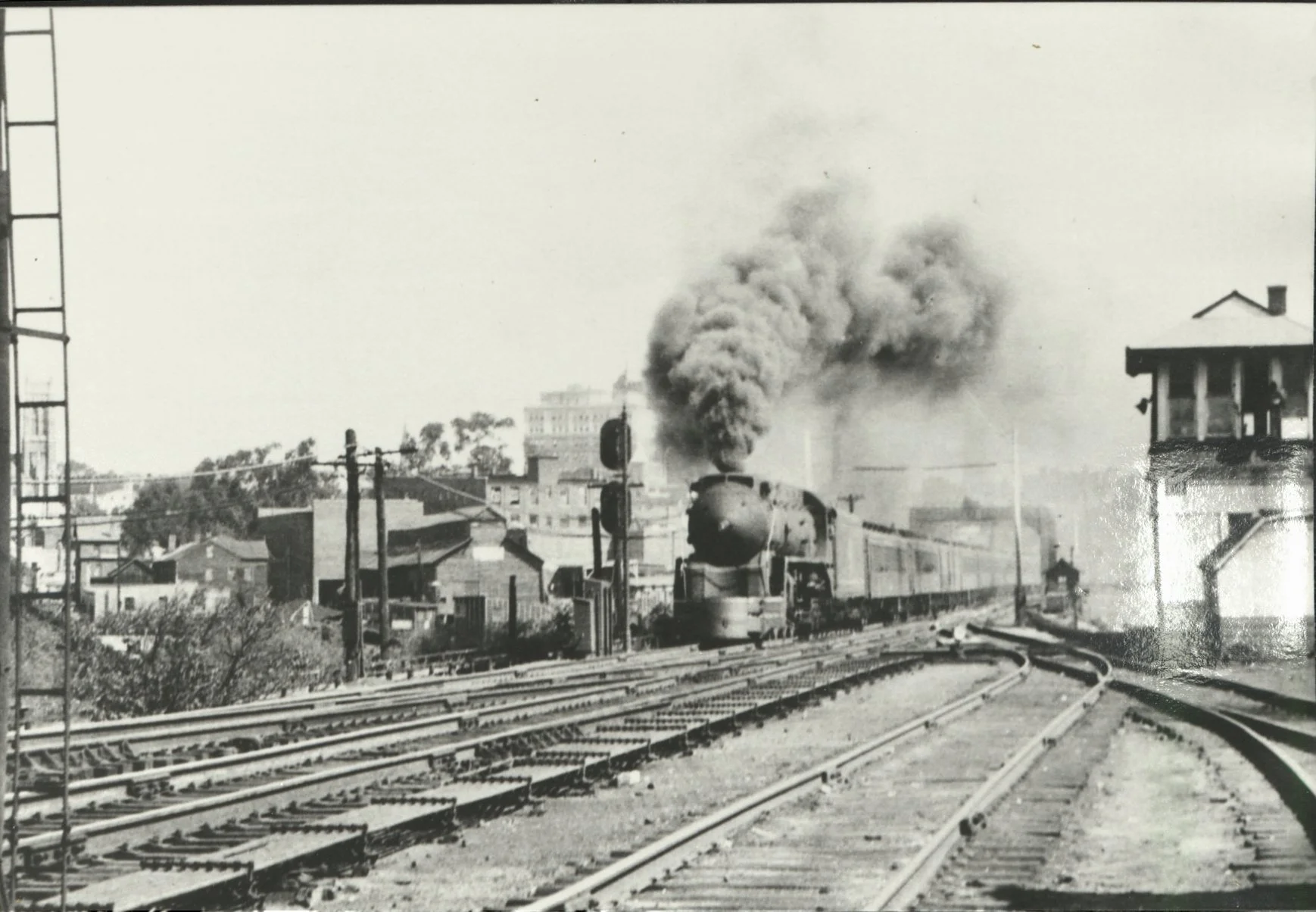
The Yankee Clipper enters Fort Yard just below the swing bridge circa 1937. The Mohican Hotel is visible on the left side of the plume and SubStation 112 is on the right.
UCONN archives, Peterson Collection, all 3 photos
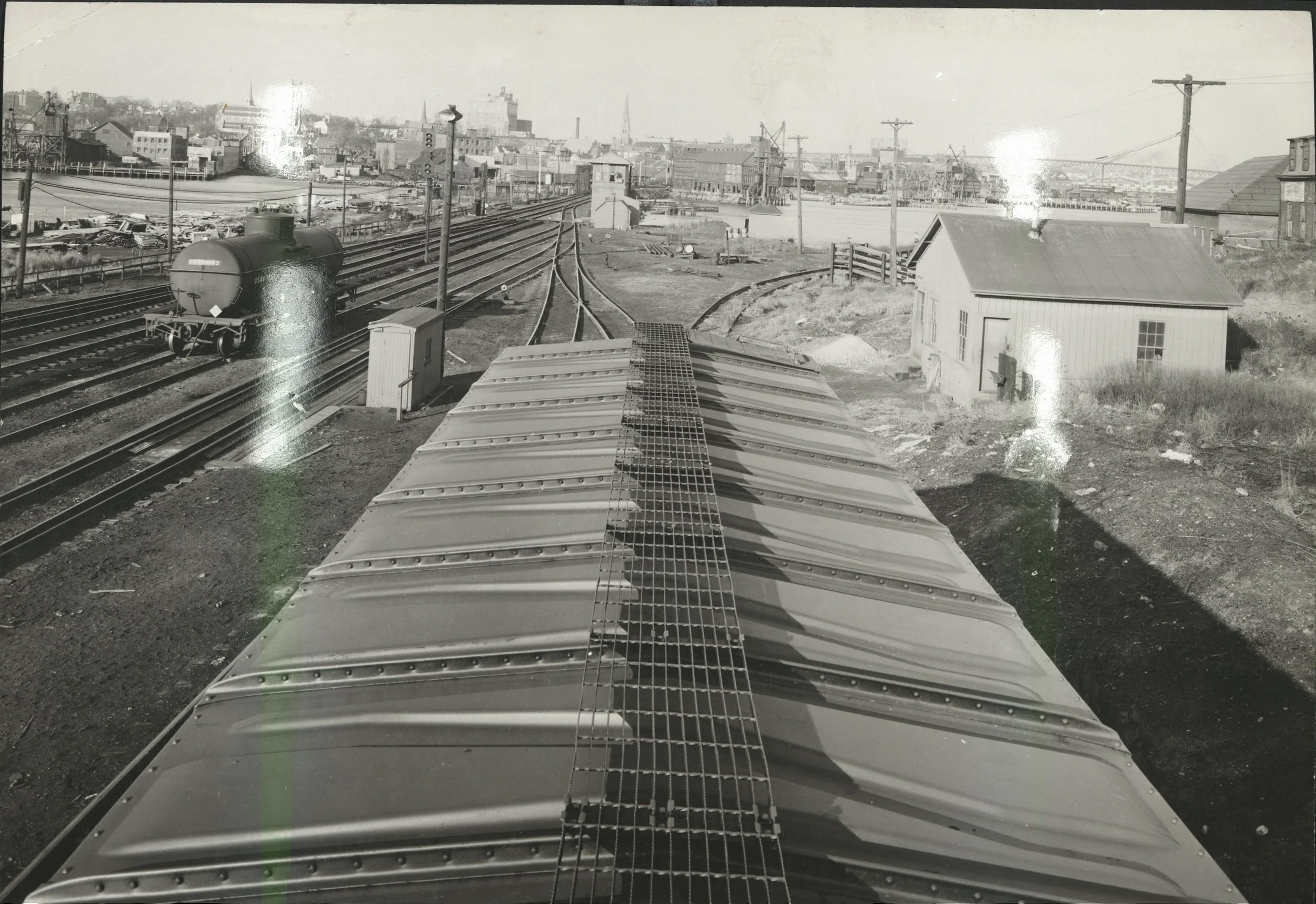
my apologies for the 4 ghosts… Chappell‘s coal and lumber dock facility is still intact which puts us before the September ˋ38 hurricane. Note the scale house between cars and the spur curving off to the right… possibly to service the fuel tank farm?
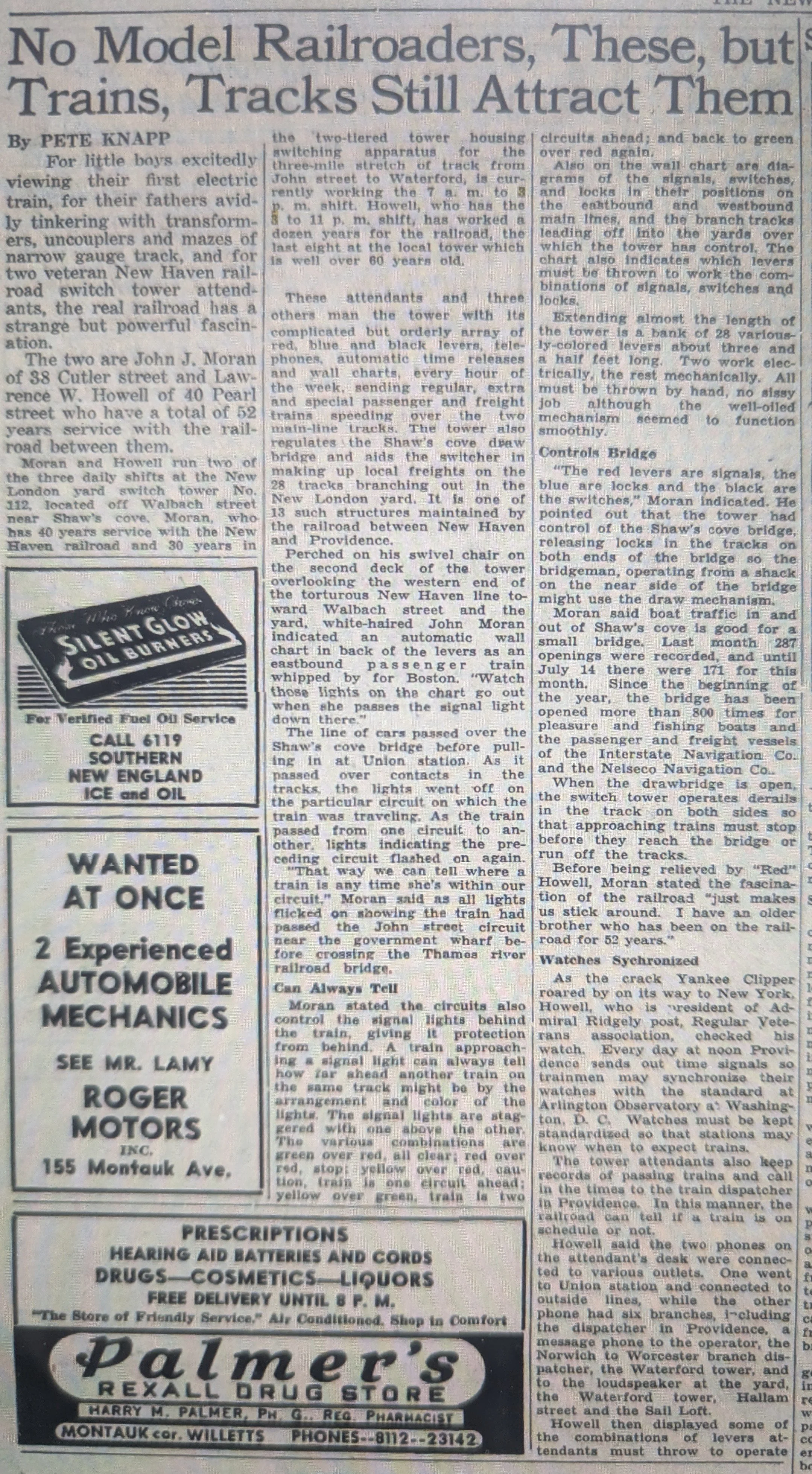
This first article about SS 112 is from Day Staff writer Pete Knapp and appeared on July 31, 1953.
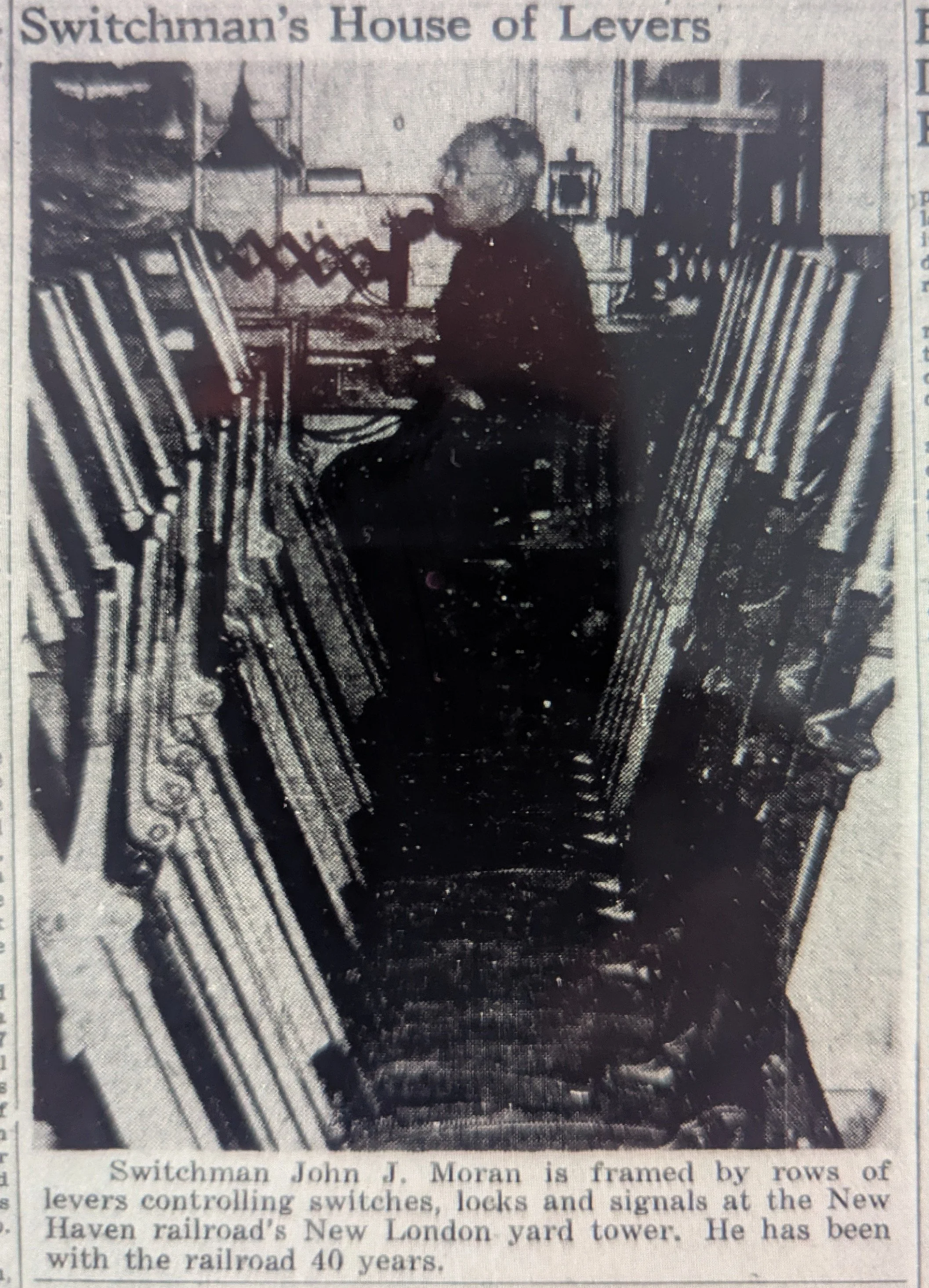
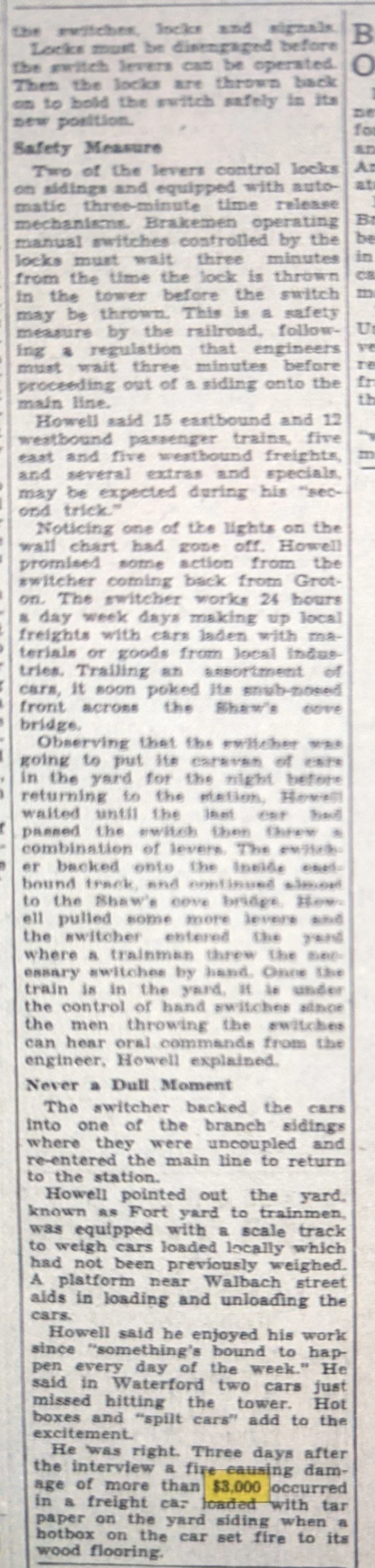
On December 26, 1958, The Day carried this article:
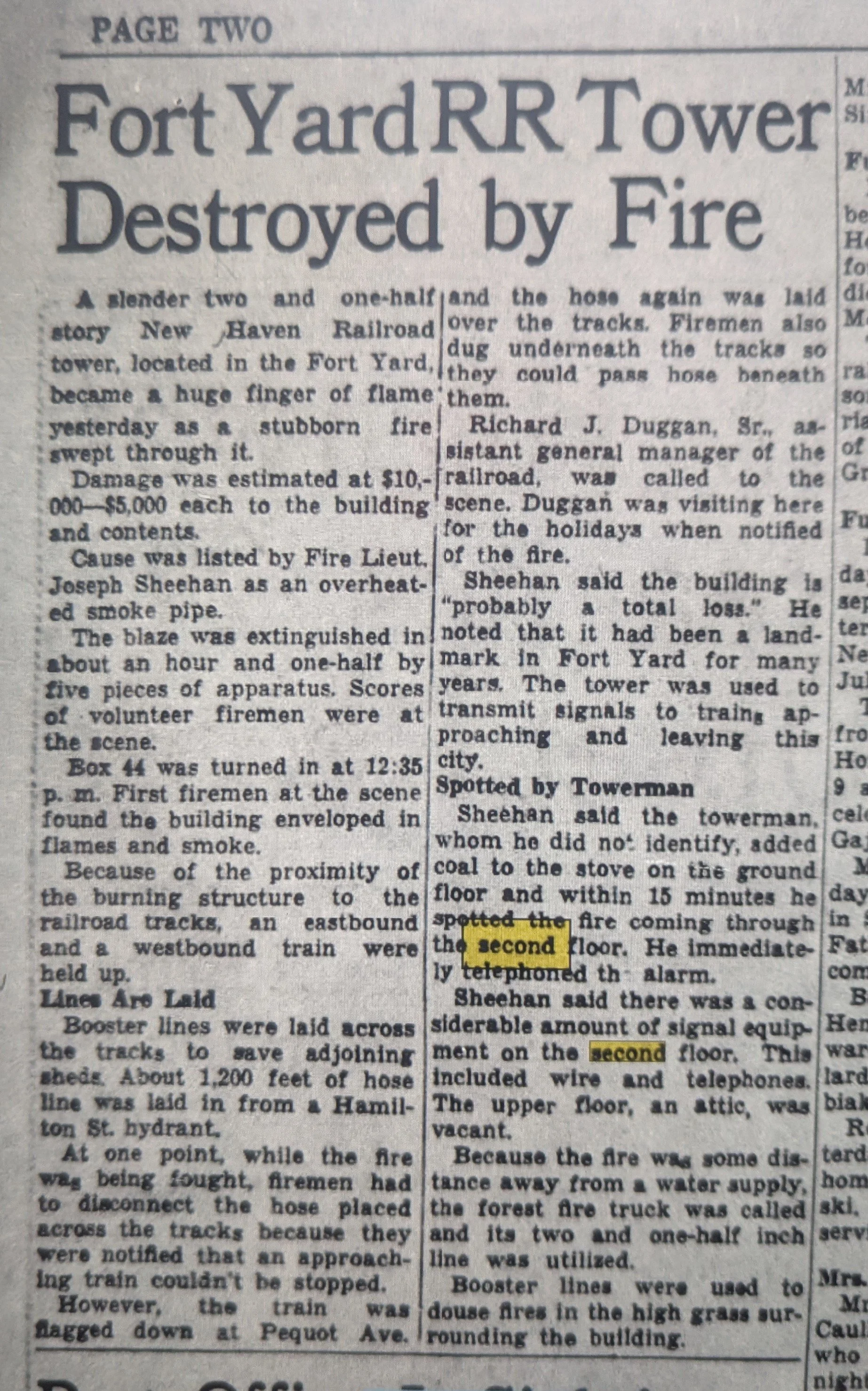
In October of ˋ67, Ken Patton was on board The Colonial rolling through Fort Yard, with a green over yellow, as it approached Union Station. Note the switch lamps on the right, the gray lighter with the black hull listing to one side in the harbor.
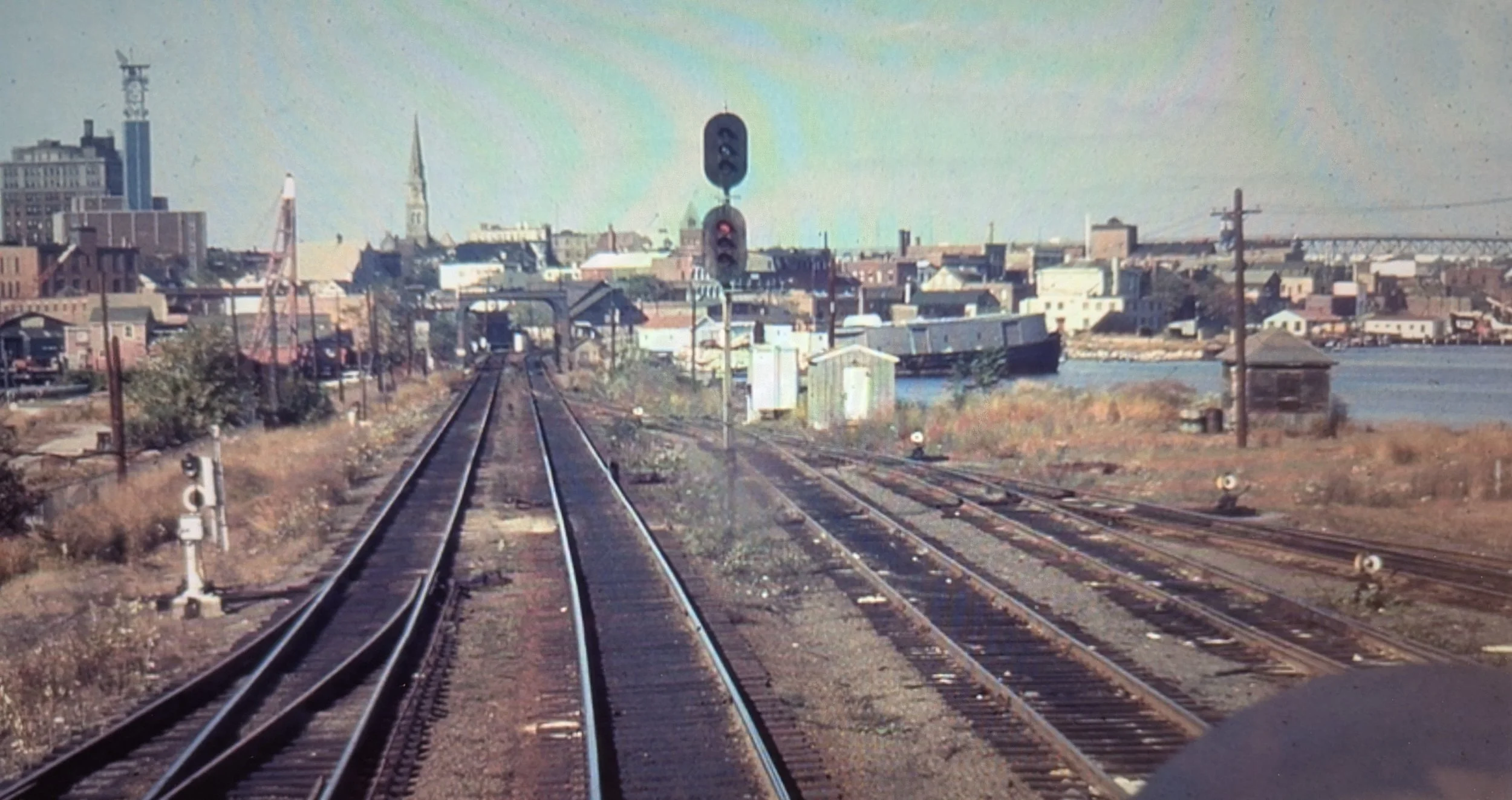
On a personal note, during the last days of spring in 1975, I spent an entire five-day week working for the railroad as a trackman. In the morning we would group up at Old Saybrook Station and board this little green Penn Central school bus that would bring us to the work location for that day… be it Clinton, Westbrook, Madison, or elsewhere. We never seemed to stay in one location long enough to get anything done. When it rained, we stayed in our little bus and talked about bars… on Route One just west of Saybrook was the world‘s best bar… and when the name comes to me, I‘ll update this posting.
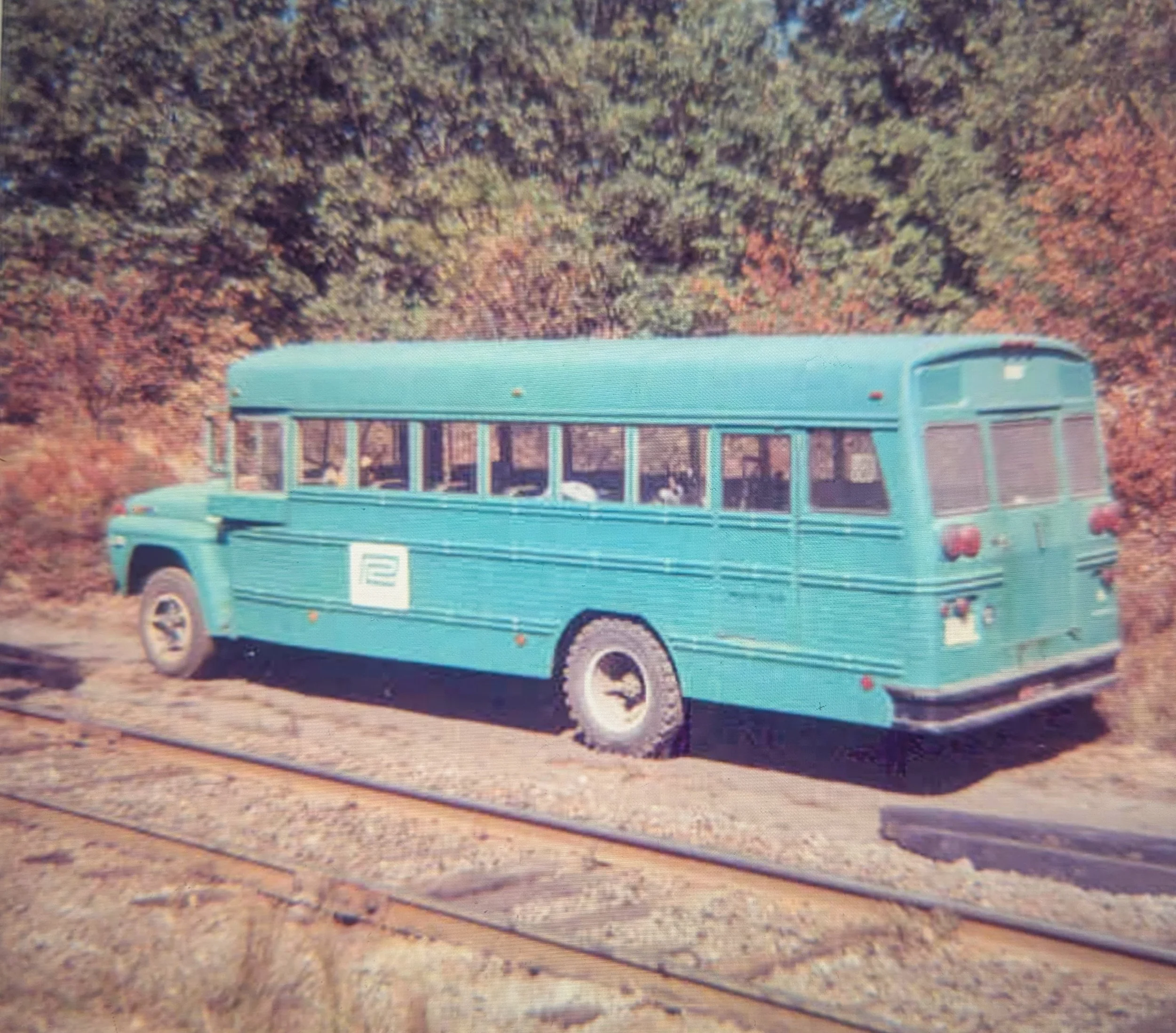
Courtesy of Gordon Q. Cochrane, Jr. 9/71
So, it seems now that I worked longer than a week. Why did I leave?
A better offer. I applied for a trainman‘s job with the Valley Railroad in Essex. They ran a steam train for area visitors that connected with a steam boat that took you further up the Connecticut River. A well-run operation and they matched Penn Central‘s $5 an hour.
oh… and the bar was called The Godfather, a lounge with live music and a good draw.
A distant second was The Monkee Farm, closer in town. This place has withstood the test of time, so check it out.
Everybody got along. Frank M. was our track foreman and you had to make sure he checked you off on his list or you wouldn‘t get paid. Once I missed a day and didn‘t get paid… Karma for some of the stupid stuff I did as a kid. Starting pay was $5 an hour.
We had two characters that stood out, both with nicknames. One was the Animal, who was very round, lots of hair, could bend steel and your arm if he was in a playful mood and, somehow, always wound up with a girl when leaving the world‘s best bar. He was a good talker with an assertive edge. I envied him.
The second was Hollywood. Lean and muscular, he wore a felt wide brim hat, dark sunglasses, moustache, sideburns, a cigarette dangling from his grinning mouth, a white, spotless V-neck t-shirt, pressed jeans, a wide leather belt, Colt 45 bronze buckle, and a pair of well-broken in cowboy boots with spurs. Whenever we ate lunch outside, usually on a handy, comfortable lawn, Hollywood would stand by the road and give a friendly wave to all the female drivers. A few pulled over.
Wow… this has been a page with many segments. I hope you found them interesting.
On 11/8/70, the New Haven Register carried the photo essay Working on the railroad… a changing art, written by Sean Kernan.
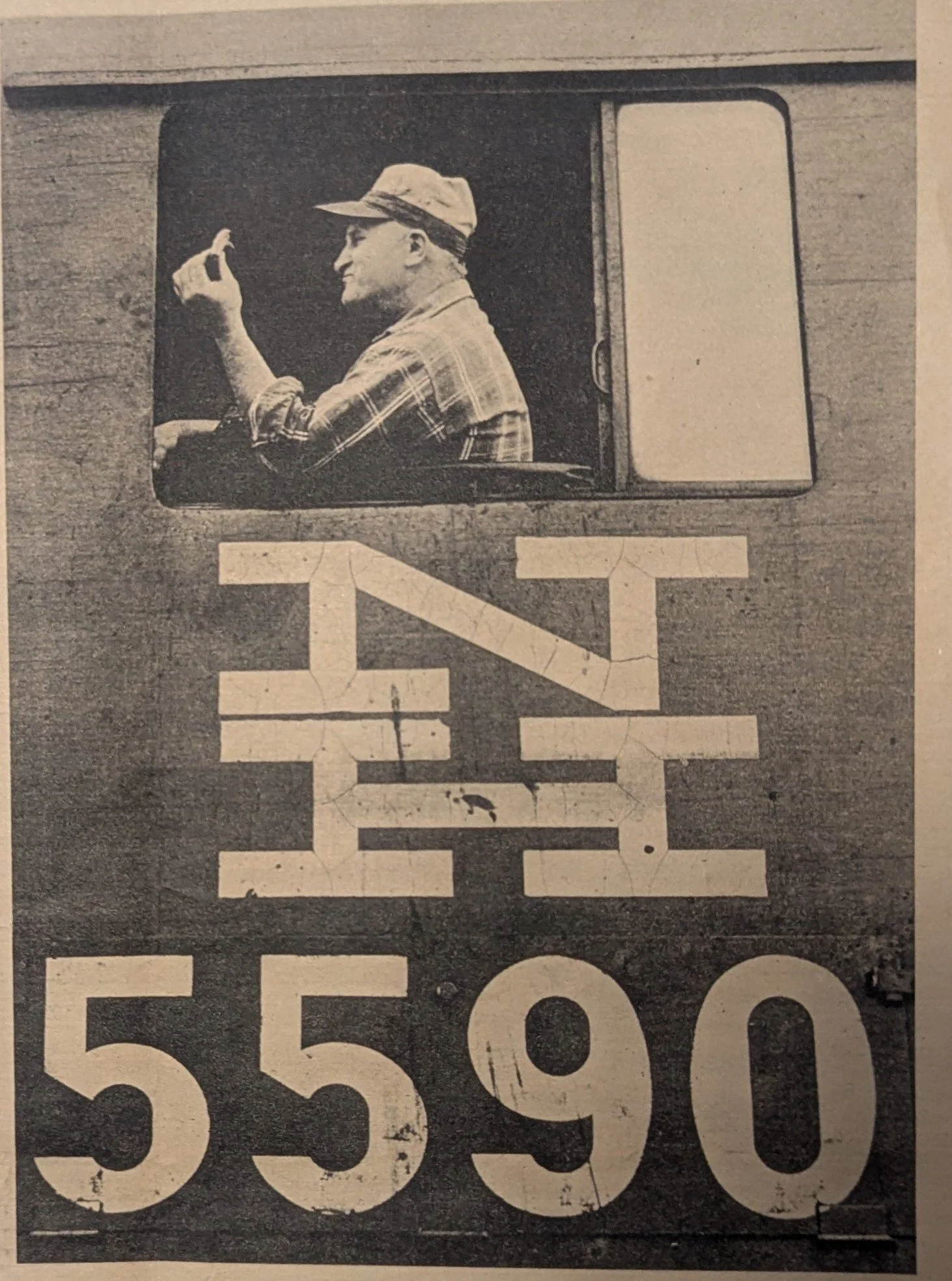
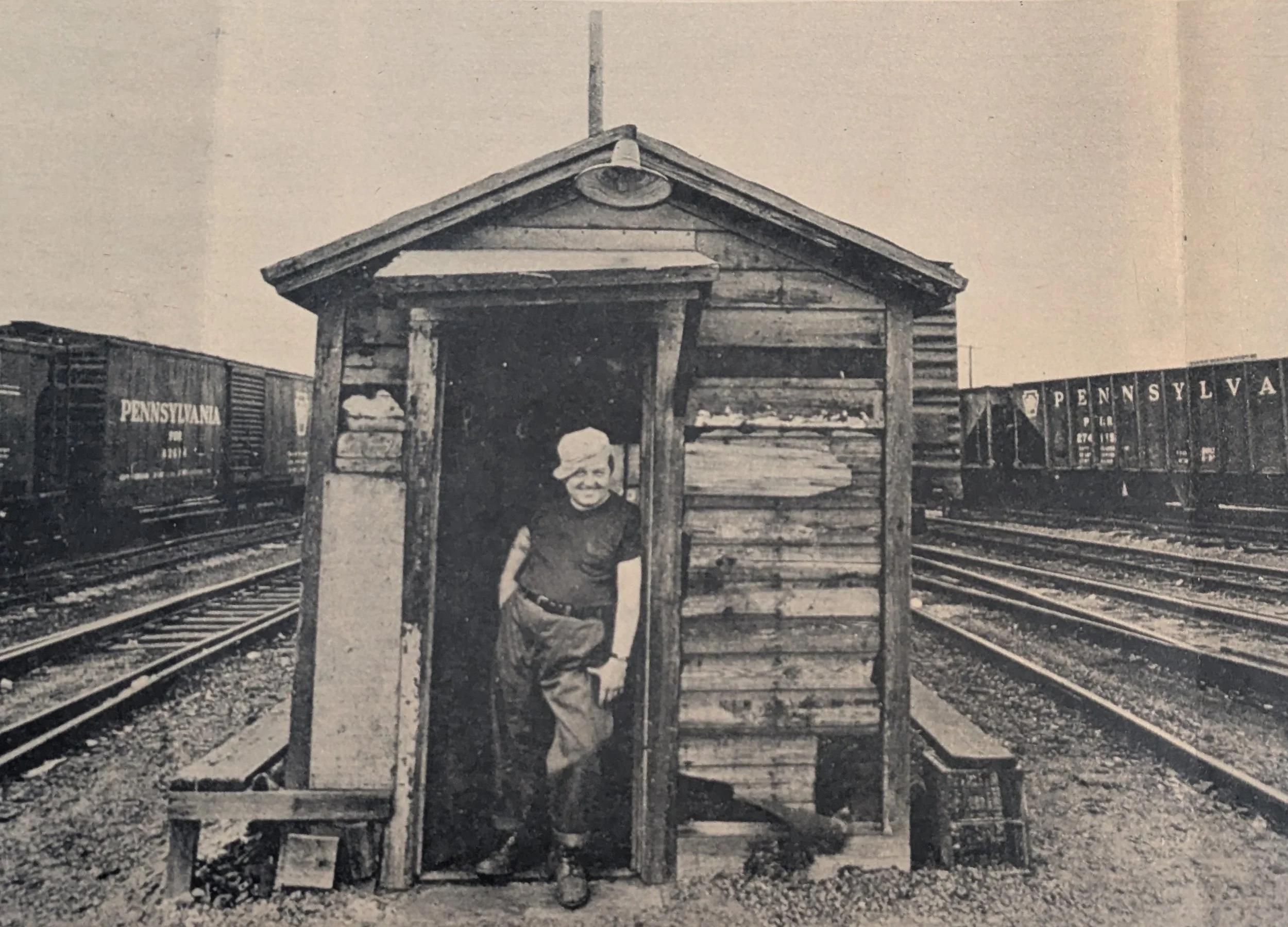
I‘m ending this page with two photos from the essay that portray people at home in the environment in which they work. Enjoy.